
 Plan Your Trip Now

In This Guide
"How far is the Tsum Valley Trek, and how long will I walk each day?" is one of the first questions trekkers ask. The honest answer is that it depends on the itinerary, the starting point and how you count. This guide gives you realistic numbers for our 18-day plan, with approximate kilometers and the walking hours from our itinerary, so you can plan your fitness, packing and pace.
For the full trip details, see our 18-day Tsum Valley Trek itinerary.
Tsum Valley Trek at a Glance
| Detail | Information |
|---|---|
| Region | Manaslu Conservation Area, Gorkha district |
| Duration | 18 days including arrival and departure |
| Walking days | 13 trekking days |
| Grade | Moderate |
| Highest overnight stay | Mu Gompa, 3,700 m |
| Typical walking time | 3–7 hours a day (about 66–79 hours in total) |
| Approximate total distance | Roughly 150 km, depending on route and source |
| Best seasons | February–May and September–November |
How Long Is the Tsum Valley Trek in Kilometers?
There is no single official figure. Trail distances in Nepal are estimates, and the starting point matters. Some itineraries begin the trek at Soti Khola, others drive on to Machha Khola, and the route may include side trips.
Published figures vary. One itinerary quotes about 147 km, another about 150 km, and a third reports a total of about 200 km. The higher numbers usually include extra days or a longer return route.
For our 18-day itinerary, which starts the trek at Soti Khola and finishes near Arughat, a realistic estimate is roughly 150 km. Treat daily kilometers as approximate, because GPS tracks, switchbacks and bridge detours all change the number. Walking time is the more useful measure, since it reflects the real terrain.
Tsum Valley Trek Daily Distance and Walking Hours
The table below follows our itinerary. The walking hours come from our trip page. The distances are approximate ranges based on commonly reported trail figures.
| Day | Route | Walking time | Approx. distance | End altitude |
|---|---|---|---|---|
| 1 | Arrival in Kathmandu | – | – | 1,300 m |
| 2 | Trek preparation in Kathmandu | – | – | 1,300 m |
| 3 | Drive Kathmandu to Soti Khola via Arughat | 6–7 hrs drive | – | 700 m |
| 4 | Soti Khola to Machhakhola | 6–7 hrs | 12–15 km | 870 m |
| 5 | Machhakhola to Jagat | 6–7 hrs | 15–22 km | 1,340 m* |
| 6 | Jagat to Chisopani | 4–5 hrs | 5–8 km | 1,660 m |
| 7 | Chisopani to Chumling | 6–7 hrs | 7–10 km | 2,386 m |
| 8 | Chumling to Chhokang Paro | 4–5 hrs | 9–13 km | 3,010 m |
| 9 | Chhokang Paro to Nile | 5–6 hrs | 7–10 km | 3,361 m |
| 10 | Nile to Mu Gompa | 3–4 hrs | 5–8 km | 3,700 m |
| 11 | Explore day at Mu Gompa | Short walks | – | 3,700 m |
| 12 | Mu Gompa to Burgi Village via Milarepa cave | 5–6 hrs | 10–12 km | 3,245 m |
| 13 | Burgi Village to Chumling | 5–6 hrs | 10–13 km | 2,386 m |
| 14 | Chumling to Philim | 6–7 hrs | 14–18 km | 1,570 m |
| 15 | Philim to Khorlabesi | 6–7 hrs | 12–16 km | 970 m |
| 16 | Khorlabesi to Soti River | 6–7 hrs | 13–15 km | 700 m |
| 17 | Soti River to Arughat, then drive to Kathmandu | 4–5 hrs trek, 6–7 hrs drive | 10–14 km | 1,300 m |
| 18 | Departure | – | – | – |
*Altitudes follow our trip page. Jagat is generally listed at about 1,340 m by other sources.
Day-by-Day Walking Hours Explained
The lower valley (days 4–7)
The trek starts in the Budhi Gandaki gorge. Trails here are narrow and rocky, with steep climbs and descents, suspension bridges and waterfalls. The distances look short on paper, but these days take 6–7 hours because the path is uneven. Expect plenty of up and down even though overall height gain is modest.
The climb into Upper Tsum (days 8–10)
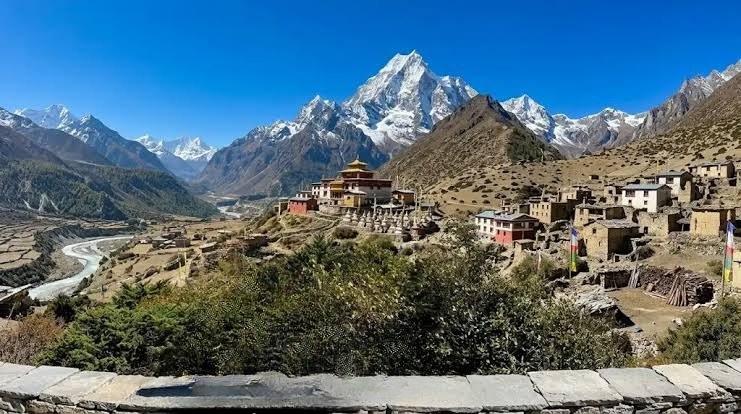
After Chumling the valley opens up and the scenery changes. Villages like Chhokang Paro and Nile have stone houses, mani walls and prayer flags. Days get shorter, at 3–6 hours, because altitude is the main challenge here. Walking slowly and taking the Mu Gompa rest day are part of staying safe. For more on this, read our guide to altitude sickness on the Tsum Valley Trek.
Mu Gompa, the turnaround point
At 3,700 m, Mu Gompa is the highest overnight stop and the spiritual highlight. The explore day lets you visit the monastery and take short, easy walks without carrying a full pack.
The return (days 12–17)
The way back is mostly downhill, but it is also the longest stretch of the trek. Days 14, 15 and 16 are each 6–7 hours, and they take a toll on knees and feet. Trekking poles help a lot on the descent.
The Longest and Hardest Days
| Challenge | Day | Why it is tough |
|---|---|---|
| Longest day on the trail | Day 5, Machhakhola to Jagat | Long distance on rough gorge trail, 6–7 hours |
| Steepest altitude gain | Day 8, Chumling to Chhokang Paro | About 600 m of climbing |
| Highest day | Day 10, Nile to Mu Gompa | Thin air at 3,700 m |
| Hardest on the legs | Days 14–16 | Three 6–7 hour descents in a row |
Total Walking Time and Daily Averages
Across the 13 trekking days, expect around 66–79 hours of walking in total. That works out to an average of about 5–6 hours a day, with shorter days around Mu Gompa and longer days in the lower valley.
Your actual time depends on several things:
- Fitness and pace: Faster trekkers finish earlier, but slow and steady is the safer approach at altitude.
- Weather: Rain and snow slow progress and make the trail slippery.
- Trail conditions: Landslides and repairs can add detours.
- Group size: Larger groups move at the speed of the slowest member.
- Photo and rest stops: Many trekkers spend extra time at monasteries and viewpoints.
A good rule of thumb is to add 30–60 minutes of breaks to every day's walking time.
Ascent and Descent: Why Kilometers Don't Tell the Whole Story
A flat 15 km and a steep 8 km are very different days. On the Tsum Valley Trek, trails climb and fall many times within a single day, especially in the lower gorge. Altitude also affects pace, because the same distance takes longer at 3,500 m than at 1,000 m. That is why walking hours are a better planning tool than kilometers.
How Hard Is the Tsum Valley Trek?
We grade the trip as moderate. You do not need technical skills, but you do need good general fitness and the stamina for several 6–7 hour days. The trek suits:
- Fit first-time trekkers with some hiking experience
- Experienced trekkers wanting a quieter alternative to the busier circuits
- Travelers interested in Tibetan Buddhist culture as much as the mountains
How to Prepare for the Daily Distances
- Train for 6–8 weeks or more. Hike, climb stairs or cycle three or four times a week.
- Practice long days. Do a few weekend hikes of 5–7 hours with a daypack.
- Build leg strength. Squats and lunges help on long descents.
- Break in your boots. Never wear new boots on the trek.
- Pack light. A daypack of 10–15 liters is enough, because porters carry your main bag.
- Bring trekking poles. They take pressure off your knees on the descent.
Our trip page has a full equipment list covering clothing, footwear and accessories.
Permits, Meals and What Is Included
Walking is easier when logistics are handled. Our package includes the Manaslu Conservation Area permit, the Tsum Valley special permit, the TIMS card, accommodation in mountain lodges or homestays, full-board meals on the trek, an English-speaking first-aid-trained guide, porters and public bus transfers. International flights, travel insurance, visa and personal expenses are not included. See the trip page for the full list.
Best Time to Trek the Tsum Valley
Our trip page lists February to May and September to November as the best times. Autumn brings clear skies and stable weather. Spring has warm days and blooming rhododendrons. Winter is colder at the higher stops, so pack warmly.
Why Trek with Team Ram Adventure?
Team Ram Adventure Pvt. Ltd. is a Kathmandu-based trekking company with experienced local guides and years of work in the Manaslu region. You get:
- Itineraries designed with acclimatization in mind
- Licensed guides trained in first aid
- All permits arranged for you
- Small groups and personal attention
- Clear, honest pricing
Learn more about us, see why to book with us and read our terms and conditions.
Other Treks to Consider
- Standard Manaslu Circuit Trek
- Short Manaslu Circuit Trek
- Manaslu Larke Pass Trek
- Tamang Heritage Trek
- Nar Phu Valley Trek
Browse all Manaslu region treks or trekking in Nepal.
Frequently Asked Questions About Tsum Valley Trek Distance
1. What is the total distance of the Tsum Valley Trek?
It depends on the route, but roughly 150 km on our 18-day itinerary. Published figures range from about 145 km to around 200 km for longer variations.
2. How many hours do you walk each day?
Between 3 and 7 hours on most days. The longest days are 6–7 hours, and the shortest are about 3–4 hours.
3. How many days of walking are there?
Our itinerary has 13 trekking days, one rest and explore day at Mu Gompa, and a drive on each end.
4. What is the longest day on the Tsum Valley Trek?
Several days run 6–7 hours. Machhakhola to Jagat is the longest on the way in, and Days 14–16 are the toughest on the return.
5. What is the shortest day?
Nile to Mu Gompa is the shortest at 3–4 hours, which helps with acclimatization at 3,700 m.
6. Is the Tsum Valley Trek hard?
We grade it as moderate. The main challenges are the long days, steep trail sections and the altitude at Mu Gompa.
7. How much ascent is there each day?
It varies. The biggest overnight gain is Chumling to Chhokang Paro at roughly 600 m. Early gorge days involve lots of small ups and downs.
8. Do I need to be very fit?
You need good general fitness and the stamina to walk 5–7 hours a day for two weeks. You do not need technical mountaineering skills.
9. Can I shorten the trek?
Shorter versions exist, but fewer days mean longer walking days and less time to acclimatize. Contact us to discuss options.
10. How much of the route is downhill on the return?
Most of it. The lower valley days are mainly descent, but they are long and hard on the knees, so poles are useful.
11. Is there a road on the Tsum Valley route?
Roads have reached parts of the lower Budhi Gandaki valley, which affects where treks start. Our itinerary drives to Soti Khola and walks from there.
12. When is the best time to trek the Tsum Valley?
February to May and September to November, according to our trip page.
Plan Your Tsum Valley Trek for 2027
Distance is only part of the story. Walking hours, altitude and trail conditions determine how a day feels. With a realistic plan, steady training and a patient pace, the Tsum Valley is very achievable for fit trekkers.
View the full Tsum Valley Trek itinerary, then send us an inquiry or contact Team Ram Adventure to check 2027 dates.
Ready to trek in the Himalayas?
Get itinerary guidance and local support from the Team Ram Adventure specialists.