 Plan Your Trip Now
In This Guide
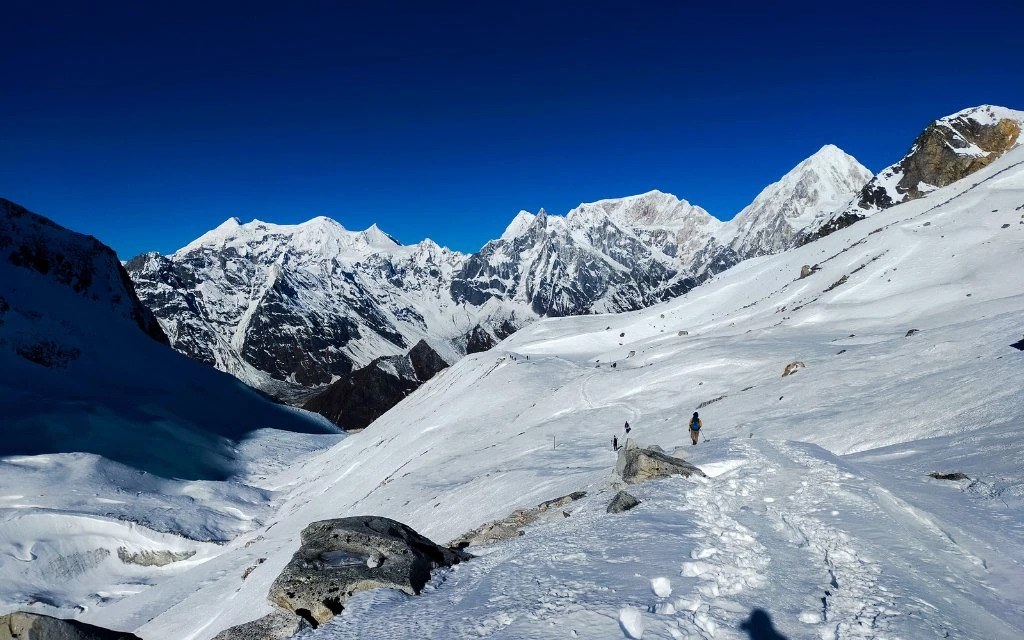
How hard is the Manaslu Larke Pass trek? It is a moderate-to-challenging trek, and one day in particular decides how it feels. For about 12 days you walk long but non-technical trails through gorges, forests and Tibetan-style villages. On day 10 you cross Larkya La (Larke Pass) at roughly 5,135 m, a pre-dawn climb followed by a descent of more than 1,400 m.
Most healthy trekkers with good preparation and a proper itinerary finish this trek. This guide tells you what is hard about it, why, and how to prepare, written by the team at Team Ram Adventure, a Kathmandu-based trekking company.
👉 Itinerary, dates and booking: Manaslu Larke Pass Trek – 14 Days
Manaslu Larke Pass Trek Difficulty at a Glance
| Factor | Rating | Why |
|---|---|---|
| Overall difficulty | Moderate to challenging | Long days plus one very demanding pass day |
| Fitness needed | 4 / 5 | 6–9 hours of walking on most days |
| Altitude risk | 4 / 5 | Pass at ~5,135 m; four nights above 3,500 m |
| Technical difficulty | 1 / 5 | No ropes or climbing, but snow or ice is possible on the pass |
| Remoteness | 4 / 5 | Limited facilities and slow evacuation above Samagaun |
| Weather exposure | 4 / 5 | Strong wind and temperatures down to about –10 to –15°C |
| Trip fact | Detail |
|---|---|
| Duration | 14 days (about 12 days walking) |
| Highest point | Larkya La, ~5,135 m |
| Typical walking | 4–9 hours a day |
| Best seasons | March–May and September–November |
| Group size | 2–16 |
| Price | US$1,199 per person |
Is the Manaslu Larke Pass Trek Hard? The Honest Answer
It is not a technical climb, and you do not need mountaineering skills. The difficulty comes from accumulation: a long approach, rising altitude, thin facilities and one high-risk day near the end.
Compared with other popular treks:
- Harder than Poon Hill, Langtang Valley or the Tsum Valley Trek, which has no high pass.
- Similar to the Annapurna Circuit's Thorong La section, though Manaslu is more remote and has fewer teahouses. See the Annapurna Circuit Trek.
- Easier than expedition-style routes, because there is no glacier travel or fixed ropes. The Everest Three High Passes Trek involves more demanding terrain.
If you have trekked above 4,000 m before, you already know part of what to expect. If this would be your first high trek, you can still do it with proper preparation, a patient guide and a realistic mindset.
Daily Walking Hours and Altitude Profile
This table is based on our standard 14-day itinerary. Walking hours are approximate and vary with pace and conditions.
| Day | Route | Walking | Sleeping altitude |
|---|---|---|---|
| 1 | Kathmandu → Soti Khola (drive) | 7–10 hrs drive | ~710 m |
| 2 | Soti Khola → Machha Khola | 6–7 hrs | ~900 m |
| 3 | Machha Khola → Jagat | 6–7 hrs | ~1,340 m |
| 4 | Jagat → Deng | 6–7 hrs | ~1,860 m |
| 5 | Deng → Namrung | 6–7 hrs | ~2,630 m |
| 6 | Namrung → Samagaun | 6–7 hrs | ~3,530 m |
| 7 | Acclimatization at Samagaun | Optional hike 4 hrs | ~3,530 m |
| 8 | Samagaun → Samdo | 4–5 hrs | ~3,860 m |
| 9 | Samdo → Dharamsala (Larkya Phedi) | 4–5 hrs | ~4,460 m |
| 10 | Dharamsala → Larkya La → Bimthang | 8–10 hrs | ~3,720 m |
| 11 | Bimthang → Tilije | 6–7 hrs | ~2,300 m |
| 12 | Tilije → Dharapani | 5–6 hrs | ~1,960 m |
| 13 | Dharapani → Kathmandu (drive) | 8–10 hrs drive | ~1,350 m |
| 14 | Departure | – | – |
Why this profile matters: you gain altitude gradually for the first six days, rest on day 7, then climb 600 m in one go from Samdo to Dharamsala. The big effort is the climb from Dharamsala to the pass (about 675 m up), followed by a long, knee-testing descent.
The 7 Biggest Challenges of the Larke Pass Trek
1. Larkya La Pass day (the crux)
Day 10 starts around 3–4 am by headlamp, at below-freezing temperatures. You climb for about 4–5 hours to the pass, spend a short time at the top, then descend more than 1,400 m over 4–5 hours into Bimthang. It is typically 8–10 hours and the hardest day of your trek.
Pass conditions change: fresh snow, strong wind or ice can slow the group or force a turnaround. Good guides will decide with weather and group condition in mind, not with the schedule.
2. Altitude
Larkya La is above 5,000 m, where the air holds roughly half the oxygen of sea level. Altitude sickness is a real risk for anyone, regardless of age or fitness. Symptoms include headache, nausea, poor sleep and loss of appetite. See the tips section below.
3. Long walking days in the lower valley
The first five days follow the Budhi Gandaki valley with steady ups and downs, rocky sections and long hours (6–7 hrs). The trail crosses suspension bridges and narrow paths above the river. It is not technical, but it can tire you before you reach the real altitude.
4. Cold
At Dharamsala and on the pass, nights and early mornings can drop to about –10 to –15°C. Wind chill makes it feel colder. Cold hands, feet and batteries are a common problem.
5. Remoteness and basic facilities
Teahouses above Samagaun are simple, with shared rooms, limited electricity and basic toilets. Wi-Fi and mobile signal are unreliable. Rescue options are slower than on busier trails, so insurance and a good guide matter more here.
6. Weather and trail conditions
Landslides and washed-out sections can occur in the lower valley, especially in or after monsoon. Snow on the pass can arrive early or linger late, depending on the year.
7. Permits and logistics
This is a restricted area. You need a Manaslu Restricted Area Permit, a Manaslu Conservation Area Permit and an Annapurna Conservation Area Permit for the exit via Dharapani. You must trek with a licensed guide through a registered agency, with a minimum of two trekkers. We arrange all permits for you, and they are included in the package.
Altitude Sickness on the Manaslu Larke Pass Trek: Tips That Work
- Use the acclimatization day properly. At Samagaun, take a gentle hike to Birendra Lake or toward Manaslu Base Camp and return to sleep. Don't treat it as a day to rest in bed all day.
- Walk slowly. If you can speak in full sentences, your pace is right.
- Drink 3–4 litres of water a day. Use purification tablets or filtered water.
- Avoid alcohol and sleeping pills at altitude.
- Tell your guide how you feel. A headache you hide can become a serious problem.
- Know the rules: if symptoms get worse, you stop ascending, and if they become severe (confusion, loss of balance, breathlessness at rest), you descend immediately.
- Talk to your doctor about preventive medication such as acetazolamide before you travel.
Our guides carry a first-aid kit and monitor oxygen levels. For more depth on acclimatization in the same region, read our altitude sickness guide for the Tsum Valley Trek.
Fitness and Training: How to Prepare for the Manaslu Larke Pass Trek
Start 8–12 weeks before your trip.
1. Build an aerobic base (3–4 times a week)
Running, cycling, swimming, brisk walking or stair climbing for 45–60 minutes.
2. Do weekly long hikes
Walk 5–7 hours with a loaded daypack (5–8 kg). Choose hills if you can. Back-to-back long days in the final month mimic the trek.
3. Train for the descent
The descent from the pass is hard on knees and quads. Practise downhill walking, step-downs, squats and lunges.
4. Strength work (2 times a week)
Legs, core and back. Add trekking poles to your training hikes.
5. Test your gear
Break in your boots, test your layers and practise with your headlamp. Blisters and cold hands are avoidable problems.
6. Get a medical check
See your doctor if you have heart, lung, blood pressure or other conditions, and tell your trek operator.
Best Time to Reduce Difficulty: Season and Weather
- Autumn (September–November): Stable weather, clear skies and mild days. It is the best and busiest season. Pass conditions are usually good, though the nights are cold.
- Spring (March–May): Warmer, with rhododendrons in bloom. The pass may still hold snow in early spring.
- Winter (December–February): Very cold, with a real risk of snow on the pass. It is only for experienced, well-equipped trekkers.
- Monsoon (June–August): Rain, leeches and landslides in the lower valley. It is not recommended.
Packing List for the Larke Pass
- Layers: thermal base layers, fleece, down jacket and waterproof shell
- Head and hands: warm hat, sun hat, insulated gloves or mittens and spare thin gloves
- Feet: warm, waterproof boots (broken in) and 4–5 pairs of warm socks
- Sleeping: a sleeping bag rated for freezing temperatures (comfort around –10°C)
- Pass-day essentials: headlamp with spare batteries, sunglasses (UV protection), trekking poles
- Health: personal medicines, blister kit, sunscreen, lip balm and water purification tablets
- Documents: passport, visa, insurance policy and passport-size photos
You can rent or buy gear in Thamel, Kathmandu, if you don't want to carry it from home.
Is the Manaslu Larke Pass Trek Suitable for Beginners?
It can be, if you meet three conditions:
- Good physical fitness and months of training behind you
- Prior hiking experience (multi-day trekking and long days on foot)
- A realistic mindset, with time for acclimatization and a willingness to turn around
If you have never trekked at altitude, consider warming up with a lower-risk trek first, such as the Tsum Valley Trek or the Short Manaslu Circuit Trek, or ask us to help you plan. Read our guide on Tsum Valley Trek difficulty to compare the two.
What the Trek Costs and What Is Included
US$1,199 per person for the 14-day trek (listed as 25% off US$1,599), for groups of 2–16.
Included:
- Airport pick-up and drop-off by private vehicle
- 2 nights in a Kathmandu hotel with breakfast
- Private vehicle to Soti Khola and back from Dharapani
- Manaslu restricted area permit, conservation permits and TIMS card
- Licensed guide and porter (wages, food, accommodation, transport and insurance)
- Teahouse accommodation and three meals a day during the trek
- Seasonal fruit every evening
- Taxes, VAT and service charges
- Farewell dinner in Kathmandu
Not included:
- International flights and Nepal visa
- Travel insurance (it must cover high-altitude trekking and emergency evacuation)
- Lunch and dinner in Kathmandu
- Personal gear and personal expenses
- Hot showers, boiled water, Wi-Fi and device charging
- Tips for your guide and porter
Why Trek the Larke Pass with Team Ram Adventure?
- Locally owned and run by experienced guides who know the Manaslu region
- A built-in acclimatization day at Samagaun, and a safety-first approach to pass decisions
- Licensed guides and porters who are fairly paid and insured
- Clear inclusions with permits arranged for you
- Real client feedback, including 4 reviews on the trip page and a Tripadvisor presence
Read more about us, see why book with us or browse all trekking in Nepal options. If you want to keep exploring the region, look at the Standard Manaslu Circuit Trek. To plan a longer route, try the Tilicho Lake and Thorung La Pass Trek or ask us to build a custom trip.
Want a more inspirational read first? See our guide to crossing the Larke high pass.
Manaslu Larke Pass Trek Difficulty FAQs
1. How difficult is the Manaslu Larke Pass trek?
It is moderate to challenging. There is no technical climbing, but you face long walking days, high altitude and a demanding 8–10 hour pass day.
2. How high is Larkya La Pass?
About 5,135 m (around 16,850 ft). You may see slightly different figures in guidebooks, between about 5,106 m and 5,160 m.
3. How many hours do you walk each day?
Typically 4–7 hours on most days. The lower valley days are 6–7 hours, and the pass day is 8–10 hours.
4. Do I need prior high-altitude experience?
It is recommended but not mandatory. Good fitness, prior hiking experience and proper acclimatization are what matter most.
5. What is the hardest day of the trek?
Day 10, from Dharamsala over Larkya La to Bimthang. It involves a very early start, cold, a steep climb and a long descent.
6. Can beginners do the Manaslu Larke Pass trek?
Fit beginners with solid training and an experienced guide can. First-time trekkers should plan extra preparation or start with a lower trek.
7. How cold does it get on the pass?
It can fall to roughly –10 to –15°C in early morning, especially in late autumn and winter, with wind chill making it feel colder.
8. How likely is altitude sickness?
It is a genuine risk above 4,000 m for anyone. Good acclimatization, slow pace, hydration and a guide who monitors you reduce the risk, but they don't remove it.
9. Is a guide compulsory?
Yes. Manaslu is a restricted area, so you must trek with a licensed guide through a registered agency, and the permit requires at least two trekkers.
10. What happens if the pass is closed by snow or weather?
Your guide decides based on safety. Options include waiting a day, using an alternate route, or turning back. Allow buffer days in your schedule and travel insurance that covers disruptions.
Final Thoughts: Is the Larke Pass Worth the Effort?
Yes, if you prepare for it. The Manaslu Larke Pass trek is demanding, but its difficulty is predictable: long days, altitude and one big pass. Train your legs and lungs, respect acclimatization, pack for real cold and trek with a guide who puts your safety before the schedule.
Ready to plan your Larke Pass adventure?
👉 Book or enquire: Manaslu Larke Pass Trek
📱 WhatsApp / call: +977 9851125603 · ✉️ info@teamramadventure.com · Contact us
Ready to trek in the Himalayas?
Get itinerary guidance and local support from the Team Ram Adventure specialists.