 Plan Your Trip Now
In This Guide
Thinking about the Manaslu Circuit Trek but wondering if it's within your reach? You're not alone. Every year, trekkers write to us asking the same thing: "How hard is the Manaslu Circuit, really?"
The short answer: it's a moderately difficult to challenging trek — tougher than the Ghorepani Poon Hill trails, but very achievable for anyone with reasonable fitness, proper acclimatization, and an experienced guide by their side. It is not a technical climb (no ropes, no climbing gear), but it does demand stamina, altitude awareness, and mental grit.
At Team Ram Adventure, we've guided trekkers of all experience levels — from first-timers to seasoned mountaineers — around this remote Himalayan circuit. Here's our honest, practical breakdown of what makes it difficult, which sections to prepare for, and how to get through them comfortably.
Is the Manaslu Circuit Trek Difficult for Beginners?
Yes, but "difficult" doesn't mean "impossible." The Manaslu Circuit is generally graded as a strenuous trek, sitting somewhere between the Annapurna Circuit and the Everest Three Passes Trek in terms of demand. Beginners regularly complete it successfully — the key factors are:
- Walking with a well-paced, acclimatization-friendly itinerary (not rushing)
- Trekking with a licensed guide who monitors altitude symptoms
- Building basic cardio fitness before arriving in Nepal
- Being mentally prepared for long, repetitive walking days
If you've never trekked above 3,000–4,000 m before, the Manaslu Circuit will test you — but with the right preparation, it's very doable.
How Long and Physically Demanding Is the Trek?
Most itineraries run 14 to 16 days, covering roughly 150–170 km round trip. On an average day you'll walk 5 to 7 hours, covering 10–15 km, though a few days push closer to 15–18 km. There are no technical climbing sections, but the terrain is uneven, with constant small ascents and descents that add up over the day.
The physical demand builds gradually — the first few days through the lower Budhi Gandaki valley are relatively gentle, and the trail gets progressively tougher as you climb toward Samagaon, Samdo, and finally Larkya La Pass.
Altitude Sickness: The Biggest Risk on Manaslu
This is the single most important difficulty to respect. The trek climbs from around 700–900 m at the trailhead to 5,106 m at Larkya La Pass, and altitude-related illness (AMS) is a real risk once you cross 3,000 m.
Key points to know:
- Symptoms include headache, nausea, dizziness, and loss of appetite
- Ignoring symptoms can progress to HAPE or HACE, both medical emergencies
- Proper itineraries build in acclimatization days around Samagaon (3,530 m)
- The "climb high, sleep low" principle — day hikes to higher elevation followed by a return to a lower sleeping altitude — significantly reduces risk
- Staying hydrated and ascending slowly (roughly 400–500 m of sleeping-altitude gain per day) is the best prevention
A good guide will check on you daily during the high-altitude stretch — this is one area where trekking with an experienced team genuinely changes the outcome.
Remoteness and Restricted-Area Logistics
The Manaslu region is a restricted area, bordering Tibet, and requires a special Restricted Area Permit (RAP) that can only be arranged through a registered trekking agency — solo permits aren't issued here. This adds a layer of planning difficulty compared to more open routes like Annapurna or Langtang.
The trail is also genuinely remote: there are no road links once you leave the lower valley, mobile signal is patchy above Samdo, and in a medical emergency, helicopter evacuation is often the only rescue option. This is exactly why solid travel insurance and a knowledgeable local guide matter so much here.
Terrain and Trail Conditions
Expect a real mix of landscapes — subtropical forest and terraced farmland in the lower valley, giving way to pine and rhododendron forest, then stark alpine and high-altitude terrain near the pass. Trail conditions vary by section:
- Lower valley: narrow, sometimes landslide-prone paths along the Budhi Gandaki river, particularly during and just after monsoon
- Mid-hills: steady forested climbs with suspension bridge crossings
- Upper Manaslu (Samagaon to Samdo): rockier, more exposed trail with thinner air
- Larkya La approach and descent: the toughest stretch of the entire trek — icy, rocky, and steep on both sides
The Toughest Stretch: Larkya La Pass
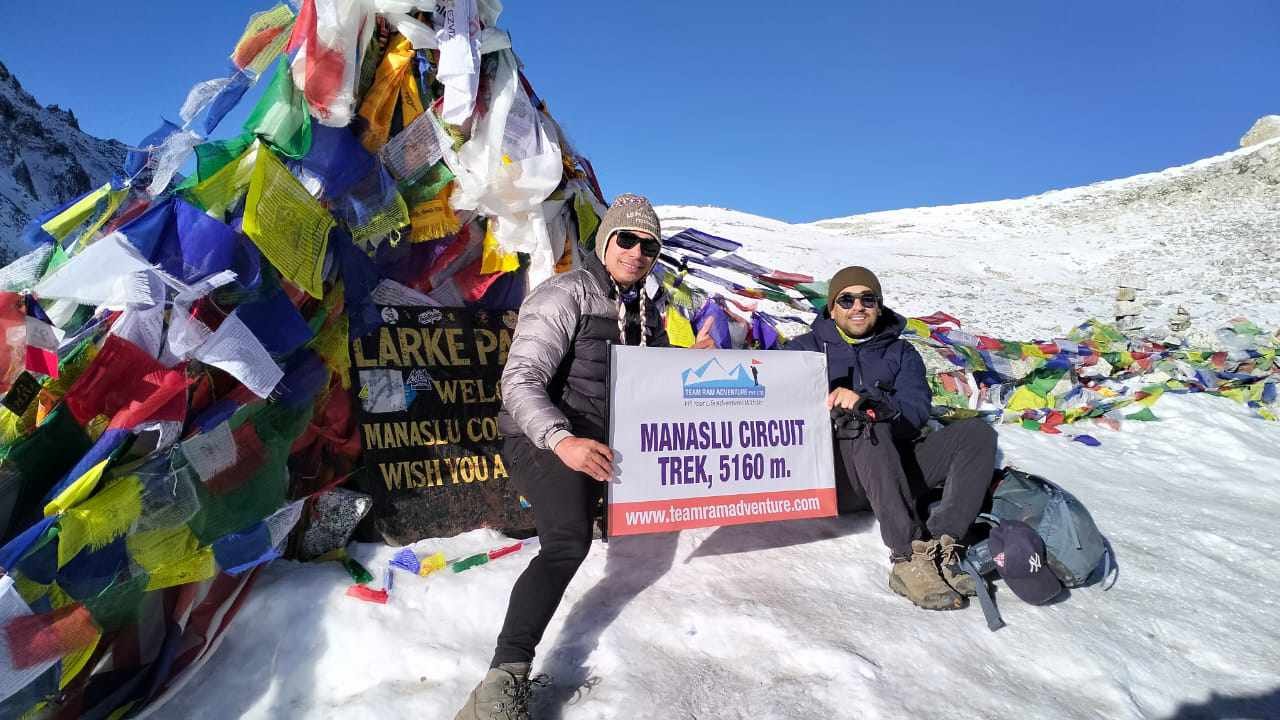
If there's one day trekkers ask us most about, it's pass day. The push from Dharamsala (also called Larkya Phedi, ~4,450 m) over Larkya La (5,106 m) and down to Bimthang (3,720 m) is long — often 8–9 hours — starting well before sunrise to beat the afternoon winds.
The descent from the pass is steep and can be hard on the knees, especially if there's fresh snow or ice underfoot. Trekking poles, proper crampons/microspikes, and warm layers are essential here, not optional extras.
Weather and Seasonal Difficulty
Weather in the high Manaslu region is unpredictable and can shift quickly, even within the more stable spring and autumn seasons. A few things to plan around:
- Autumn (September–November) and spring (March–May) are the most reliable seasons, with clearer skies and stable trails
- Winter often closes Larkya La entirely due to heavy snow
- Monsoon (June–August) brings landslide risk in the lower valley and limited mountain visibility
- Afternoon winds pick up significantly near the pass and around Samagaon side-trips, so early starts are strongly recommended
How Manaslu Compares to Other Treks
A question we get constantly — here's the honest comparison:
- Vs. Annapurna Circuit: Manaslu is more remote, has fewer teahouses, and requires special permits, making logistics tougher, even though the walking difficulty is fairly similar
- Vs. Everest Base Camp: EBC reaches a higher altitude, but Manaslu's terrain and longer daily distances make it feel more physically tiring overall
- Vs. Everest Three Passes / Dhaulagiri Circuit: Manaslu is comparatively easier — those routes involve more technical high-pass terrain
How to Prepare: Team Ram Adventure's Tips
- Train 6–8 weeks ahead with cardio (hiking, stair climbing, jogging) and light strength work for your legs and core
- Choose a 15–16 day itinerary with built-in acclimatization days rather than a rushed schedule
- Pack for cold and ice: down jacket, thermal layers, crampons/microspikes, trekking poles, and a good sleeping bag rated to at least -15°C
- Hire a porter if you can — it genuinely makes the long days easier and supports the local economy
- Get comprehensive travel insurance that covers high-altitude trekking and helicopter evacuation
- Tell your guide immediately if you feel any AMS symptoms — don't wait it out
- Build in 1–2 buffer days in your schedule in case weather closes the pass temporarily
- Drink 3–4 litres of water daily and eat well, even when appetite drops at altitude
Frequently Asked Questions
1. What is the Manaslu Circuit Trek difficulty level?
The Manaslu Circuit Trek is rated moderately difficult to strenuous. It involves long daily walks, high-altitude terrain up to 5,106 m, and remote, rugged trails — but it's non-technical, meaning no ropes or climbing gear are required.
2. How hard is the Manaslu Circuit Trek compared to other treks?
It's harder than short lower-altitude hikes like Poon Hill, roughly comparable to the Annapurna Circuit, and slightly easier than high-pass routes like the Everest Three Passes Trek. The main challenges are altitude, remoteness, and daily walking distance rather than technical difficulty.
3. Is the Manaslu Circuit Trek suitable for beginners?
Yes, with the right preparation. Beginners with reasonable fitness, a well-paced itinerary, and an experienced guide complete the trek successfully every season. It's not recommended as your very first multi-day trek, but prior Himalayan experience isn't mandatory.
4. How difficult is Larkya La Pass on the Manaslu Circuit?
Larkya La Pass (5,106 m) is the most physically demanding day of the trek. Expect an 8–9 hour push starting before sunrise, icy and rocky terrain, thinning air, and a steep, knee-testing descent to Bimthang.
5. How serious is altitude sickness risk on the Manaslu Circuit Trek?
It's the biggest risk on this trek, since the route climbs from under 1,000 m to over 5,000 m. Proper acclimatization days around Samagaon, slow ascent rates, and monitoring symptoms closely reduce the risk significantly.
6. What preparation is needed for the Manaslu Circuit Trek?
Solid cardio training 6–8 weeks beforehand, a 15–16 day itinerary with acclimatization days built in, proper cold-weather and traction gear, comprehensive travel insurance, and trekking with a licensed guide are all essential preparation steps.
7. What fitness level is required for the Manaslu Circuit Trek?
You should be comfortable walking 5–7 hours a day over multiple consecutive days. Regular cardio and leg-strengthening exercise in the weeks before departure makes a noticeable difference, especially on the longer 15–18 km days.
8. What is the best time for the Manaslu Circuit Trek?
Autumn (September–November) and spring (March–May) are the best seasons, offering the most stable weather and clearest mountain views. Winter often closes Larkya La due to snow, and monsoon brings landslide risk in the lower valley.
9. What is the highest point of the Manaslu Circuit Trek?
Larkya La Pass at 5,106 m is the highest point and the toughest single day of the trek.
Ready to take on the Manaslu Circuit with an experienced team that knows the trail inside out? Contact Team Ram Adventure to plan your itinerary, permits, accommodation, and ideal departure dates for an unforgettable Manaslu adventure.
Ready to trek in the Himalayas?
Get itinerary guidance and local support from the Team Ram Adventure specialists.