 Plan Your Trip Now
In This Guide
Most Himalayan treks ask you to choose between spectacular scenery and solitude. The Manaslu Circuit with the Larke La Pass crossing gives you both. The trail loops around Mount Manaslu (8,163 m), the eighth-highest mountain on Earth. It climbs from subtropical river gorges to the windswept alpine world of Samagaun and Samdo, then crosses a 5,000 m+ pass into the Annapurna region.
The route stays far quieter than Everest or Annapurna, even in peak season. Villages still follow Tibetan-influenced traditions, the suspension bridges span deep glacial gorges, and the Larke La crossing gives the trek a real sense of achievement.
This guide covers what you need to plan the trek: the day-by-day itinerary, permits and costs, honest difficulty ratings, altitude advice, the best time to go, and packing and preparation tips. If you would like a ready-made, fully supported version, you can view our 14-day Manaslu Larke Pass Trek with dates, inclusions and pricing.
Manaslu Larke La Pass Trek at a Glance
| Detail | Information |
|---|---|
| Region | Manaslu Region, Gorkha, Nepal |
| Duration | 14 days (Kathmandu to Kathmandu) |
| Trek type | Teahouse trek, circuit |
| Difficulty | Moderate to strenuous |
| Highest point | Larke La Pass, approx. 5,135 m |
| Trek start / end | Soti Khola / Dharapani |
| Best seasons | March–May and September–November |
| Group size | Minimum 2 trekkers (permit requirement) |
| Guide | Licensed guide mandatory |
| Accommodation | Teahouses / lodges |
Note: sources quote the pass height anywhere from about 5,106 m to 5,160 m, depending on the survey and GPS device. Whichever figure you see, plan for a crossing above 5,100 m.
Why Trek the Manaslu Circuit with Larke La Pass?
Remote, authentic Himalayan trekking. The Manaslu Restricted Area lets only a limited number of trekkers in each year. You will often share the trail with mule trains, monks and schoolchildren rather than crowds.
A complete change of landscape. In two weeks you walk from terraced millet fields and bamboo forest, through rhododendron and pine, up to glacial moraine and high alpine terrain. You finish in the apple country of the Marsyangdi Valley.
Tibetan-influenced culture. Above Namrung, the villages are full of mani walls, prayer wheels, chortens and monasteries. Samagaun and Samdo sit close to the Tibetan border and preserve traditions that have changed little for generations.
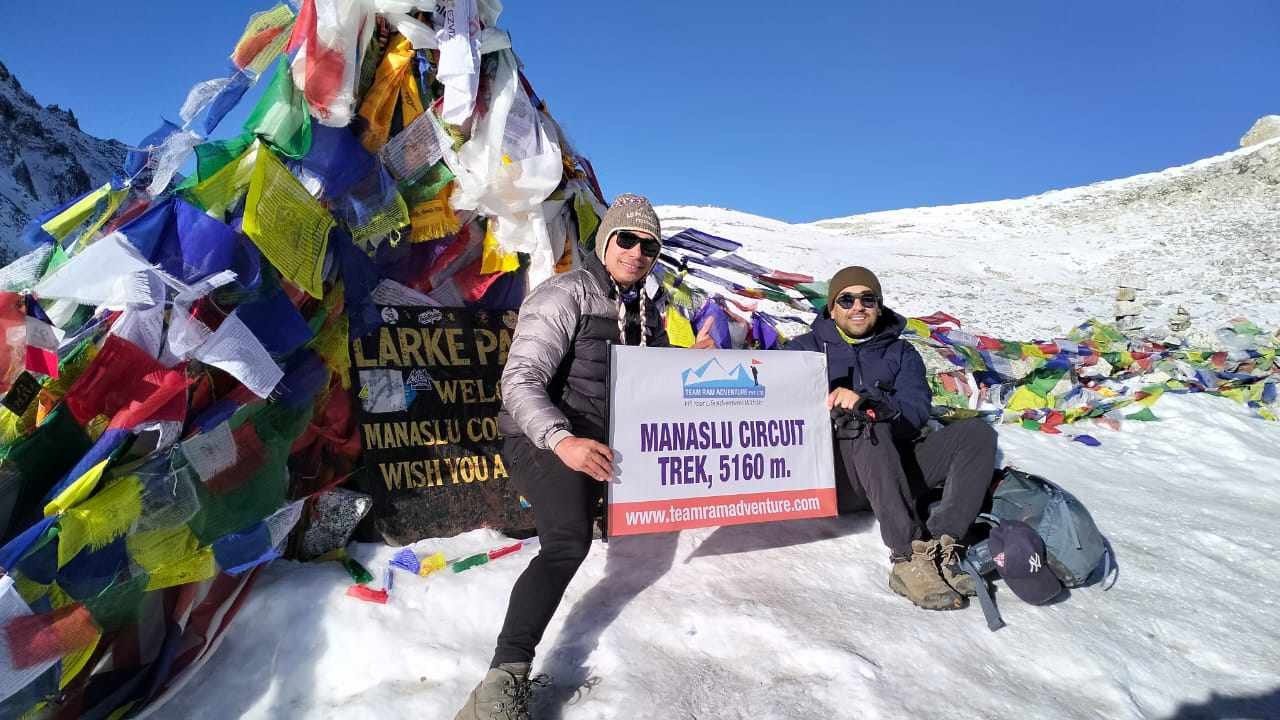
A proper pass crossing. The Larke La is a long and demanding day. It rewards you with panoramic views of Himlung Himal, Cheo Himal, Kang Guru and the Annapurna range, and a long descent to the meadows of Bimthang.
14-Day Manaslu Larke La Pass Itinerary
The standard itinerary below is designed for good acclimatization with one dedicated rest day. It can be adjusted to your pace and schedule.
Day 1: Kathmandu to Soti Khola (≈710 m) — 7–9 hours by road
You leave Kathmandu early by private jeep. The road winds through Dhading and Arughat, following the Budhi Gandaki River. The last section is rough and bumpy, but the scenery is a good introduction to Nepal's hills. You overnight at Soti Khola, beside the river.
Day 2: Soti Khola to Machha Khola (≈900 m) — 6–7 hours
The trail follows the river through sal forest, terraced fields and small waterfalls. There are a few short ascents and descents along the gorge. Machha Khola is a small village and a good first taste of the trail rhythm.
Day 3: Machha Khola to Jagat (≈1,340 m) — 6–7 hours
You cross suspension bridges, pass the hot springs at Tatopani, and climb over a ridge before reaching Jagat. This is the formal checkpoint for the restricted area, so your guide will register your permits here.
Day 4: Jagat to Deng (≈1,860 m) — 6–7 hours
The valley narrows and the forests thicken. You pass through Philim and Ekle Bhatti, and the gorge becomes steeper and wilder. Tibetan influence starts to show in the architecture and the faces you meet.
Day 5: Deng to Namrung (≈2,630 m) — 6–7 hours
You cross the river several times and climb through bamboo and rhododendron forest, past the village of Ghap. Namrung offers your first real views of high peaks, with Ganesh Himal visible in the distance.
Day 6: Namrung to Samagaun (≈3,530 m) — 6–7 hours
The landscape opens up as you pass Lihi, Sho and Lho, and Manaslu itself finally comes into view. You end the day in Samagaun, the largest village in the upper valley and a base for exploring the mountain.
Day 7: Acclimatization Day at Samagaun (≈3,530 m)
A rest day is essential, not optional. Most trekkers choose one of these short hikes, always following the "climb high, sleep low" rule:
- Birendra Lake: a gentle hike to a glacial lake beneath the mountain.
- Pungyen Gompa: a monastery on the slopes above the village, with big views.
- Manaslu Base Camp: a longer, more strenuous day hike for those who feel strong.
Day 8: Samagaun to Samdo (≈3,860 m) — 4–5 hours
A short day. You pass the Manaslu glacier viewpoints and cross the Budhi Gandaki on your way to Samdo, a Tibetan-style village of stone houses, just a few hours from the Tibetan border.
Day 9: Samdo to Dharmasala / Larke Phedi (≈4,460 m) — 4–5 hours
You climb steadily along a moraine, then cross a wooden bridge to reach Dharmasala, a small stone lodge at the foot of the pass. This is a cold, high-altitude night. Eat well, drink lots of fluids and go to bed early.
Day 10: Dharmasala to Bimthang via Larke La Pass (5,135 m / 3,720 m) — 8–9 hours
This is the big day. You leave before dawn, usually between 3:00 and 5:00 a.m., with headlamps and warm layers. The climb crosses a rocky moraine and the trail is often steep and icy. From the top, the mountain views are outstanding. The descent to Bimthang is long and hard on the knees, so trekking poles help. Bimthang's meadows feel like a reward.
Day 11: Bimthang to Tilije (≈2,300 m) — 6–7 hours
You descend through rhododendron forest, cross the Dudh Khola, and pass Gho before reaching Tilije. The terrain is much warmer, and the air feels thicker after days at altitude.
Day 12: Tilije to Dharapani (≈1,960 m) — 5–6 hours
A gentler day, mostly downhill through villages and fields. Dharapani sits on the Annapurna Circuit, so you will start meeting different kinds of trekkers here.
Day 13: Dharapani to Kathmandu — 8–9 hours by road
You take a jeep back to Kathmandu via Besisahar. It is a long drive, but you see the full range of Nepal's midhills on the way.
Day 14: Departure
Transfer to the airport for your onward flight, or extend your stay with sightseeing, a Pokhara stop or another trek.
Note on itinerary length: this schedule includes one acclimatization day. If you are concerned about altitude, or want a more relaxed pace, a 15–16 day version with an extra night at Samdo or a shorter day 9 is worth considering.
Manaslu Larke La Trek Permits
The Manaslu region is a restricted area, so you cannot simply turn up and walk. You need the following permits:
- Manaslu Restricted Area Permit (RAP): required for the section between Jagat and Dharapani.
- Manaslu Conservation Area Permit (MCAP): covers entry to the conservation area.
- Annapurna Conservation Area Permit (ACAP): required because the trail exits through the Annapurna Conservation Area after Larke La.
Manaslu Larke La Pass Trek Permit Costs
The Restricted Area Permit costs USD 100 per person for the first 7 days in September–November, plus USD 15 for each extra day. From December to August it costs USD 75 for the first 7 days, plus USD 10 for each extra day. The MCAP and ACAP are each NPR 3,000 per foreign trekker, and the price is the same all year.
For a typical 14-day itinerary, this works out to a rough total of USD 150–210 per person in permits, depending on the season and how many days fall inside the restricted area. Small local fees may also apply on the trail, and your guide will handle these.
Key Permit Rules
- A licensed guide is mandatory. The Restricted Area Permit cannot be obtained independently; a registered Nepali trekking agency must apply for it on your behalf.
- Minimum two trekkers. The Restricted Area Permit requires at least two trekkers, so solo travelers need to join another trekker or a group.
- TIMS card. As of 2026, a TIMS card is generally not required for the Manaslu Circuit; the core permits are the RAP, MCAP and ACAP. Your operator will confirm exactly what is needed for your dates.
- Documents you need. A passport with at least six months of validity, passport-sized photos and a copy of your travel insurance.
Fees and rules change from time to time, so always confirm current figures with your operator or an official source such as the Nepal Tourism Board before you travel. When you book through Team Ram Adventure, we arrange every permit as part of the package.
How Difficult Is the Manaslu Larke La Pass Trek?
We rate this trek moderate to strenuous. It is not technical, and you do not need climbing skills or ropes. But it is a demanding trek for four reasons:
- Altitude. You sleep above 4,000 m for several nights and cross a pass above 5,100 m.
- Long days. Many walking days run 6–7 hours, and pass day can reach 8–9 hours.
- Remote terrain. Facilities are basic above Samagaun, and rescue takes longer than on busier routes.
- Cold. Pre-dawn temperatures on the pass can drop to around –10°C to –15°C.
Who Is This Trek For?
It suits reasonably fit hikers who enjoy multi-day walking and are comfortable with basic accommodation. Previous high-altitude experience helps but is not essential. Good fitness, a positive mindset and a sensible pace matter more than speed.
Training Tips
- Do cardio 3–4 times a week (running, cycling, swimming or stair climbing) for at least 8–12 weeks before your trek.
- Add hiking with a loaded daypack, ideally on hills, to prepare your legs and lungs.
- Include strength work for legs and core, especially for the long descents.
- Break in your boots well before the trek to avoid blisters.
Altitude Sickness and Acclimatization
Acute mountain sickness (AMS) is the main safety issue on this route. Anyone can be affected, regardless of fitness or age.
Common early symptoms: headache, nausea, loss of appetite, dizziness, poor sleep and unusual fatigue.
Serious warning signs: worsening headache, confusion, loss of balance, shortness of breath at rest or a persistent wet cough. These require immediate descent and medical attention.
How to reduce the risk:
- Ascend gradually and respect the rest day at Samagaun.
- Walk slowly and steadily. The trek is not a race.
- Drink 3–4 liters of water a day.
- Avoid alcohol at altitude.
- Tell your guide about any symptoms early, and never ignore them.
- Discuss preventive medication with your doctor before you leave.
- Buy travel insurance that covers trekking to 5,500 m or higher, with emergency helicopter evacuation.
On pass day, weather and group condition decide everything. A good guide will delay or turn back if conditions are unsafe. Always listen to that decision.
Best Season for the Manaslu Larke La Pass Trek
Autumn (September–November): Best Overall
Autumn brings clear skies, stable weather, excellent visibility and comfortable daytime temperatures. The post-monsoon landscape is lush and the trails are in good condition. October is generally considered the best month. It is also the busiest, so book early, especially if you want a specific departure date.
Spring (March–May): Best for Flowers
Spring brings warm weather, blooming rhododendrons and long views. Afternoon clouds are more common than in autumn, but the forest colors are spectacular. April and early May are especially popular.
Winter (December–February): Challenging
Winter temperatures are very low at altitude, and snow can close the Larke La Pass. Only experienced trekkers with proper gear should consider it, and many lodges above Samagaun close.
Monsoon (June–August): Not Recommended
Heavy rain causes slippery trails, landslides, leeches at lower altitudes and poor mountain views. The lower valley can be especially difficult.
Cost and What Is Included
Prices vary by operator, group size and season. For our 14-day Manaslu Larke Pass Trek, packages are priced from around US$1,199 per person at the time of writing. Check the current price and departures before you plan, as offers change.
Typically included:
- Airport pickups and drops by private vehicle
- All required trekking permits, including the restricted area permit
- Private transport to Soti Khola and back from Dharapani
- Two nights in a Kathmandu hotel with breakfast
- Licensed trekking guide and porter (wages, food, lodging, insurance)
- Teahouse accommodation during the trek
- Breakfast, lunch and dinner during the trek
- Seasonal fruit after dinner
- All government taxes and service charges
- Farewell dinner in Kathmandu
Typically not included:
- International flights and Nepal entry visa
- Personal travel insurance (must cover trekking and evacuation)
- Meals in Kathmandu beyond those listed
- Hot showers, boiled water, Wi-Fi and device charging
- Personal gear, drinks, snacks and souvenirs
- Tips for guide and porter
Accommodation, Food and Connectivity
Accommodation. Teahouses are simple, friendly and clean, usually with twin-share rooms and shared bathrooms. Lower down, lodges are better equipped. Above Samagaun, rooms are basic, unheated and cold at night. Bring a four-season sleeping bag.
Food. Dal bhat (lentils, rice and vegetables) is the staple, and refills are usually free. Menus also include noodles, soups, pasta, eggs, potatoes, pancakes, Tibetan bread and momos. Vegetarian food is widely available, and the trail is a good place to stick to it, because meat is less fresh at altitude.
Water. Refill from taps or boiled water and treat it with tablets or a filter. Avoid buying plastic bottles wherever you can.
Electricity and connectivity. Charging costs extra and gets more limited with altitude. Mobile signal and Wi-Fi are patchy, especially near Dharmasala and the pass, so treat this as a digital detox.
What to Pack for Manaslu Larke La Pass Trek
- Layers: thermal base layers, fleece, waterproof shell jacket and trousers, and a warm down jacket
- Footwear: broken-in waterproof hiking boots, camp shoes, and warm wool socks
- Head and hands: warm hat, sun hat, sunglasses with UV protection, and gloves or mittens (a lighter pair plus a warm pair)
- Sleeping bag rated for around –10°C or lower
- Headlamp with spare batteries, essential for the pre-dawn pass start
- Trekking poles, which really help on the long descent to Bimthang
- Daypack of around 25–30 liters, plus a duffel for the porter
- First-aid kit, blister care, personal medication and water purification
- Sunscreen and lip balm with high SPF
- Microspikes or gaiters if you trek in early spring or late autumn, when snow on the pass is likely
You can rent or buy most gear in Thamel, Kathmandu, if you prefer to pack light.
Practical Tips for a Smooth Trek
- Book early. Permits are limited and autumn departures fill quickly.
- Build in a buffer day. Weather at Larke La can delay crossing, and an extra day gives you a safety margin. Avoid tight flight connections right after the trek.
- Carry cash. Bring Nepali rupees for drinks, showers, charging, donations at monasteries and tips. Cards and ATMs are not available on the trail.
- Respect local culture. Walk clockwise around mani walls and chortens, ask before photographing people, and dress modestly in villages.
- Trek responsibly. Carry out your waste, avoid single-use plastic and choose lodges that support local communities.
- Tip your crew. Guides and porters work hard at altitude, and tips are an important part of their income.
Frequently Asked Questions
1. How difficult is the Manaslu Larke La Pass Trek?
The trek is rated moderate to strenuous. It is not technical, so you don't need climbing skills or ropes. The difficulty comes from altitude (several nights above 4,000 m and a pass crossing above 5,100 m), long walking days of 6-7 hours, cold mornings and remote terrain. Pass day is the hardest, at about 8-9 hours, starting well before sunrise. With good preparation and a steady pace, most reasonably fit hikers can complete it.
2. How many days does the trek take?
The trek takes 12-16 days depending on pace and acclimatization. Our standard itinerary is 14 days from Kathmandu to Kathmandu. It starts with a drive to Soti Khola, includes a rest day at Samagaun, crosses Larke La on Day 10, and ends with the drive back from Dharapani. If you want a more relaxed pace, an extra acclimatization night at Samdo is a good option. See the full Manaslu Larke Pass Trek itinerary.
3. What is the best time to do the Manaslu Larke La Pass Trek?
The best seasons are autumn (September to November) and spring (March to May). Autumn brings clear skies, stable weather and the best mountain views. Spring brings warm weather and blooming rhododendrons. Winter is very cold, and snow can close the pass. The monsoon (June to August) brings slippery trails, landslides and poor visibility, so it is not recommended.
4. What permits do I need, and how much do they cost?
You need three permits: the Manaslu Restricted Area Permit (RAP), the Manaslu Conservation Area Permit (MCAP) and the Annapurna Conservation Area Permit (ACAP). The RAP costs USD 100 per person for the first 7 days from September to November, plus USD 15 per extra day, or USD 75 for the first 7 days from December to August, plus USD 10 per extra day. The MCAP and ACAP are each NPR 3,000 per foreign trekker. Fees change from time to time, so confirm current rates when you book. If you book with Team Ram Adventure, we arrange all the permits for you.
5. Do I need a guide, and can I trek solo?
Yes, a licensed guide is mandatory, and you must book through a registered Nepali trekking agency. The restricted area permit needs a minimum of two trekkers, so solo travelers have to join another trekker or a group organized by an agency. Your guide also handles checkpoints, safety, acclimatization decisions and pass-day judgment calls.
6. How serious is altitude sickness on this trek?
It is the main health risk on the route. Anyone can be affected, regardless of age or fitness. You reduce the risk with a gradual ascent, the rest day at Samagaun, 3-4 liters of water a day, no alcohol and a slow, steady pace. Report symptoms such as headache, nausea, dizziness or unusual fatigue to your guide early. Worsening symptoms, confusion, loss of balance or breathlessness at rest mean you must descend immediately. Consult your doctor about preventive medication before you go.
7. How cold does it get, and what if the pass is closed?
Nights above 4,000 m are well below freezing, and temperatures on pass morning can drop to around -10°C to -15°C. Pack a warm down jacket, a sleeping bag rated for low temperatures, thermal layers, gloves and a warm hat. Heavy snow or high winds can delay or block the crossing. Your guide will decide whether it is safe, so build a spare day into your schedule and avoid tight flight connections after the trek.
8. Do I need previous trekking or high-altitude experience?
Previous high-altitude experience is helpful but not essential. What matters more is good physical fitness and a positive mindset. Start training 8-12 weeks ahead with cardio (running, cycling, swimming or stair climbing), hill hikes with a loaded daypack and leg and core strength work. Break in your boots well before the trek.
9. What are the accommodation, food and connectivity like?
You stay in teahouses and lodges with simple twin-share rooms and shared bathrooms. Facilities are better in the lower valley and very basic above Samagaun, where rooms are unheated. Meals include dal bhat, noodles, soup, pasta, eggs, potatoes, pancakes, Tibetan bread and momos, and vegetarian options are widely available. Treat or filter all drinking water. Hot showers, charging and Wi-Fi cost extra and become limited or unreliable at higher altitudes, especially near Dharmasala and the pass.
10. How much does the trek cost, and what is included?
Our 14-day Manaslu Larke Pass Trek is priced from around US$1,199 per person at the time of writing. Check the current price and departure dates before you plan. The price typically includes:
- Airport transfers and private transport to Soti Khola and back from Dharapani
- All required permits, including the restricted area permit
- Two nights in a Kathmandu hotel with breakfast
- Licensed guide and porter (wages, food, lodging, insurance)
- Teahouse accommodation and three meals a day on the trek
- Seasonal fruit after dinner, all taxes and a farewell dinner
It does not include international flights, your Nepal visa, personal travel insurance (which must cover trekking and helicopter evacuation), drinks and snacks, hot showers, charging, Wi-Fi, personal gear or tips for your guide and porter.
Final Thoughts
The Manaslu Larke La Pass Trek combines remote scenery, living culture and a satisfying high-pass crossing without the crowds found elsewhere in Nepal. It asks for good preparation, respect for altitude and a flexible attitude, but the payoff is one of the best trekking experiences in the Himalayas.
If you are ready to start planning, explore the full Manaslu Larke Pass Trek itinerary, dates and pricing, or send us your questions and we will help you choose the right season, pace and extras for your trip.
Ready to trek in the Himalayas?
Get itinerary guidance and local support from the Team Ram Adventure specialists.