 Plan Your Trip Now
In This Guide
Rising like a canvas tent pitched at the heart of the Annapurna Sanctuary, Tharpu Chuli — better known to climbers as Tent Peak (5,663m) — is one of Nepal's most rewarding introductory climbing peaks. It sits inside the same dramatic amphitheatre as Annapurna I, Machhapuchhre, and Hiunchuli, offering a genuine mountaineering experience without the extreme technical demands of an 8,000-meter expedition.
The peak earns its name honestly — from a distance, its sharp, triangular silhouette really does resemble a tent pitched among giants. But don't let the modest elevation fool you. Tharpu Chuli is a real climb, not just a high walk. It demands crampons, an ice axe, a rope, and the judgment to move confidently across glaciated terrain and a narrowing summit ridge. What sets it apart from Nepal's other 6,000-meter-plus objectives is how it packages that experience: a moderate technical grade, a well-established route, and an approach trek that many climbers have already walked in part — the classic trail to Annapurna Base Camp.
That overlap is precisely what makes Tharpu Chuli such a natural next step. The route follows the same trail used by thousands of trekkers every year — through the terraced hillsides above Pokhara, the rhododendron and bamboo forests of the lower Modi Khola valley, and the close-knit Gurung villages of Ghandruk and Chhomrong — before quietly branching away from the trekking crowds and climbing into genuine mountaineering territory above Annapurna Base Camp. By the time climbers reach Tharpu Chuli Base Camp and High Camp, they've already spent more than a week acclimatizing on a trail that is, by Himalayan standards, remarkably gentle.
For trekkers who've completed Annapurna Base Camp and are ready to take the next step into peak climbing, Tharpu Chuli is often described as the perfect first summit. It offers everything a climber needs to test their readiness for higher, harder objectives — glacier travel, fixed-rope sections, altitude above 5,500m, and the discipline of a structured summit push — while remaining well within reach of a fit, well-prepared beginner climbing under experienced guidance. It's no surprise that many climbers use Tharpu Chuli as a stepping stone toward bigger trekking peaks like Island Peak or Mera Peak, or even future expeditions in the Everest and Manaslu regions.
This guide breaks down everything you need to know before booking: the difficulty rating and what it actually means on the mountain, a full day-by-day route description, required permits, the best climbing seasons, and essential preparation and packing tips. Full trip details and confirmed departure dates are available through Team Ram Adventure's Tent Peak Climbing page.
Why Climb Tharpu Chuli (Tent Peak)?
- A true summit experience — snow, ice, and a ridge climb, not just a high trek
- Spectacular 360° views from the top: Annapurna I (8,091m), Annapurna III (7,555m), Annapurna South (7,219m), Gangapurna (7,455m), Hiunchuli (6,441m), and Machhapuchhre (6,993m)
- Located inside the Annapurna Sanctuary, so the approach follows the classic ABC trekking trail through Gurung villages, bamboo forest, and Jhinu hot springs
- A manageable introduction to mountaineering — lower and technically easier than neighboring peaks like Singu Chuli and Hiunchuli
- No prior climbing certification required, though fitness and basic snow/ice movement skills matter
Route Overview
The climb to Tharpu Chuli follows the same trail as the Annapurna Base Camp trek for most of its length before branching off toward the peak itself.
Approach: Kathmandu → Pokhara → Nayapul → Ghandruk/Ghorepani → Chomrong → Bamboo/Dovan → Machhapuchhre Base Camp (MBC, ~3,700m) → Annapurna Base Camp (ABC, ~4,130m)
Climbing section: From ABC, the route follows the glacial moraine toward Tharpu Chuli Base Camp, then continues to a High Camp at roughly 5,000m. From High Camp, the route crosses the glacier and climbs a snow slope of around 40° to gain the northwest ridge — broad at first, narrowing to a knife-edge for the final stretch to the summit.
Descent: Climbers retrace the route back through MBC, Bamboo, and Jhinu Danda — a welcome stop for natural hot springs — before returning to Chomrong and Pokhara.
Tharpu Chuli Climbing Itinerary (17 Days)
| Day | Route | Altitude |
|---|---|---|
| Day 1 | Drive from Kathmandu to Pokhara | 820 m |
| Day 2 | Drive from Pokhara to Nayapul, trek to Hille | 1,495 m |
| Day 3 | Trek from Tikhedhunga to Ulleri | 2,020 m |
| Day 4 | Trek via Ghorepani, Deurali, Banthanti to Tadapani | 2,630 m |
| Day 5 | Trek to Chhomrong via Chuile (2 hrs, 1,800m) | 2,170 m |
| Day 6 | Trek via Riverside (45 min), Sinuwa (1.5 hrs), Bamboo (2 hrs, 2,310m) to Dovan | 2,600 m |
| Day 7 | Trek via Deurali to Machhapuchhre Base Camp (MBC) | 3,700 m |
| Day 8 | Trek from MBC to Annapurna Base Camp (ABC) | 4,130 m |
| Day 9 | Rest & acclimatization day at Annapurna Base Camp | 4,130 m |
| Day 10 | Trek to Tharpu Chuli Base Camp | ~4,300 m |
| Day 11 | Trek to High Camp | ~5,000 m |
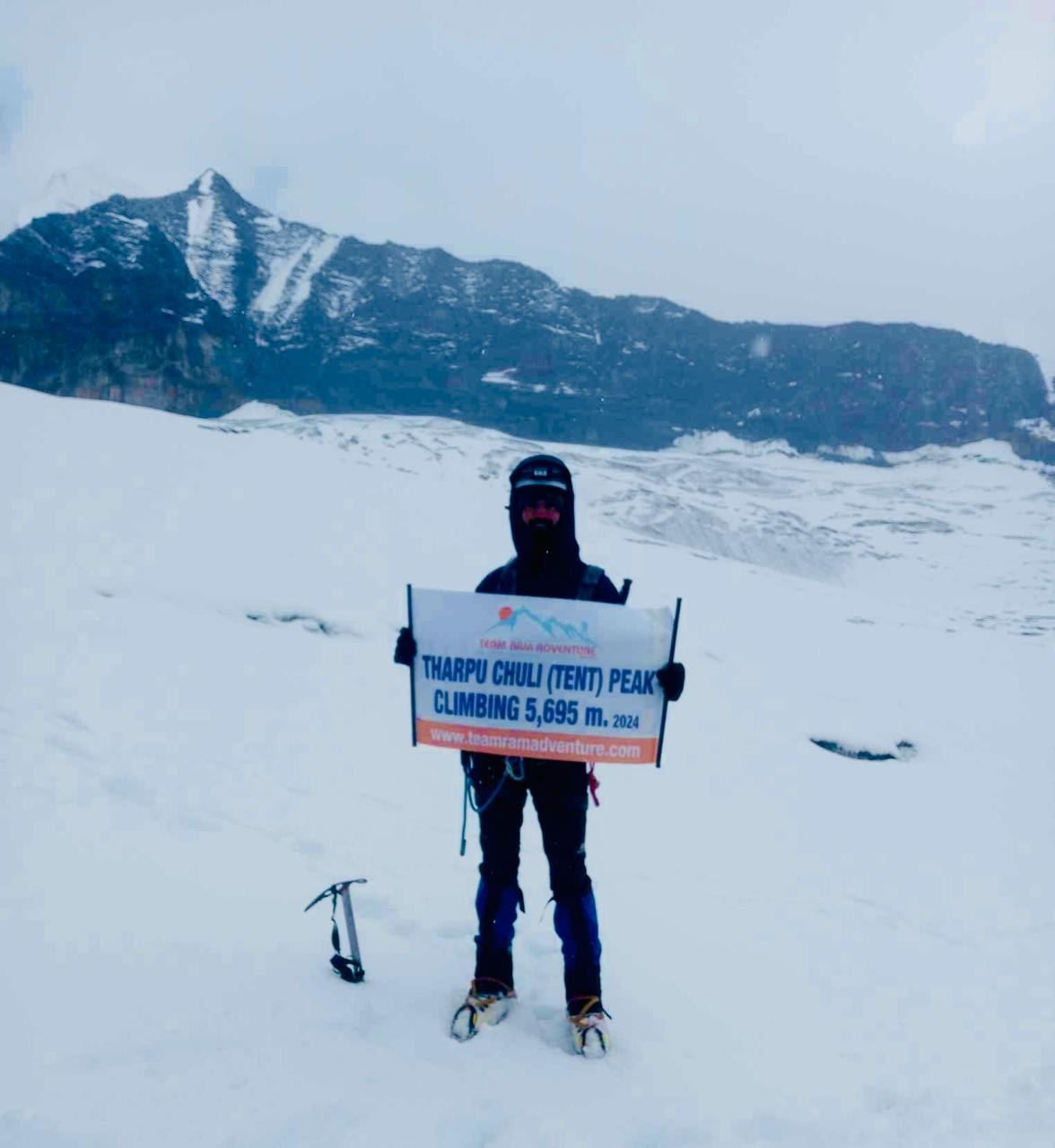
| Day 12 | Summit Tharpu Chuli (Tent Peak) – 5,695 m, return to High Camp | 5,695 m |
| Day 13 | Trek back to Tharpu Chuli Base Camp | ~4,300 m |
| Day 14 | Trek back to Machhapuchhre Base Camp | 3,700 m |
| Day 15 | Trek to Bamboo | 2,310 m |
| Day 16 | Trek out and drive to Pokhara | 820 m |
| Day 17 | Drive or fly from Pokhara to Kathmandu | 1,400 m |
Total Duration: 17 Days
Maximum Altitude: 5,695 m (Tharpu Chuli Summit)
Trek Type: Annapurna Sanctuary approach + technical peak climb
Team Ram Adventure can tailor the itinerary length, acclimatization schedule, and departure season — check the official trip page for confirmed dates.
Tharpu Chuli Climbing Difficulty Level
Tharpu Chuli is officially graded 2C by the Nepal Mountaineering Association, and PD+ (Peu Difficile) under the Swiss/French Alpine grading system — meaning moderate difficulty with some technical sections and glacier travel, but nothing beyond what a well-prepared, fit trekker can manage with a guide.
What makes it moderate-to-challenging:
- A glacier crossing and a 40° snow slope leading to the summit ridge
- A narrow, knife-edge ridge for the final approach to the top
- Summit altitude of 5,663m, with real risk of altitude sickness
- Long summit day (8–10 hours round trip from High Camp)
What makes it accessible:
- No prior mountaineering certification required
- Lower and technically easier than nearby peaks like Hiunchuli and Singu Chuli
- Fixed ropes are typically used on the steeper glacier and ridge sections, led by experienced climbing guides
- A widely used "first trekking peak" for climbers stepping up from treks like Island Peak or Mera Peak
Recommended preparation:
- Prior multi-day trekking experience at altitude (ABC, EBC, or similar)
- Basic use of crampons, an ice axe, and a climbing harness (guides provide a briefing before summit day)
- Strong cardiovascular fitness — training 2–3 months in advance is recommended
- Comfort with exposure and steep snow terrain
Best Season for Tharpu Chuli Climbing
Autumn (September–November) and spring (March–May) are the two recommended climbing windows, offering stable weather, clearer summit views, and safer snow conditions. Winter brings heavy snow and extreme cold at altitude, while the monsoon season (June–August) creates poor visibility and unstable glacier conditions.
Permits Required for Tharpu Chuli Climbing
- Annapurna Conservation Area Permit (ACAP)
- TIMS Card (Trekkers' Information Management System)
- NMA Climbing Permit for Tharpu Chuli (Tent Peak), issued by the Nepal Mountaineering Association since it falls under the "trekking peaks" category
These are typically arranged by your climbing operator as part of the full package.
Essential Packing & Gear Tips
- Technical gear: crampons, ice axe, climbing harness, ascender/jumar, helmet (often provided or rented through the operator)
- Clothing: down jacket, insulated climbing boots, thermal base layers, waterproof shell, glacier glasses
- Sleeping: sleeping bag rated to at least -15°C to -20°C for High Camp nights
- Health: Diamox (consult your doctor), personal first-aid kit, high-SPF sunscreen for glacier glare
- Extras: headlamp with spare batteries (summit push starts before dawn), trekking poles for the approach trek
FAQs About Tharpu Chuli (Tent Peak) Climbing
1. How difficult is Tharpu Chuli Peak climbing?
It's graded 2C by the Nepal Mountaineering Association and PD+ on the Alpine grading scale — moderate difficulty with a glacier crossing and a steep, narrow summit ridge, but manageable for fit trekkers with guide support and no prior technical climbing certification.
2. What is the altitude of Tharpu Chuli (Tent Peak)?
The peak stands at 5,663m (18,579 ft), though some sources list it at 5,695m depending on the survey reference used.
3. Do I need prior climbing experience?
No formal mountaineering certification is required, but prior high-altitude trekking experience (such as Annapurna Base Camp or Everest Base Camp) and good physical fitness are strongly recommended.
4. How long does the Tharpu Chuli climbing trip take?
Most itineraries run 17 to 19 days from Kathmandu to Kathmandu, including the approach trek, acclimatization, the climb, and return. Some operators offer trimmed versions closer to 14 days for experienced climbers.
5. What permits are required for Tent Peak climbing?
You'll need an ACAP permit, a TIMS card, and an NMA trekking peak climbing permit specifically for Tharpu Chuli, all typically arranged by your trekking agency.
6. What is the best season to climb Tharpu Chuli?
Autumn (September–November) and spring (March–May) offer the most stable weather and safest snow conditions for the summit push.
7. Is a guide mandatory for climbing Tharpu Chuli?
While not always legally mandatory like Manaslu's restricted-area rules, a certified climbing guide is strongly required in practice — the summit day includes glacier travel and a technical ridge that should not be attempted without experienced support.
8. What views can I expect from the summit?
On a clear day, the summit offers close-up panoramas of Annapurna I (8,091m), Annapurna III (7,555m), Annapurna South (7,219m), Gangapurna (7,455m), Hiunchuli (6,441m), and Machhapuchhre (6,993m) — a full sweep of the Annapurna Sanctuary.
9. How does Tharpu Chuli compare to Island Peak or Mera Peak?
Tharpu Chuli is generally considered a comparable or slightly gentler introduction to peak climbing, with the added benefit of approaching through the scenic Annapurna Base Camp trail rather than the more remote Khumbu approach used for Island and Mera Peak.
10. What training should I do before attempting this climb?
Focus on cardiovascular endurance (hiking, running, stair climbing) for 2–3 months beforehand, practice hiking with a loaded pack, and if possible, get basic exposure to crampon and ice-axe use before departure — your guide will run a technical briefing at Base Camp regardless.
Final Thoughts
Tharpu Chuli (Tent Peak) occupies a rare sweet spot in Nepal's mountaineering scene: technical enough to feel like a real climb, yet approachable enough for a well-prepared trekker to reach the summit on a first attempt. Standing at 5,663m in the heart of the Annapurna Sanctuary, it rewards climbers with something few peaks can offer at this grade — a genuine glacier crossing, a real ridge to negotiate, and a 360-degree view of some of the world's most iconic 8,000-meter giants, all within a three-week window that doesn't demand a career mountaineer's résumé.
What makes this climb memorable isn't just the summit push itself. It's the full arc of the journey — the terraced hillsides and rhododendron forests on the walk in, the warmth of Gurung villages like Chomrong and Ghandruk, the quiet discipline of the acclimatization days at ABC and Base Camp, and finally the reward of Jhinu Danda's hot springs easing tired legs on the way back down. The mountain asks for respect, not perfection: solid fitness, patience with the acclimatization schedule, and a willingness to trust your guide on the exposed sections near the top.
For climbers weighing where to take their first real step beyond trekking, Tharpu Chuli is one of the most honest introductions available in the Himalaya — hard enough to earn the summit photo, safe enough with proper guidance to make that achievement realistic rather than reckless. Whether you're a seasoned Annapurna Base Camp veteran looking for the next challenge or a strong hiker curious about what peak climbing actually feels like, this is a mountain that delivers on its promise.
If you're ready to plan your climb, Team Ram Adventure can walk you through permits, gear, seasonal timing, and a route built around your fitness and experience. Explore the full itinerary and current departures here: https://www.teamramadventure.com/trip/tent-peak-climbing
Ready to trek in the Himalayas?
Get itinerary guidance and local support from the Team Ram Adventure specialists.