 Plan Your Trip Now
In This Guide
If you're weighing when to walk the Manaslu Circuit, October settles the question quickly. It sits right in the heart of Nepal's autumn season, after the monsoon clouds have cleared and before the deep winter cold sets in on Larkya La. For many guides and repeat trekkers, it's simply the best month on the calendar for this route.
Here's what to actually expect from the weather, the trail, and the logistics if you're planning a Manaslu Circuit Trek in October.
Why October Is Considered Peak Season
The monsoon rains taper off by late September, and October opens with washed-clean skies, dry trails, and unusually stable high-pressure weather systems sitting over the region. Unlike September, which is still a transition month, October tends to deliver consistent conditions from the first week to the last.
That stability is the whole appeal: clearer mountain views, safer river crossings, drier trails underfoot, and a much more predictable Larkya La Pass crossing than you'd get in spring or the shoulder months.
October also happens to coincide with Nepal's two biggest festivals, Dashain and Tihar, so villages along the trail often have a festive, lived-in energy that you won't see at other times of year.
Weather and Temperatures Along the Route
Temperatures vary a lot depending on elevation and where in October you're walking:
Skies are at their clearest this month. The monsoon's moisture is gone, so you get consistently sunny days, minimal rainfall, and long stretches of unobstructed mountain views — a real advantage on a trek where cloud cover can hide the payoff. Daytime temperatures in the lower valleys (Soti Khola to Deng) stay mild, generally in the 15–20°C range, while higher up toward Samagaon and Samdo they drop noticeably, especially once the sun dips. Nights are cold throughout, and by the time you're approaching Larkya La (5,106m), sub-zero temperatures are the norm — a proper down jacket, sleeping bag rated for well below freezing, and layered gear are essential.
- Lower elevations (Soti Khola, Machha Khola, Jagat): Daytime temperatures generally sit between 12°C and 20°C, with mild, comfortable nights.
- Mid elevations (Namrung, Samagaon): Daytime highs drop to roughly 5°C–12°C, with noticeably colder nights.
- Larkya La Pass (5,160m) and Dharamsala: This is where October's chill really shows up. Daytime temperatures at the pass typically range from about -2°C to 5°C, while nights at Dharamsala can fall to -8°C to -10°C.
The month itself has a bit of an arc:
- Early October still carries some of September's freshness — mild days, mild nights, and occasional lingering moisture from the tail end of the monsoon.
- Mid-October is generally regarded as the most stable stretch of the whole month: clear skies, comfortable daytime hiking temperatures, and the best mountain visibility of the year, though nights are starting to bite.
- Late October turns noticeably colder, especially at altitude. Morning frost becomes common above roughly 3,500m, and you should be ready for below-freezing nights near the pass.
Rain and snow are unlikely for most of the month, but weather at 5,000m+ is never fully predictable — a warm jacket, good gloves, and proper layering still matter even on a "safe" October crossing.
Trail Conditions
Trail conditions in October are about as favorable as this route gets:
Dry weather means dry, stable trails — less mud, fewer landslide risks, and safer river crossings than you'd face during or right after monsoon season. Visibility on the pass itself is generally excellent, which matters a lot given how exposed and weather-dependent that crossing can be. The flip side is traffic: October is peak season, so you'll share the trail with more trekking groups and porters than you would in spring's shoulder months or the depths of winter.
- Dry, firm trails across most of the circuit, without the mud and landslide risk that lingers into early autumn from monsoon runoff.
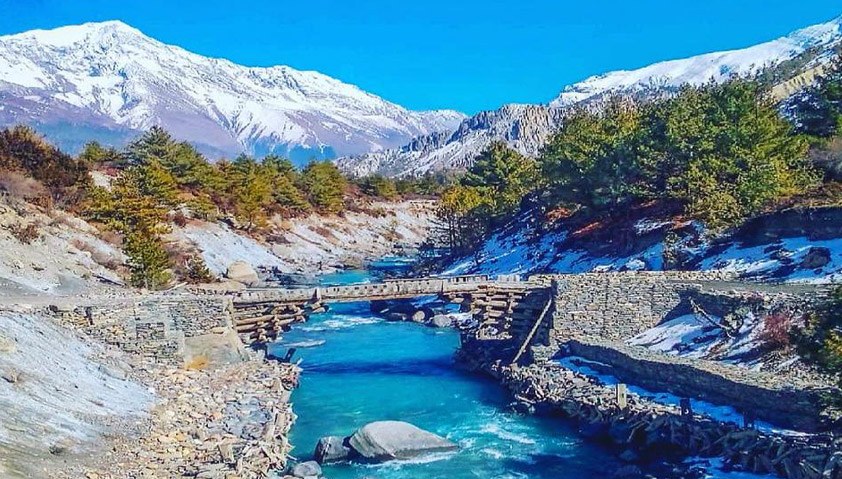
- Larkya La Pass is fully open and in its most stable state of the year — dry underfoot, with good visibility on a morning crossing and panoramic views of Manaslu, Himalchuli, Ngadi Chuli, and the Annapurna range on clear days.
- River crossings and suspension bridges are calmer than in monsoon season, when swollen rivers can make some sections nerve-wracking.
- Late-October risk: an early winter storm can occasionally close Larkya La for a day. It's rare, but experienced operators often recommend building in an extra buffer day for late-October departures, specifically around Samagaon and Dharamsala, so you're not forced to push through in poor conditions.
Permits You'll Need
The Manaslu Circuit runs through a government-restricted area near the Tibetan border, so permits are non-negotiable and can't be arranged independently — a registered, licensed trekking agency has to apply for them on your behalf. As of 2026, you'll need:
- Manaslu Restricted Area Permit (RAP) — covers the section from Jagat to Dharapani, checked at the Jagat and Philim checkpoints. Cost scales with the number of days spent inside the restricted zone and is higher during peak autumn season.
- Manaslu Conservation Area Permit (MCAP) — covers the protected land around the Manaslu massif.
- Annapurna Conservation Area Permit (ACAP) — required because the trail exits into the Annapurna region at Dharapani.
A licensed guide from a registered agency is mandatory throughout, regardless of group size. Note that Nepal's Department of Immigration removed the old two-person minimum for restricted-area permits in March 2026, so solo trekkers can now apply individually — though a licensed guide is still required either way, so independent, unguided trekking on this route remains off the table.
Practical Trekking Tips for October
- Book and arrange permits early. October is peak season, so teahouse space and guide availability tighten up, especially around Dashain and Tihar.
- Layer for a big temperature swing. You'll go from short-sleeve mornings in the lower valleys to sub-zero nights near the pass, sometimes within the same week.
- Prioritize a rest day at Samagaon. Guides consistently flag this as the single most useful acclimatization stop before pushing toward Larkya La.
- Add a buffer day if you're going late in the month. It protects you against a rare early-winter storm closing the pass.
- Aim for an early morning crossing of Larkya La — conditions are calmest and visibility best before midday winds pick up.
- Pack a real cold-weather kit: a proper down jacket, insulated gloves, a warm sleeping bag rated well below freezing, and a headlamp for pre-dawn starts.
Planning the Trek
Given the permit requirements, the restricted-area rules, and the need for a licensed guide, most trekkers go with an established operator who handles logistics end to end. If you're looking at a guided itinerary for this route, Team Ram Adventure runs a Standard Manaslu Circuit Trek that covers the full circuit with permits and guiding arranged as part of the package — worth a look if October is the window you're aiming for.
Manaslu Circuit Trek in October FAQs
1. Is October a good time to trek the Manaslu Circuit?
Yes — October is widely considered the best month for the Manaslu Circuit. The monsoon has cleared, skies are mostly clear, trails are dry and stable, and mountain views are at their sharpest all year.
2. What is the weather like on the Manaslu Circuit in October?
Expect mild daytime temperatures (15–20°C) in the lower valleys and colder conditions as you climb toward Samagaon, Samdo, and Larkya La, where nights drop well below freezing. Rainfall is minimal and skies are generally clear.
3. How cold does it get at Larkya La Pass in October?
Temperatures near Larkya La (5,106m) regularly fall below freezing overnight and in early morning, often into negative double digits with windchill. A warm sleeping bag and proper down layers are essential.
4. Do I need to book permits and teahouses in advance for October?
Yes. October is peak season on the Manaslu Circuit, so teahouses fill up quickly and it's best to arrange your Manaslu Conservation Area Permit (MCAP) and Restricted Area Permit (RAP), along with guides and accommodation, well before your trip.
5. Is the Manaslu Circuit crowded in October?
It's the busiest month of the year for this trek. You'll see more trekking groups and porters on the trail compared to spring or winter, though it's still far quieter than more mainstream routes like Everest Base Camp.
6. What permits are required for the Manaslu Circuit Trek?
Trekkers need the Manaslu Conservation Area Permit (MCAP), the Restricted Area Permit (RAP), and the Annapurna Conservation Area Permit (ACAP), since the route crosses into the Annapurna region near the end. A licensed guide is mandatory for the restricted section.
7. How difficult is the Manaslu Circuit Trek in October?
It's a moderately strenuous trek, with the main challenge being the Larkya La Pass crossing at over 5,100m. Good weather in October makes the pass safer and more predictable, but altitude fitness and acclimatization days are still essential.
8. What should I pack for a Manaslu Circuit Trek in October?
Layered clothing is key: moisture-wicking base layers, insulated mid-layers, a down jacket, waterproof outer shell, a cold-rated sleeping bag, trekking poles, and sturdy waterproof boots for the high-altitude, cold-night conditions.
9. How many days does the Manaslu Circuit Trek take?
Most itineraries run 14–18 days, including acclimatization days at Samagaon and Samdo before the Larkya La crossing, plus buffer days for weather or altitude adjustment.
10. Is October better than spring for the Manaslu Circuit?
Both seasons offer good trekking weather, but October generally has more stable skies, drier trails, and clearer mountain views, while spring adds blooming rhododendrons. October also tends to be busier due to its reputation as peak season.
Final Thoughts
October is Manaslu Circuit season at its finest. The monsoon clouds have cleared out, leaving crisp, dry trails and some of the sharpest mountain views you'll get all year — Manaslu, Himlung, and the peaks along the Nubri and Tsum valleys stand out crystal-clear against blue skies. Villages come alive too, with harvest festivals and post-monsoon energy giving the trek a warmth that's hard to match in quieter months.
The catch is that everyone else knows this too. Teahouses fill up faster, the trail sees more foot traffic, and you'll want to book permits and accommodation ahead rather than winging it. Nights above 4,000m still bite — expect sub-zero temperatures once you're near Larkya La — so solid cold-weather gear isn't optional.
Even so, for most trekkers October is the easiest call on the calendar. You're trading a bit of solitude and some early booking effort for the most dependable weather window the Manaslu Circuit offers — stable skies, safer pass crossings, and views that make the whole three-week trek worth it. If your priority is reliability over quiet trails, October is hard to beat.
Ready to trek in the Himalayas?
Get itinerary guidance and local support from the Team Ram Adventure specialists.