
 Plan Your Trip Now

In This Guide
Makalu (8,485 m) is the fifth-highest mountain in the world. Its pyramid-shaped summit rises above the Barun Valley, one of the wildest and least-visited trekking regions in Nepal. The trek to its base camp passes through rhododendron forests, remote Sherpa and Rai villages, alpine meadows, and glacial moraine, with very few other trekkers.
The remoteness is also what makes this trek demanding. This guide explains how hard the trek is, what the trail is like, and how to prepare. For the full itinerary, inclusions, and departure dates, visit the Makalu Base Camp Trek page.
How Difficult Is the Makalu Base Camp Trek?
The Makalu Base Camp Trek is generally rated moderate to strenuous. Many guides consider it one of the more demanding teahouse-and-camping treks in Nepal, but it does not require technical climbing skills.
Four factors drive the difficulty:
- Duration: Itineraries typically last around 18 to 21 days, so fatigue builds up.
- Remoteness: Services, medical posts, and communication are limited.
- Terrain: Steep ascents, descents, and rough trail sections are frequent.
- Altitude: The trek reaches roughly 4,800 to 5,000 m at base camp.
For fit hikers with some previous multi-day experience, it is challenging but achievable. For first-time trekkers, it is possible with serious preparation and an experienced team, but it is not an easy introduction to the mountains.
| Factor | Rating |
|---|---|
| Overall difficulty | Moderate to strenuous |
| Technical climbing | Not required |
| Remoteness | Very high |
| Crowds | Low |
| Altitude risk | Moderate to high |
Makalu Base Camp Trek Altitude and Elevation
The trek begins at low elevation and climbs steadily. A typical profile looks like this:
- Tumlingtar: about 500 m, the usual starting point after a flight from Kathmandu
- Num or Seduwa: roughly 1,500 m
- Tashigaon: around 2,100 m
- Khongma Danda: about 3,500 m
- Shipton La Pass: roughly 4,100 m
- Yangri Kharka: about 3,600 m
- Langmale Kharka: around 4,400 m
- Makalu Base Camp: about 4,800 to 5,000 m
Exact figures vary by source and route. The notable point is the climb from the lower valleys to above 4,000 m within a short span, which makes acclimatization essential.
Daily Walking Hours and Trail Conditions
You will typically walk 5 to 8 hours per day, with some days longer. Time depends on pace, weather, and trail conditions.
What the trail is like:
- Lower sections: Terraced fields, stone steps, and jungle paths. These can be humid and slippery in wet months.
- Mid-section: Forested ridges, steep climbs, and rough descents. Some days gain or lose over 1,000 m.
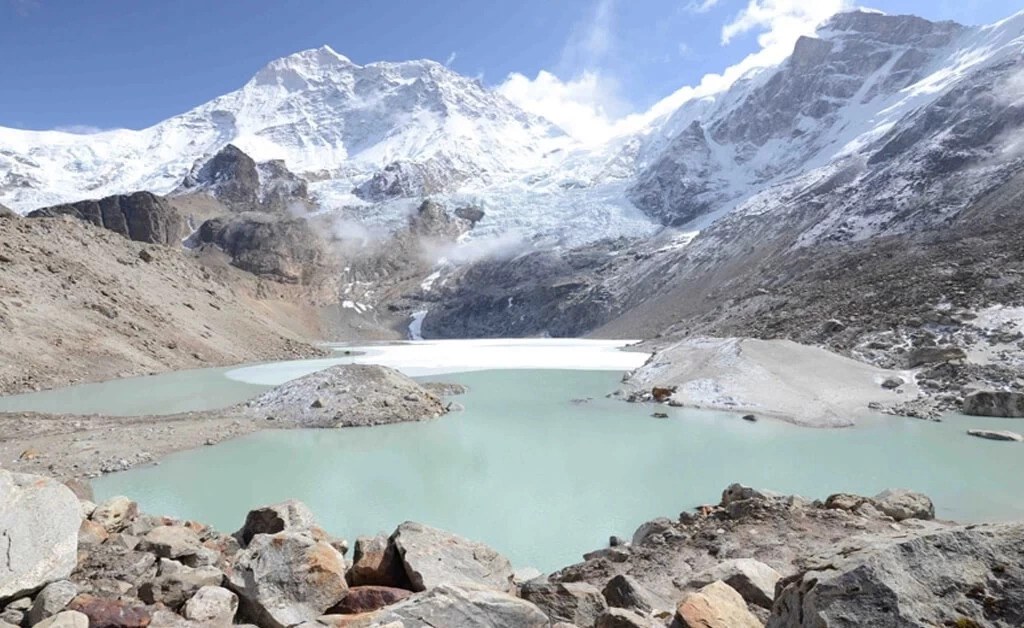
- Upper Barun Valley: Open valleys, rocky ground, and glacial moraine, with big views of Makalu, Lhotse, and Peak 6.
- Passes: The route crosses high ridges, including the Shipton La, which can have snow and wind.
Practical points:
- Suspension bridges are common and can be exposed.
- Water sources are available but should always be treated.
- Landslides can disrupt the route, especially after rain.
- Facilities become simpler and more basic as you climb.
Trails are narrow and less maintained than in Everest or Annapurna. Good boots and trekking poles help considerably.
Major Challenges of the Makalu Base Camp Trek
1. Remote Location
There are few villages, limited lodging, and almost no quick evacuation options in the upper valley. A reliable local team is not optional here.
2. Basic Accommodation
Lower villages have simple teahouses. Higher up, services are limited, and some itineraries use camping or very basic lodges.
3. Weather Variability
Rain, fog, and sudden cold can occur. Trails become slippery during and after storms.
4. Long Daily Distances
Several days are physically demanding because of steep climbs, long descents, and rough footing.
5. Altitude Gain
The upper sections move quickly into thinner air, and symptoms can appear if the pace is too aggressive.
6. Logistics
Travelling to the starting point may involve flights and road transfers that are affected by weather. Allow buffer days in your travel plans.
Altitude Sickness and Acclimatization Tips
Altitude sickness is a serious risk on any trek above 3,000 m. It can affect fit and unfit trekkers alike.
Acclimatization tips:
- Follow an itinerary that includes rest days at higher camps.
- Climb gradually and avoid skipping stages.
- Drink 3 to 4 liters of fluid daily.
- Avoid alcohol and smoking.
- Sleep lower than your highest point when possible.
- Eat well, even if your appetite drops.
- Report symptoms to your guide immediately.
Warning signs:
- Mild: headache, nausea, dizziness, poor sleep
- Serious: confusion, loss of coordination, severe breathlessness, or a wet cough
If serious symptoms appear, descend immediately. Never ascend further with worsening symptoms. Consult a doctor before the trip about altitude medication, and do not use it to mask warning signs.
Fitness and Training Required for the Trek
You do not need to be an athlete, but you do need good cardiovascular fitness and strong legs.
Suggested training plan (8 to 12 weeks):
- Cardio: Running, cycling, or swimming 3 to 4 times weekly
- Strength: Squats, lunges, step-ups, and core work
- Hiking: Weekly hikes with a loaded pack, building to long days
- Back-to-back days: Practice consecutive long hikes to simulate trek fatigue
- Stair training: Climb stairs with a weighted pack for leg endurance
Break in your boots well before departure. Many trekking problems come from blisters and poor footwear rather than fitness.
Is the Makalu Base Camp Trek Suitable for Beginners?
It is not recommended as a first trek. The remoteness, length, and altitude put it in a higher category than shorter, more developed routes.
That said, motivated beginners with strong fitness and realistic expectations can succeed. Consider building experience first on treks such as Poon Hill, Langtang, or Annapurna Base Camp, then moving up to Makalu.
You are better suited to this trek if you:
- Have completed at least one multi-day trek before
- Are comfortable walking 6 to 8 hours daily
- Can handle basic accommodation and limited facilities
- Are mentally prepared for remote conditions
How to Prepare for the Makalu Base Camp Trek
Plan and Book Early
Choose a spring or autumn departure and book ahead. Confirm the itinerary on the trip page.
Permits
You will need entry permits for the Makalu Barun National Park and local area permits. Your trekking company usually arranges them. Confirm current fees before you book.
Travel Insurance
Choose a policy that covers trekking to at least 5,000 m and helicopter evacuation.
Gear Essentials
- Waterproof, broken-in trekking boots
- Layered clothing, including a down jacket
- A sleeping bag rated to at least -10°C
- Trekking poles, headlamp, and sun protection
- A basic first aid kit and water purification
- A waterproof pack cover and dry bags
Best Season
Spring (March to May) and autumn (September to November) offer the most stable weather. Spring adds rhododendron blooms, while autumn brings clear skies. Monsoon and winter bring more difficult conditions.
Health Check
See your doctor before the trek, especially if you have heart, lung, or blood-pressure concerns.
Frequently Asked Questions (FAQs)
1. How hard is the Makalu Base Camp Trek compared to Everest Base Camp?
Makalu is generally considered harder because of its remoteness, rougher trails, limited facilities, and longer duration. The altitude at base camp is similar to Everest Base Camp.
2. What is the highest point on the trek?
Makalu Base Camp, at roughly 4,800 to 5,000 m depending on the source and route.
3. How many hours do I walk each day?
Usually 5 to 8 hours, with a few longer days depending on conditions.
4. Is altitude sickness common on this trek?
It is a real risk. Gradual ascent, hydration, and listening to your body reduce it significantly.
5. Do I need prior trekking experience?
It is strongly recommended. Previous multi-day trekking prepares you for the length and difficulty.
6. Do I need a guide?
Yes. Because the route is remote and permits are required, trekking with a licensed guide and support team is the safe and standard option.
7. What kind of accommodation is available?
Simple teahouses in lower sections and very basic lodges or camping higher up. Expect limited comfort.
8. When is the best time for the trek?
March to May and September to November are the most reliable seasons.
9. Is there mobile network or electricity on the trail?
Coverage is patchy and often absent in the upper valley. Charging options are limited, so carry a power bank or solar charger.
10. What if I get sick or injured?
Your guide will manage first aid and arrange evacuation if needed. Travel insurance with helicopter cover is essential.
Final Thoughts
The Makalu Base Camp Trek is demanding, but the reward is a quiet Himalayan experience far from the crowds, with views of one of the world’s great peaks. Success depends on realistic fitness, gradual acclimatization, solid gear, and an experienced local team.
Ready to take on the challenge? Explore the full itinerary and plan your departure here: Makalu Base Camp Trek.
Ready to trek in the Himalayas?
Get itinerary guidance and local support from the Team Ram Adventure specialists.