 Plan Your Trip Now
In This Guide
Why Makalu Base Camp Feels Different
Part of what sets this trek apart is simply geography. Makalu sits in a more remote pocket of eastern Nepal than Everest or Annapurna, tucked inside Makalu Barun National Park — one of the most biodiverse protected areas in the country, spanning elevations from subtropical river valleys all the way up to permanent snowfields. That elevation range means the trek unfolds almost like several treks in one: you start among terraced fields, rhododendron forests, and small Rai and Sherpa villages, then gradually climb into alpine meadows, moraine, and glacial terrain as Makalu itself comes into view.
The trail is also simply quieter. Because access requires a longer approach, extended acclimatization, and a route that still runs largely on camping-supported logistics above Tashigaon, the numbers here are a fraction of what you'd see on the Everest or Annapurna trails in peak season. There's no queuing for photos, no crowded lodge dining rooms competing for space — often just your group, a scattering of local herders, and the mountains themselves.
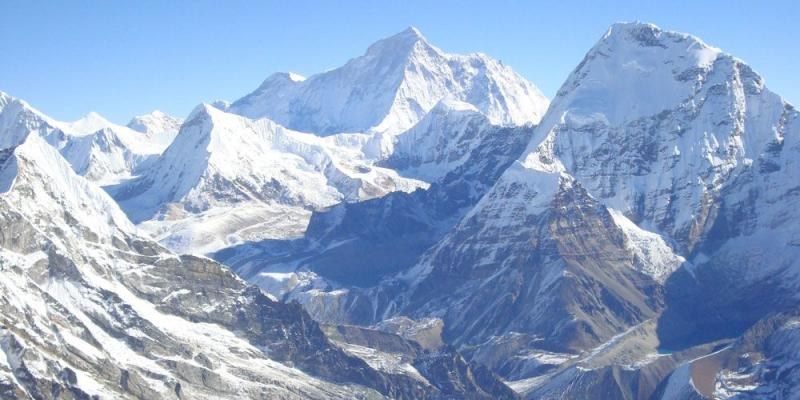
That remoteness comes with a payoff most trekkers describe as the trek's defining feature: views of Makalu's dramatic south face up close, along with sightings of Chamlang, Baruntse, and — on clear days — even the hidden Kanchenjunga face and glimpses of Everest from certain vantage points. Wildlife sightings are also more common here than on busier routes, with the national park home to red pandas, Himalayan black bears, and a wide range of high-altitude bird species for those who keep an eye out along the trail.
It's worth being honest about the trade-off, though: this authenticity is earned through longer travel days, more basic infrastructure, and a genuine commitment to being self-sufficient in a way that Everest and Annapurna trekkers rarely have to think about anymore. This isn't a trek to attempt on a whim or as a first Himalayan outing — but for trekkers who've done a base camp trek before and want something wilder, it's hard to find a route in Nepal that delivers more untouched terrain per day of walking.
What Is the Makalu Base Camp Trek?
The Makalu Base Camp Trek leads deep into the Makalu Barun National Park in eastern Nepal, culminating at the base of Mount Makalu (8,485m), the fifth-highest mountain on Earth and one of the few 8,000m peaks with a distinctive four-sided, pyramid-like shape. The route sits in the Mahalangur Himalayan range, close to the junction of Everest, Lhotse, and Cho Oyu, and along the way you'll pass through deep river gorges, waterfalls, sacred lakes, and dense forest before climbing into high alpine terrain near base camp, which sits at roughly 4,870m (some itineraries push to a Makalu Base Camp viewpoint around 5,000–5,416m).
Unlike Everest or Annapurna, this trek is defined by isolation. Trail infrastructure is minimal, villages are sparse, and once you're past Tashigaon the trip shifts from teahouse-style lodging to a more camping-dependent experience. Most itineraries run 17 to 22 days, typically starting with a flight from Kathmandu to Tumlingtar before driving to Num and beginning the trek on foot.
How Difficult Is the Makalu Base Camp Trek?
This trek is generally rated challenging to strenuous, and most operators are upfront that it's not a beginner's route. A few factors drive the difficulty:
- Long daily walking times. Expect 5–8 hours of walking per day on often rugged terrain, sustained over nearly three weeks.
- High altitude. The trek reaches close to 5,000m at Makalu Base Camp itself, with some route variations touching over 5,400m at a nearby viewpoint — altitude sickness is a real risk without proper acclimatization.
- Remote, underdeveloped trail. Because it's far less trafficked than Everest or Annapurna routes, teahouses, signage, and emergency support are limited, and trekkers can be relying on a fully self-sufficient camping setup for stretches of the route.
- Basic accommodation and food. Even where teahouses exist, comfort levels are noticeably more basic than on Nepal's mainstream trekking routes, and menu options shrink as you climb higher.
Given all this, good physical fitness and prior trekking experience are strongly recommended, and a licensed guide is considered essential — not just for navigation, but for arranging accommodation, communicating with locals, securing permits, and monitoring altitude-related symptoms along the way.
Makalu Base Camp Trek Permits
The good news: Makalu Base Camp is not classified as a restricted area, so you avoid the costly special permits required for places like Upper Mustang or Manaslu, which keeps this trek's permit costs comparatively modest. Still, a few permits are mandatory:
1. Makalu Barun National Park Entry Permit
Covers entry into the national park and conservation area protecting Mount Makalu. It costs approximately USD 30 for foreign nationals, with a discounted rate of roughly USD 15 for SAARC nationals.
2. Makalu Rural Municipality Permit
A separate local permit required to enter the Makalu region itself, priced at roughly USD 20 per person per week for the first four weeks, with a higher weekly rate for any time beyond that (some sources list it closer to NPR 2,000, or about USD 20, depending on route and duration).
3. TIMS Card
The standard Trekkers' Information Management System card, required on this route like most others in Nepal, typically costing around USD 20.
4. Restricted Area Permit (route-dependent)
If your itinerary crosses into certain restricted villages — for example, on routes that connect toward Kanchenjunga through places like Chepuwa, Hatiya, Kimathangka, or Pawakhola — an additional special permit is required, priced at roughly USD 20 per week per person for the first four weeks.
Permits can be applied for online through the DNPWC e-ticket portal and collected from the Nepal Tourism Board office in Kathmandu, or from park entry points at Num and Seduwa. Most trekkers going through a registered agency have all of this arranged on their behalf, which is worth the convenience given how remote the trailhead is.
Makalu Base Camp Trek Cost
Costs on this trek vary more than on mainstream routes, largely because of group size, trip length, and how much of the journey is teahouse-based versus camping-supported. As a general guide:
- Budget-oriented packages: roughly USD 1,200–1,800 per person, with basic teahouse accommodation, a local guide and porter, and standard meals.
- Standard packages: roughly USD 1,800–2,800 per person, adding a more experienced English-speaking guide, full board meals, equipment provision, and insurance coverage.
- Premium/fully-supported packages: USD 2,500–3,700+ per person, depending on group size, comfort level, and services included.
What's typically included in a full package: the Kathmandu–Tumlingtar flight, ground transport to the trailhead, all permits, a licensed guide and porter, teahouse or camping accommodation, and meals on the trail. What's usually not included: Kathmandu hotel nights outside the trek dates, personal gear, travel insurance (often recommended separately, around USD 150 for a month's coverage), and tips for your guide and porter team — it's common to set aside an extra USD 20–30 for tips and small village donations along the way.
Given the remoteness of the route and the reduced infrastructure compared to Everest or Annapurna, booking with an experienced local operator is less a convenience and more a practical necessity here — locating teahouses, arranging camping logistics, and having someone monitor altitude symptoms matters a lot more on a trail this quiet.
Best Season for the Makalu Base Camp Trek
Timing your trek around Nepal's two main trekking windows makes a real difference to both weather and trail conditions:
Spring (March–May)
Spring brings stable weather and increasingly clear skies as the season progresses, along with blooming rhododendron forests at lower elevations — widely considered one of the two best windows for this trek.
Autumn (September–November, sometimes extending into December)
Autumn is equally favored, offering clear skies, minimal rainfall, and excellent visibility of Makalu and its neighboring peaks, including glimpses of Everest, Lhotse, and Kanchenjunga's hidden face along parts of the route.
Winter and Monsoon
Winter is generally discouraged due to extreme cold and snow-blocked passes at this trek's higher elevations, while monsoon season (June–August) brings heavy rainfall, leeches on the lower forested sections, and a higher risk of landslides on the trail — making both seasons best avoided for this particular route.
Bottom line: Plan for March–May or September–November/December for the most stable weather and clearest mountain views, and steer clear of the winter and monsoon months.
Makalu Base Camp Trek Cost, Permits, Difficulty FAQs
1. How much does the Makalu Base Camp Trek cost?
Costs vary by service level: budget packages run roughly USD 1,200–1,800, standard packages USD 1,800–2,800, and premium fully-supported packages USD 2,500–3,700+ per person, depending on group size and trip length.
2. Do I need a restricted area permit for this trek?
No. Makalu Base Camp is not classified as a restricted area, so you avoid the costly special permits required for places like Upper Mustang or Manaslu, keeping overall permit costs lower than many other remote treks.
3. What permits do I actually need?
You'll need the Makalu Barun National Park Entry Permit (around USD 30, or roughly USD 15 for SAARC nationals), the Makalu Rural Municipality Permit (about USD 20 per week for the first four weeks), and a TIMS card (around USD 20). A Restricted Area Permit is only needed if your route crosses into specific restricted villages.
4. Where do I get my permits?
Permits can be applied for online through the DNPWC e-ticket portal and collected from the Nepal Tourism Board office in Kathmandu, or from park entry points at Num and Seduwa. Most trekking agencies arrange all of this on your behalf.
5. How difficult is the Makalu Base Camp Trek?
It's rated challenging to strenuous, involving 5–8 hours of walking per day over 17–22 days, high altitude near 5,000m, and a remote trail with limited infrastructure compared to Everest or Annapurna routes.
6. Is this a good trek for beginners?
Not recommended. Good physical fitness and prior trekking experience are strongly advised, given the altitude, long daily walking times, and basic trail infrastructure.
7. Do I need a guide?
Yes, a licensed guide is considered essential for this route — not just for navigation, but for arranging accommodation, communicating with locals, securing permits, and monitoring altitude symptoms on a trail with limited emergency support.
8. What's the maximum altitude on this trek?
Makalu Base Camp itself sits around 4,870m, with some itinerary variations reaching a viewpoint closer to 5,000–5,416m.
9. What kind of accommodation should I expect?
Teahouses are available for much of the lower route, but comfort levels are noticeably more basic than on Everest or Annapurna trails, and above Tashigaon the trip often shifts to a camping-supported setup.
10. What's the best season to do this trek?
Spring (March–May) and autumn (September–November, sometimes into December) are the two best windows, offering the most stable weather and clearest mountain views.
11. Should I avoid trekking in winter or monsoon?
Yes. Winter brings extreme cold and snow-blocked passes at higher elevations, while monsoon season (June–August) brings heavy rainfall, leeches on lower forested sections, and increased landslide risk.
12. How many days does the trek typically take?
Most itineraries run 17 to 22 days, including a flight from Kathmandu to Tumlingtar, a drive to Num, acclimatization days, and the return journey.
13. Is travel insurance required?
It's strongly recommended given the trek's remoteness and altitude, with typical coverage costing around USD 150 for a month, though always confirm your policy covers high-altitude trekking and emergency evacuation.
14. What extra costs should I budget for beyond the package price?
Set aside money for tips for your guide and porter, plus small donations to local communities or monasteries along the way — an extra USD 20–30 is a reasonable cushion.
15. Why choose Makalu Base Camp over Everest or Annapurna Base Camp?
It offers a far less crowded, more remote wilderness experience, with dramatic close-up views of Makalu's south face, diverse ecosystems ranging from subtropical forest to high alpine terrain, and a genuine sense of isolation that's increasingly hard to find on Nepal's more commercialized trekking routes.
Planning Your Trek
The Makalu Base Camp Trek isn't about comfort — it's about genuine wilderness, solitude, and a real sense of accomplishment in one of Nepal's least-commercialized corners. If that's the kind of Himalayan experience you're after, it's worth planning with an operator who knows this remote route well. Team RAM Adventure's Makalu Base Camp Trek page is a good place to start looking at itineraries, permit logistics, and current pricing.
Permit requirements and costs for remote regions in Nepal can change with little notice. Always confirm current figures with your trekking agency before departure.
Ready to trek in the Himalayas?
Get itinerary guidance and local support from the Team Ram Adventure specialists.