 Plan Your Trip Now
In This Guide
If Everest and Annapurna are Nepal’s famous trekking highways, the far east is its wild frontier. Here the trails are quieter, the villages are smaller, and the mountain at the end of the valley is the third highest on Earth. The Kanchenjunga Circuit Trek circles Mount Kanchenjunga (8,586 m), linking two base camps, high passes and communities that rarely see more than a handful of trekkers a day.
This guide covers what the trek is really like: the route, the villages, the cultural landscape, the difficulty, the permits and the practical details. It is based on the 21-day itinerary offered on the Kanchenjunga Circuit Trek page by Team Ram Adventure.
What Is the Kanchenjunga Circuit Trek?
The Kanchenjunga Circuit is a long, remote trek in Nepal’s far eastern Himalayas, in Taplejung district near the Sikkim and Tibet borders. The route runs up the Tamor and Ghunsa river valleys to the North Base Camp at Pangpema (5,143 m), then crosses the Sele La pass to reach the South Base Camp side near Ramche and Oktang (about 4,730 m). Finally it descends through forests and farmland to the roadhead.
Trek at a glance:
- Duration: 21 days from Kathmandu to Kathmandu (18–21 days on the trail, depending on the plan)
- Highest point: Pangpema at 5,143 m
- Region: Kanchenjunga Conservation Area, eastern Nepal
- Accommodation: Teahouses and lodges, with camping in some remote stretches
- Best seasons: February to May and September to November
- Group size: 2–16 trekkers
It is a trek for experienced walkers who want solitude and scale, not creature comforts.
Why This Trek Feels So Remote
Several things keep the Kanchenjunga circuit quiet:
- Distance from Kathmandu. Reaching the trailhead means a flight to Bhadrapur followed by a long drive to Taplejung, which puts off many casual trekkers.
- Restricted area status. Special permits and a registered trekking agency are required, which limits numbers.
- Few facilities. Lodges are simple and settlements are small and far apart. You will walk several hours between villages.
- No crowds on the trail. In a typical season you may share the path with local porters, yak herders and the occasional trekking group, not queues of hikers.
That feeling of space is the main reward, and it is also why careful preparation matters.
The Route: From Taplejung to Both Base Camps
Here is the day-by-day outline from the Team Ram Adventure itinerary:
| Day | Route | Notes |
|---|---|---|
| 1 | Arrive in Kathmandu | Trek briefing and gear check |
| 2 | Fly to Bhadrapur, drive to Taplejung (1,820 m) | 45-min flight, 7–8 hrs drive |
| 3 | Taplejung to Mitlung | 4–5 hrs |
| 4 | Mitlung to Chirwa | 5–6 hrs |
| 5 | Chirwa to Sukathum | 5–6 hrs |
| 6 | Sukathum to Amjilosa | 6–7 hrs |
| 7 | Amjilosa to Gyabla | 5–6 hrs |
| 8 | Gyabla to Ghunsa | 6–7 hrs |
| 9 | Acclimatization day at Ghunsa | Optional 3–4 hr hike |
| 10 | Ghunsa to Kambachen | 5–6 hrs |
| 11 | Kambachen to Lhonak | 5–6 hrs |
| 12 | Lhonak to Pangpema (North Base Camp) and back | 7–8 hrs |
| 13 | Back to Ghunsa | 6–7 hrs |
| 14 | Ghunsa to Sele La area | 5–6 hrs |
| 15 | Over Sele La to Tseram | 6–7 hrs |
| 16 | Tseram to Ramche (South Base Camp area) | 6–7 hrs |
| 17 | Back to Tortong | 6–7 hrs |
| 18 | Tortong to Yamphudin | 6–7 hrs |
| 19 | Yamphudin to Khebang | 6–7 hrs |
| 20 | Drive to Bhadrapur, fly to Kathmandu | 7–8 hrs drive, 45 min flight |
| 21 | Departure |
Traditional Mountain Villages and Living Culture
The trek is as much about people as peaks. As you climb, the cultural map changes with the altitude.
- Lower valleys (Taplejung, Mitlung, Chirwa): Rai and Limbu communities farm terraced fields of rice, millet and maize. You’ll see bamboo homes, small tea shops and suspension bridges over the Tamor River.
- Mid-altitude villages (Sukathum, Amjilosa, Gyabla): Forest trails and small settlements, with growing Tibetan Buddhist influence. Gyabla is a Tibetan-influenced village known for its prayer flags.
- Ghunsa (about 3,400 m): The major Sherpa village of the upper valley, with a monastery, stupas, prayer flags and several lodges. Many trekkers love it for its warm atmosphere and mountain views.
- High pastures (Kambachen and beyond): Seasonal yak herders live here, and the settlements feel more like outposts than villages.
- Southern side (Tseram, Tortong, Yamphudin, Khebang): Mixed ethnic communities including Rai, Limbu and Sherpa families, with beautiful terraces and forests as you descend.
Cultural etiquette tips:
- Walk clockwise around mani walls, chortens and prayer wheels.
- Remove shoes before entering monasteries and ask before taking photos inside.
- Dress modestly and accept tea or snacks graciously when offered.
- Learn a few Nepali greetings such as namaste and dhanyabad (thank you).
Ghunsa: The Heart of the Upper Valley
Ghunsa deserves its own mention. It is the biggest settlement in the upper valley and a natural rest stop, with an acclimatization day built into the itinerary.
What to do there:
- Take the optional short hike to nearby ridges for views and acclimatization.
- Visit the monastery and walk the prayer-flag paths.
- Chat with local lodge owners, many of whom have lived in the valley all their lives.
- Rest, wash your clothes and repack before the harder days ahead.
Treat the rest day as part of the plan, not a luxury. Spending extra time at this altitude significantly improves your chance of enjoying Pangpema.
Pangpema: Kanchenjunga North Base Camp
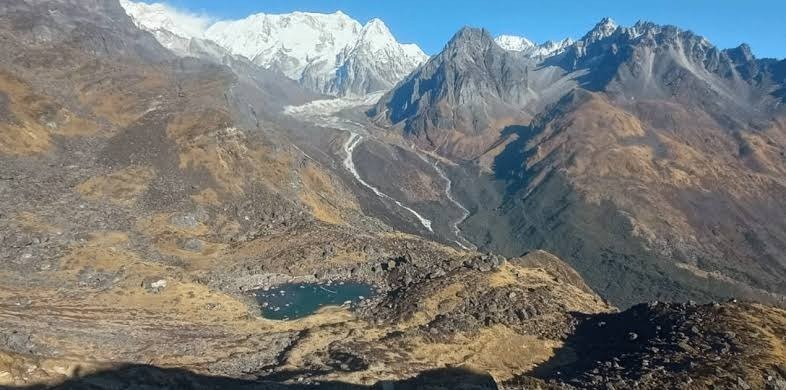
Day 12 is the high point of the trek, both literally and emotionally. From Lhonak, you walk along moraine and open slopes to Pangpema (5,143 m), a high meadow at the foot of the north face of Kanchenjunga.
What you’ll see:
- The massive north face of Kanchenjunga (8,586 m), one of the world’s great mountain walls
- Neighbouring peaks such as Jannu (7,710 m) and other summits on the border ridge
- Glaciers, moraines and wide-open alpine terrain
The day is long, around 7–8 hours round trip, and it is the highest point of the trek, so go slowly, carry warm layers and start early. Weather can change quickly, so some trekkers see a perfect sunrise and others see clouds. Allow flexibility in your schedule if you can.
Crossing Sele La and Reaching the South Side
After returning to Ghunsa, the trek turns south. The climb to Sele La (about 4,290 m) goes through rhododendron forests and alpine meadows before reaching a high pass with big mountain views. Beyond it you descend into a different valley, passing yak pastures and small settlements on the way to Tseram, near the Yalung Glacier.
From Tseram, the trail climbs to Ramche, with close-up views of Kanchenjunga’s huge south face. This is the area of the South Base Camp (often referred to as Oktang, at around 4,730 m). Many trekkers consider this the second summit moment of the circuit, with a very different feel from the North Base Camp.
Kanchenjunga Conservation Area: Landscape and Wildlife
The trek lies within the Kanchenjunga Conservation Area, one of Nepal’s most biologically varied regions.
Landscapes you’ll pass through:
- Subtropical forests and terraced farmland at the start
- Bamboo and rhododendron forests in the middle section
- Alpine meadows, moraine and glacial valleys at the top
- Dramatic ridgelines and high passes
Wildlife: The area is home to snow leopards, red pandas, Himalayan black bears, blue sheep and many bird species, though sightings are rare and never guaranteed. Spring brings flowering rhododendrons and lush greenery, while autumn offers the clearest skies.
How Difficult Is the Kanchenjunga Circuit Trek?
This is one of Nepal’s more demanding treks. Team Ram Adventure describes the route as strenuous and recommends it for experienced trekkers with strong fitness.
What makes it hard:
- Length. Around three weeks in total, with many consecutive walking days.
- Walking hours. Most days run 5–7 hours, with the Pangpema day reaching 7–8 hours.
- Altitude. Several days above 4,000 m and a high point of 5,143 m.
- Remoteness. Medical help and evacuation are far away, so preparation and caution are essential.
- Terrain. Steep climbs, long descents, moraine and a high-altitude pass crossing.
How to prepare:
- Train for 8–12 weeks with hiking, stairs, cycling or running.
- Practice walking long days with a loaded daypack.
- Choose boots that are well broken in.
- Take altitude seriously: ascend slowly, drink plenty of fluids and report any symptoms to your guide immediately.
Note that the trip page lists the grade as “moderate” in the facts box but as “strenuous” in the text and FAQ. For safety, plan for strenuous.
Best Time to Trek
- Spring (March–May): Rhododendrons bloom, forests are green and temperatures are pleasant at lower altitude. Good visibility in most years.
- Autumn (September–November): Stable weather, clear skies and excellent mountain views. This is the most popular season.
- Winter (December–February): Very cold and snowy, and often not advisable at high altitude.
- Monsoon (June–August): Heavy rain, leeches and landslides on the approach roads. Generally avoided.
Team Ram Adventure lists February to May and September to November as the best windows.
Permits and Logistics
The Kanchenjunga region needs two permits:
- Kanchenjunga Restricted Area Permit
- Kanchenjunga Conservation Area Permit
Restricted area trekking in Nepal normally requires a registered trekking company and a small group, so independent travel is not usually possible. The Team Ram Adventure package lists both permits as included, along with a licensed English-speaking guide and a porter for every two trekkers.
For logistics, allow a buffer day at the start and end because the flight to Bhadrapur and the long drive can be delayed by weather or road conditions.
Food and Accommodation
- Lodges and teahouses: Basic rooms with shared bathrooms. Some remote stretches use camping, so be ready for simple conditions.
- Meals: Dal bhat, Tibetan bread, momos, soups, noodles and some continental dishes. The package includes breakfast, lunch and dinner on the trek.
- Connectivity: The trip page says Wi-Fi is available in every teahouse, but you should still expect patchy or no signal in the highest and most remote sections.
- Drinking water: Carry purification tablets or a filter and avoid bottled water to reduce plastic.
What to Pack
Clothing: Thermal base layers, fleece, down jacket, waterproof jacket and trousers, trekking pants and shirts, warm hat, sun hat, inner and outer gloves, hiking and thermal socks, broken-in trekking boots.
Gear: A 50–60 L backpack, a sleeping bag rated to about -20°C, trekking poles, sunglasses, sunscreen, headlamp with spare batteries, water purification, and a personal first-aid kit.
Extras: Snacks, power bank, camera, lightweight towel and travel insurance covering high-altitude trekking and helicopter evacuation.
Cost and What’s Included
The Team Ram Adventure package is listed from US$2,999 per person (discounted from US$3,400) for 21 days.
Included: Airport transfers, 2 hotel nights in Kathmandu, domestic transport to and from the trailhead, both Kanchenjunga permits, a licensed guide and porter (1 porter per 2 trekkers), teahouse accommodation, meals with tea or coffee on the trek, first-aid kit, and taxes.
Not included: International flights, Nepal visa, travel insurance, personal expenses, extra nights, tips, and emergency evacuation unless covered by insurance.
Prices change, so check the trip page before you book.
Responsible Trekking in Kanchenjunga
Because the region is remote and fragile, how you travel matters.
- Carry out your rubbish and use refillable bottles.
- Support local lodges and family-run teahouses so money stays in the villages.
- Respect sacred sites, prayer flags and monasteries.
- Ask before photographing people.
- Stay on the trail and keep a respectful distance from yaks, wildlife and herders.
- Pay guides and porters fairly, and choose a company that insures its staff.
Frequently Asked Questions (FAQs)
1. How long is the Kanchenjunga Circuit Trek?
The standard itinerary is 21 days from Kathmandu to Kathmandu, with about 18–19 days on the trail.
2. How difficult is it?
It is a strenuous trek with long days, high altitude and a high-pass crossing. It suits experienced trekkers with good fitness.
3. What is the highest point?
Pangpema, the North Base Camp, at 5,143 m.
4. What is the difference between North and South Base Camp?
The north side at Pangpema offers a wide view of Kanchenjunga’s north face and Jannu. The south side near Ramche and Oktang gives close-up views of the massive south face.
5. What is the best time to go?
February to May and September to November.
6. What permits do I need?
Both a Kanchenjunga Restricted Area Permit and a Kanchenjunga Conservation Area Permit.
7. Can I trek independently?
No. Restricted area treks normally need a registered agency and a small group.
8. What is the accommodation like?
Basic teahouses and lodges, with camping at some remote stops.
9. Is there Wi-Fi and phone signal?
The trip page lists Wi-Fi at every teahouse, but signal and speed vary and are often unavailable at high or remote stops.
10. Is altitude sickness a risk?
Yes. The route includes several days above 4,000 m and a high point above 5,000 m. Acclimatize well, move slowly and report symptoms early.
11. What wildlife might I see?
The area is home to red pandas, snow leopards, Himalayan black bears and blue sheep, though sightings are rare.
12. How much does it cost?
The listed price is from US$2,999 per person for the full 21 days, subject to change.
13. What should I pack?
Layers, a warm down jacket, a -20°C sleeping bag, waterproof gear, trekking poles, headlamp and water purification.
14. How should I train?
Build stamina for 8–12 weeks with hiking, stairs and endurance training, including long days with a loaded pack.
15. Can I shorten the trek?
Yes, with a shorter variation such as the Kanchenjunga Base Camp route, or by customizing your itinerary with your trekking company.
Final Thoughts
The Kanchenjunga Circuit Trek rewards patience and preparation. You walk through terraced farmland and Sherpa villages, cross a high pass, and stand beneath two sides of one of the world’s greatest mountains, all without crowds. It is not an easy trek, but for experienced walkers it is among the most authentic Himalayan journeys in Nepal.
Ready to start planning? View the full Kanchenjunga Circuit Trek itinerary, compare it with the Kanchenjunga Base Camp Trek or the Makalu Base Camp Trek, or browse more Eastern Region treks. For other remote adventures, consider the Upper Dolpo Trek or the Standard Manaslu Circuit Trek. Read the travel information page, learn why book with us, or customize your trip and contact Team Ram Adventure to check dates and send an inquiry.
Ready to trek in the Himalayas?
Get itinerary guidance and local support from the Team Ram Adventure specialists.