 Plan Your Trip Now
In This Guide
Upper Dolpo Trek – A Remote Himalayan Desert Adventure
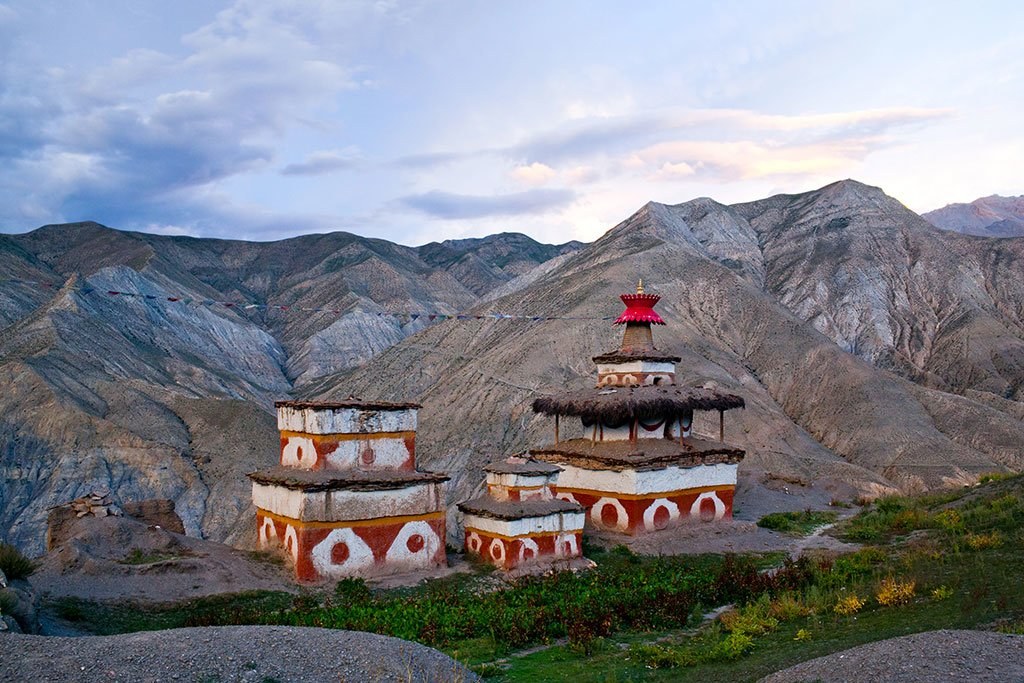
The Upper Dolpo Trek offers one of Nepal's most remote and culturally rich trekking experiences, deep in the restricted trans-Himalayan region between the Dhaulagiri range and the Tibetan plateau. The trek begins with a short domestic flight from Kathmandu to Nepalgunj, followed by a mountain flight to Jhupal, the trailhead of the Dolpo region. From there, the trail follows the Bheri and Suli Gad rivers to Phoksundo Lake, climbs over the high Kang La and Saldang La passes into Inner Dolpo, and loops back down through Dho Tarap before retracing the route to Jhupal for the return flights to Kathmandu. The total Upper Dolpo Circuit trekking distance runs well over 200 km, covered over roughly 20 trekking days.
Trekking Highlights:
- Cross Kang La Pass (5,100–5,115 m), the highest point of the entire circuit
- Visit the pristine turquoise waters of Phoksundo Lake, Nepal's deepest lake
- Explore Shey Gompa, also known as Crystal Mountain, made famous by Peter Matthiessen's "The Snow Leopard"
- Trek through Shey Phoksundo National Park, home to snow leopards, blue sheep, and Himalayan thar
- Experience the ancient, unbroken Bon Buddhist culture of Dolpo's remote villages
- Walk through Saldang, the largest settlement in Inner Dolpo, on a historic trade route to Tibet
- Visit Dho Tarap, a stone-walled village home to Magar and Tibetan communities
- Enjoy sweeping views of the Dhaulagiri range and the vast Tibetan plateau along desert-like high passes
Trail Conditions and Difficulty
The Upper Dolpo Trek trail moves through dry, windswept high-altitude terrain, narrow glacial valleys, steep passes, and remote villages that have remained largely unchanged for centuries. The hardest sections are the crossings of Kang La (5,100–5,115 m) and Saldang La (4,800 m), both of which involve long, steep ascents at serious altitude. The trek is rated moderate to challenging and is best suited to trekkers with prior high-altitude trekking experience, given the remoteness and the distance from any quick evacuation route.
Food and Accommodation:
- A mix of tented camping and teahouse-style lodges, depending on the section of the route
- Three full meals a day (breakfast, lunch, and dinner) prepared and served by the trekking crew
- Facilities are very basic in Inner Dolpo, with limited or no connectivity along much of the trail
Trekking Time and Daily Overview:
- Total trekking time: around 20 days on the trail
- Average daily hike: 5–7 hours
- Maximum elevation: Kang La Pass, 5,100–5,115 m
- Trip duration including Kathmandu arrival, flights, and departure: 27 days
Transportation:
- Flight from Kathmandu to Nepalgunj: around 1 hour
- Flight from Nepalgunj to Jhupal: a short mountain flight with Annapurna and Dhaulagiri views
- Return flights: Jhupal to Nepalgunj, then Nepalgunj to Kathmandu
Best Time for the Upper Dolpo Trek:
- Spring season (March through May) — stable weather ahead of the summer monsoon
- Autumn/Fall season (September through December) — clear skies and the most reliable conditions
- Dolpo sits in a rain shadow, so even the monsoon months are more forgiving here than in central Nepal, though spring and fall remain the safest windows
Permits and Guide Requirement:
- Restricted Area Permit for Upper Dolpo
- Shey Phoksundo National Park entry permit
- A licensed trek leader and experienced local guides and porters are compulsory for this restricted region
- Special governmental permits are arranged in advance by your trekking agency
How Long is the Upper Dolpo Trek?
The Upper Dolpo Trek is a substantial 27-day journey from arrival in Kathmandu to final departure, of which around 20 days are spent trekking through the Dolpo region itself. The trek starts at Jhupal (2,500 m) after the Kathmandu–Nepalgunj–Jhupal flights, and gradually climbs toward Kang La Pass (5,100–5,115 m), the highest point of the trip.
Important stops along the way include Dunai (2,150 m), Ankhe (2,660 m), Sulighat (3,500 m), Phoksundo Lake (3,600 m), Phoksundo Bhanjyang (4,400 m), and Shey Gompa (4,500 m). From Shey Gompa, the route continues over Saldang La Pass to Namduna Gaun, through Saldang village, Yangze Gompa, Sibu, and Jeng La Pass to Tokyu Gaun, before reaching Dho Tarap (4,100 m). The final stretch descends through Tarap Khola, Khanigaon, and Tarakot back to Dunai and Jhupal.
Three rest days are built into the itinerary — at Phoksundo Lake, Shey Gompa, and Dho Tarap — giving trekkers time to acclimatize, explore local monasteries, and take in the region's remote Bon Buddhist culture. This trek offers desert-like high passes, glacial valleys, and a sense of true wilderness rarely found elsewhere in Nepal. It's best done in spring (Mar–May) or fall (Sep–Dec) for stable weather and safer high-pass crossings.
Upper Dolpo Trek Distance, Duration, and Altitude
The full itinerary covers flights on both ends plus roughly 20 days of trekking through remote, high-altitude terrain. Below is a day-by-day route summary based on the standard 27-day itinerary.
| Day / Route | Time | Elevation |
|---|---|---|
| Day 1: Arrival in Kathmandu | — | 1,350 m |
| Day 2: Kathmandu – Nepalgunj (flight) | ~1 hr | — |
| Day 3: Nepalgunj – Jhupal (flight), trek to Dunai | 3 hrs | 2,150 m |
| Day 4: Dunai – Ankhe | 5 hrs | 2,660 m |
| Day 5: Ankhe – Sulighat | 6 hrs | 3,500 m |
| Day 6: Sulighat – Phoksundo Lake | 5 hrs | 3,600 m |
| Day 7: Rest day at Phoksundo Lake | — | 3,600 m |
| Day 8: Phoksundo Lake – Phoksundo Khola | 5 hrs | 3,500 m |
| Day 9: Phoksundo Khola – Phoksundo Bhanjyang | 7 hrs | 4,400 m |
| Day 10: Cross Kang La Pass – Shey Gompa | 6 hrs | 5,100–5,115 m → 4,500 m |
| Day 11: Rest day at Shey Gompa | — | 4,500 m |
| Day 12: Cross Saldang La Pass – Namduna Gaun | 7 hrs | 4,800 m → 4,400 m |
| Day 13: Namduna Gaun – Saldang | 5 hrs | 3,900 m |
| Day 14: Saldang – Yangze Gompa | 5 hrs | 3,850 m |
| Day 15: Yangze Gompa – Sibu | 6 hrs | 3,950 m |
| Day 16: Sibu – Jeng La Phedi | 6 hrs | 4,350 m |
| Day 17: Cross Jeng La Pass – Tokyu Gaun | 5 hrs | 4,350 m |
| Day 18: Tokyu Gaun – Dho Tarap | 5 hrs | 4,100 m |
| Day 19: Rest day at Dho Tarap | — | 4,100 m |
| Day 20: Dho Tarap – Tarap Khola/Kamakharka | 6 hrs | 3,800 m |
| Day 21: Kamakharka – Khanigaon | 5 hrs | 2,550 m |
| Day 22: Khanigaon – Tarakot | 5 hrs | 2,300 m |
| Day 23: Tarakot – Dunai | 6 hrs | 2,150 m |
| Day 24: Dunai – Jhupal | 3 hrs | 2,500 m |
| Day 25: Jhupal – Nepalgunj – Kathmandu (flights) | — | 1,350 m |
| Day 26: Rest day, sightseeing, farewell dinner | — | 1,350 m |
| Day 27: Flight back home | — | — |
Upper Dolpo Trek Itinerary with Route and Elevation: Daily Route Plan
How Many Acclimatization Days Do I Need on the Upper Dolpo Trek?
Three rest days are built into the standard Upper Dolpo Trek itinerary, at Phoksundo Lake (3,600 m), Shey Gompa (4,500 m), and Dho Tarap (4,100 m). Given that the route reaches over 5,100 m at Kang La Pass and stays at high altitude for much of its length, these days are essential to reduce the risk of altitude sickness.
The Phoksundo Lake rest day is largely for enjoyment — exploring the turquoise alpine lake, visiting nearby Bon monasteries, and taking in the region's dramatic scenery. The Shey Gompa rest day allows the body to adjust after the climb over Kang La Pass, with time to visit the nearby Crystal Mountain monastery. The Dho Tarap rest day comes after the demanding stretch through Saldang, Yangze Gompa, and Jeng La Pass, giving trekkers a chance to recover and explore the village's stone-walled settlement and local Bon gompa.
- These three rest days are essential preparation and recovery around the trek's two highest passes, Kang La (5,100–5,115 m) and Saldang La (4,800 m). Don't skip them.
- Because of how remote Upper Dolpo is, proper acclimatization is even more critical here than on more accessible Himalayan routes.
Are You Planning Some Side Trips During the Upper Dolpo Trek?
Make the most of your rest days with these local excursions
Given the remoteness of the region, most "side trips" on the Upper Dolpo Trek are built directly into the rest days rather than added as extras:
- Option 1: Ringmo village and Phoksundo waterfall – A pleasant walk around Phoksundo Lake on the rest day there, taking in the village, local Bon monasteries, and a striking nearby waterfall.
- Option 2: Crystal Mountain (Shey Gompa) – The ancient monastery beside Shey Gompa, built almost a millennium ago and made famous in Peter Matthiessen's "The Snow Leopard," is an easy, rewarding visit on the Shey Gompa rest day.
- Option 3: Dho Tarap village exploration – Spend the Dho Tarap rest day interacting with the local Magar and Tibetan community and visiting the nearby Bon gompa, one of the best cultural immersion opportunities on the whole trek.
Each of these options adds cultural depth without adding extra trekking days, since they're already woven into the itinerary's built-in rest days.
Allocate Extra Days for Unforeseen Circumstances
Given how remote and flight-dependent this trek is, it's wise to build a buffer into your overall travel plans around the Upper Dolpo Trek:
- Flight delays between Kathmandu, Nepalgunj, and Jhupal are common, especially around Kang La and Saldang La in shoulder-season conditions.
- Weather can close high passes for a day or more, particularly approaching Kang La (5,100–5,115 m).
- Altitude symptoms may slow the pace through the high sections between Phoksundo Bhanjyang and Shey Gompa, sometimes requiring extra rest.
- Because this is a restricted, remote area with limited quick-access routes out, trekkers should build in a day or two of flexibility around both the Nepalgunj–Jhupal flights and the overall trip length.
- A little slack in your international flight booking after Day 27 is strongly recommended given the trek's reliance on small-aircraft mountain flights.
One More Day for Kathmandu Sightseeing
Day 26 of the standard itinerary is already set aside as a rest day with sightseeing and a farewell dinner in Kathmandu, giving trekkers time to visit Boudhanath, Pashupatinath, and Swayambhunath before flying home. Trekkers who want more time in the valley can easily extend this before departure or after the trek wraps up, allowing a more relaxed pace through Kathmandu's UNESCO World Heritage Sites without rushing straight from the mountains to the airport.
How Long is the Flight from Kathmandu to Nepalgunj?
The flight from Kathmandu to Nepalgunj takes approximately 1 hour. Nepalgunj, in Nepal's western Terai lowlands, serves as the gateway for onward flights into the remote Dolpo region and is where trekkers typically spend a night before continuing to Jhupal the following morning.
How Long is the Flight from Nepalgunj to Jhupal?
The onward flight from Nepalgunj to Jhupal is a short but scenic mountain flight, offering views of the Annapurna and Dhaulagiri ranges to the north during the morning approach. Jhupal, at around 2,500 m, is the starting and ending point of the Upper Dolpo trekking route, and flights here are more weather-sensitive than the Kathmandu–Nepalgunj leg, so building in flexibility around this connection is important.
Final Words
The Upper Dolpo Trek covers well over 200 km of remote high-altitude trail and takes 27 days in total, including flights, three essential rest days, and the crossing of two major passes — Kang La (5,100–5,115 m) and Saldang La (4,800 m). The trek's defining challenge and reward is crossing Kang La, the highest point of the journey, with sweeping views over Dolpo's dry, mountainous terrain.
Because the trek depends on small mountain flights between Kathmandu, Nepalgunj, and Jhupal, it's worth building extra flexibility into your travel plans on both ends of the trip. A day of Kathmandu sightseeing is already included near the end of the standard itinerary, and it pairs naturally with any additional buffer time.
Overall, budget the full 27 days for the complete Upper Dolpo Trek experience. This window provides sufficient acclimatization across two major passes, safer trekking through one of Nepal's most remote restricted regions, and enough flexibility to absorb the occasional flight delay without disrupting your onward travel.
Team Ram Adventure runs the Upper Dolpo Trek as a fully guided 27-day itinerary with experienced local trek leaders, all required restricted-area permits, camping and lodge accommodation, and complete logistical support — so you can plan your own journey into one of the Himalayas' last untouched regions with confidence.
FAQs: "How Long is the Upper Dolpo Trek?"
1. What is the standard duration of the Upper Dolpo Trek?
The Upper Dolpo Trek usually takes 27 days from arrival in Kathmandu to final departure, including flights to and from Nepalgunj and Jhupal, roughly 20 trekking days, and three built-in rest days. Most trekkers with Team Ram Adventure follow the 27-day itinerary.
2. How long is the Upper Dolpo trekking distance?
The Upper Dolpo Circuit covers well over 200 km on foot, walked over approximately 20 trekking days from Jhupal, through Phoksundo Lake, Shey Gompa, Saldang, and Dho Tarap, and back to Jhupal.
3. What is the highest point on the Upper Dolpo Trek?
The highest point is Kang La Pass at 5,100–5,115 m, crossed between Phoksundo Bhanjyang and Shey Gompa. Saldang La Pass, at around 4,800 m, is the second-highest crossing on the route.
4. How many rest or acclimatization days do I need for the Upper Dolpo Trek?
Three rest days are built into the standard itinerary — at Phoksundo Lake, Shey Gompa, and Dho Tarap. These are essential given the altitude and remoteness of the route.
5. Can solo trekkers do the Upper Dolpo Trek?
No. Upper Dolpo is a restricted area requiring a registered trekking agency and special governmental permits. Trekkers must travel with a licensed trek leader and organized crew — solo, unguided trekking is not permitted here.
6. Is a guide mandatory for the Upper Dolpo Trek?
Yes. Because of the restricted-area status and the remoteness of the region, an experienced English-speaking trek leader, local guides, and porters are compulsory and arranged as part of every trek package.
7. When is the best time to do the Upper Dolpo Trek?
The best seasons are spring (March to May) and fall (September to December), when weather is most stable for crossing Kang La and Saldang La passes. Dolpo sits in a rain shadow, making it more forgiving during the monsoon than most of Nepal, though spring and fall remain the safest windows.
8. How difficult is the Upper Dolpo Trek?
The trek is rated moderate to challenging. It involves long trekking days, two major high-altitude passes, and genuine remoteness far from quick evacuation routes. Prior high-altitude trekking experience is recommended.
9. What permits are required for the Upper Dolpo Trek?
You need a Restricted Area Permit for Upper Dolpo and a Shey Phoksundo National Park entry permit. Your registered trekking agency arranges both, along with all other necessary governmental documents.
10. How long is the flight from Kathmandu to Nepalgunj?
The flight from Kathmandu to Nepalgunj takes approximately 1 hour, and most itineraries include an overnight stay there before continuing on to Jhupal the next morning.
11. How long is the flight from Nepalgunj to Jhupal?
It's a short mountain flight offering scenic views of the Annapurna and Dhaulagiri ranges. Like many small-aircraft routes in Nepal, it is weather-sensitive, so buffer days are recommended around this connection.
12. What should I pack for the Upper Dolpo Trek?
Pack layered clothing, a four-season down sleeping bag, waterproof shell jacket and pants, warm gloves, a headlamp, trekking poles, sunglasses with UV protection, and a basic first-aid kit. Conditions at Kang La and Saldang La can be extremely cold and windy.
13. Are side trips possible during the Upper Dolpo Trek?
Yes, though most are built into the itinerary's rest days rather than added separately — including exploring Ringmo village and the Phoksundo waterfall, visiting Crystal Mountain monastery at Shey Gompa, and spending time in Dho Tarap village.
14. How much does the Upper Dolpo Trek cost?
The Upper Dolpo Trek with Team Ram Adventure is priced from around $2,699 USD per person for the standard 27-day itinerary, covering permits, flights, guide and porter services, accommodation, and meals throughout the trek.
15. Is altitude sickness a concern on the Upper Dolpo Trek?
Yes, particularly around Kang La Pass (5,100–5,115 m) and Saldang La Pass (4,800 m). Walk slowly, stay hydrated, take the built-in rest days seriously, and watch for symptoms throughout the high sections of the route.
16. What kind of accommodation is available on the Upper Dolpo Trek?
Accommodation is a mix of tented camps and basic lodges, since much of the route passes through areas with little to no teahouse infrastructure. The trekking crew sets up and manages camps along the way.
17. Do I need travel insurance for the Upper Dolpo Trek?
Yes. Given the remoteness and altitude of this trek, comprehensive travel and rescue insurance covering high-altitude trekking and emergency evacuation is essential and not included in the standard package.
18. How should I prepare physically for the Upper Dolpo Trek?
Prior high-altitude trekking experience is recommended given the length and remoteness of this route. Start cardio and strength training well in advance, and build up stamina with multi-day loaded hikes before departure.
19. What wildlife might I see on the Upper Dolpo Trek?
The trek passes through Shey Phoksundo National Park, home to snow leopards, blue sheep, yaks, Himalayan thar, and ghorals, along with a wide range of high-altitude bird and plant life.
20. Can I add extra days in Kathmandu before or after the trek?
Yes. The standard itinerary already includes a Kathmandu sightseeing day and farewell dinner near the end of the trip, and trekkers can extend their stay either before or after for a more relaxed transition in and out of the mountains.
Ready to trek in the Himalayas?
Get itinerary guidance and local support from the Team Ram Adventure specialists.