 Plan Your Trip Now
In This Guide
If you've ever seen a photo of a small colorful town clinging to a mountainside with a runway that seems to end in thin air, you've seen Lukla — the gateway to the Everest region. Nearly every trekker heading to Everest Base Camp starts here, after a short, scenic flight from Kathmandu.
That's exactly why so many travelers ask the same question before booking their trek: how far is Everest Base Camp from Lukla, really? It sounds like a simple thing to look up, but anyone who's searched it before knows the numbers online rarely agree — one site says 60 km, another says 80 km, and a third throws in the return trip as if it were the one-way distance.
The honest answer is that "distance" here means more than one thing. There's the straight-line trekking distance from Lukla to Base Camp. There's the actual trail distance you'll walk, which winds up and down the Khumbu valley and is considerably longer than a straight line suggests. And there's the time on the trail, which matters far more to most trekkers than kilometers do, since the walk from Lukla to Everest Base Camp cannot be rushed — it has to be broken up over several days to allow the body to acclimatize to the altitude.
Each of these numbers tells a different part of the story, and none of them alone captures what the journey actually involves. So let's break it down — distance, route, and time — so you know exactly what to expect before you start walking.
Quick Answer
Everest Base Camp is roughly 65 km from Lukla on foot, one way. In practice, this breaks down as:
- Lukla to Namche Bazaar: about 18–19 km, spread over one to two trekking days
- Namche Bazaar to Dingboche/Lobuche: about 30 km, spread over three to four trekking days for acclimatization
- Lobuche to Everest Base Camp: about 15 km, usually split across the final one to two days via Gorak Shep
Put together, most trekkers cover the full one-way trail — Lukla to Base Camp — in 7 to 9 days, with the return trek back to Lukla taking another 3 days, since the descent is much faster than the climb.
Breaking Down the Route Step by Step
Step 1: Kathmandu to Lukla (Flight)
The journey to Everest Base Camp technically doesn't start on foot. Most trekkers fly from Kathmandu to Lukla's Tenzing-Hillary Airport, a roughly 30–35 minute flight that covers about 135 km of straight-line distance and drops you at 2,860 meters, right at the edge of the Khumbu region. This flight is one of the most scenic — and most weather-dependent — short hops in Nepal, and delays are common during cloudy mornings.
Step 2: Lukla to Phakding and Namche Bazaar
From Lukla, the trail descends gently along the Dudh Koshi river to Phakding, a short first day of about 3–4 hours covering 7–8 km. The next day is tougher: the trail climbs steadily, crosses several suspension bridges, and finishes with a steep ascent into Namche Bazaar, the bustling Sherpa hub at 3,440 meters. This stretch covers around 10–11 km and typically takes 5–6 hours.
Step 3: Namche Bazaar to Tengboche and Dingboche
Beyond Namche, most itineraries include an acclimatization day before continuing to Tengboche, home to the region's most famous monastery, with sweeping views of Ama Dablam along the way. From there, the trail pushes on to Dingboche at 4,410 meters. This section spans roughly 20 km over two to three days, and it's where altitude starts to noticeably slow the pace.
Step 4: Dingboche to Lobuche and Gorak Shep
After a second acclimatization stop, the trail continues through increasingly barren, high-altitude terrain past the Khumbu Glacier's moraine to Lobuche, then on to Gorak Shep, the last settlement before Base Camp, sitting at 5,164 meters. This leg covers about 15 km and usually takes two days, factoring in the thinning air.
Step 5: Gorak Shep to Everest Base Camp
This is the moment everyone's been walking toward. From Gorak Shep, trekkers set out on a roughly 3-hour, 7–8 km round-trip hike across rocky, uneven moraine to reach Everest Base Camp at 5,364 meters. There's no view of Everest's summit from Base Camp itself — it's blocked by the surrounding ridgeline — but standing at the foot of the Khumbu Icefall, surrounded by some of the tallest peaks on Earth, is the whole point of the trip. Many trekkers also add on a climb of Kala Patthar (5,644 m) nearby for the classic, unobstructed view of Everest's summit.
Step 6: The Return Journey
Coming down is faster than going up, since altitude is no longer holding the pace back. Trekkers usually retrace the same trail from Base Camp back through Lobuche, Namche Bazaar, and Phakding to Lukla, covering the roughly 65 km return distance in about 3 days, before flying back to Kathmandu.
How Long Does the Whole Trek Take?
| Itinerary Style | Duration | Best For |
|---|---|---|
| Short / fast-paced | 10–11 days | Fit trekkers comfortable with a quicker acclimatization pace |
| Standard | 12–14 days | Most trekkers — a safer, more comfortable acclimatization pace |
| Extended with side trips | 15–16 days | Those adding Gokyo Lakes, Chola Pass, or extra rest days |
None of these itineraries can safely be compressed much further, since the extra acclimatization days built into the route exist specifically to reduce the risk of altitude sickness above 3,500 meters.
Why the Distance Numbers Vary So Much Online
If you've researched this before, you've probably run into wildly different figures — some pages say 60 km, others say 130 km, and a few even quote the number as if it includes the Kathmandu–Lukla flight distance. Here's why: some measurements count only the one-way trekking trail, others add the return trek as a separate leg, and some fold in the flight distance from Kathmandu entirely. None of these figures are "wrong" — they're just measuring different parts of the journey. The roughly 65 km figure covers the practical one-way trekking distance most people actually care about: getting from Lukla's airstrip to the foot of Everest.
Is the Trek Difficult?
Yes, more so than most other treks in Nepal — though not because of technical climbing. Everest Base Camp is graded as a strenuous trek, mainly due to the altitude rather than the terrain itself. The trail doesn't require ropes or climbing gear, but reaching over 5,000 meters means acclimatization days, a slow and steady pace, and a reasonable baseline level of fitness all matter far more here than on lower-altitude treks.
Best Time to Trek from Lukla to Everest Base Camp
The clearest mountain views usually come in autumn (late September to November) and spring (March to May), when skies tend to be stable and flights to Lukla are less likely to be delayed. Winter treks are possible for those prepared for the cold, while the summer monsoon months bring rain, leeches at lower elevations, and clouded-over peaks, making them the least popular window for this trek.
Planning Your Everest Base Camp Trek
Distance and timing are only part of the picture — flights, permits, teahouse accommodation, and a properly paced itinerary all shape how the trek actually feels once you're on the trail. If you'd rather not piece together the logistics yourself, Team Ram Adventure runs a complete Everest Base Camp Trek package that handles the Lukla flights, permits, accommodation, and an experienced local guide, so all you need to bring is your energy and your camera. You can see the full itinerary and pricing here: Everest Base Camp Trek.
Frequently Asked Questions
Everest Base Camp is one of the most iconic treks in the world, but because the journey involves a flight, a long multi-day trail, and a fair amount of altitude, first-time trekkers often get confused about the real distance and how long it takes. Here are the most-searched questions answered in detail.
1. How far is Everest Base Camp from Lukla?
The one-way trekking distance from Lukla to Everest Base Camp is approximately 65 km (40 miles), covered entirely on foot through the Khumbu valley. That figure isn't a straight line on a map — it's the actual trail distance, which winds along river gorges, climbs over ridgelines, and threads through villages like Namche Bazaar, Tengboche, and Dingboche before finally reaching the glacial moraine near Base Camp. Because the trail gains nearly 2,500 meters in elevation over that distance, the number of kilometers matters far less than the number of days it takes, since the pace has to slow considerably above 3,500 meters to allow proper acclimatization.
2. Is the distance from Lukla to Everest Base Camp covered on foot the whole way?
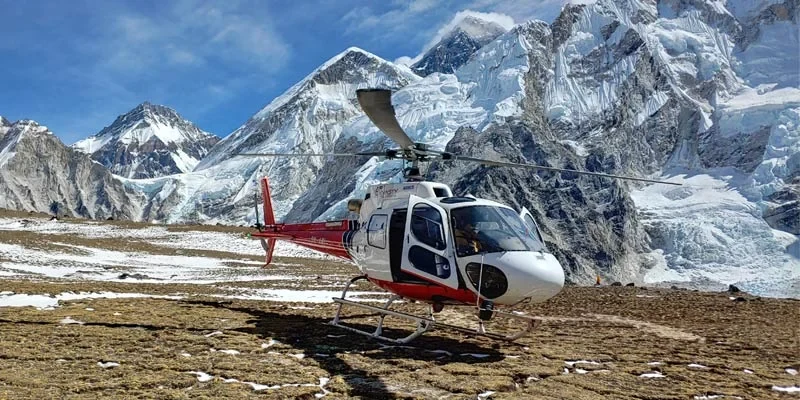
Yes, entirely. Once your flight lands at Lukla's Tenzing–Hillary Airport, there are no roads, jeeps, or vehicles of any kind that continue further into the Khumbu region — the terrain simply doesn't allow it. Every kilometer from Lukla to Base Camp is walked, typically over 7 to 9 days, with porters and yaks used to carry heavier gear and supplies rather than any form of motorized transport. The only alternative to walking any section of this route is a helicopter, which some trekkers use for emergency evacuation or, less commonly, to skip a portion of the descent.
3. Can the trek from Lukla to Everest Base Camp be done in fewer days?
Technically yes, but it isn't safe for most people. The trail climbs from 2,860 m in Lukla to 5,364 m at Base Camp, and the body needs time to adjust to the thinning air at that altitude. Standard itineraries build in at least two acclimatization days — usually at Namche Bazaar (3,440 m) and Dingboche (4,410 m) — specifically to reduce the risk of Acute Mountain Sickness (AMS). Compressing the schedule to move faster is possible, and some very fit, high-altitude-acclimatized trekkers do it, but for the vast majority of people it significantly raises the risk of altitude sickness, which can range from mild headaches and nausea to life-threatening conditions like HAPE or HACE if ignored. Most trekking agencies and guides will strongly discourage a rushed itinerary for exactly this reason.
4. How long does it take to walk from Lukla to Everest Base Camp?
Most itineraries take 7 to 9 days one way, and the schedule is built around gradual altitude gain rather than raw distance. A typical breakdown looks like this:
- Days 1–2: Lukla to Namche Bazaar, gaining about 580 meters of elevation over roughly 19 km, with an overnight stop in Phakding along the way
- Days 3–5: Namche Bazaar to Dingboche, including a mandatory acclimatization day in Namche and a stop in Tengboche near its famous monastery
- Days 6–7: Dingboche to Lobuche and on to Gorak Shep, including a second acclimatization day, usually paired with a short acclimatization hike to a higher point before descending to sleep
- Days 8–9: Gorak Shep to Everest Base Camp and back, often combined with a pre-dawn climb up Kala Patthar for sunrise views of Everest's summit
Add roughly 3 days for the return trek to Lukla, and most full itineraries — including flights — run 12 to 14 days door to door.
5. What is the distance from Namche Bazaar to Everest Base Camp?
From Namche Bazaar, it's roughly 45 km on foot to Everest Base Camp, usually spread across 5 to 6 trekking days. This stretch is where the trail gains most of its elevation and where the effects of altitude start to become noticeable, so the daily walking distances are intentionally kept shorter than the Lukla–Namche leg, even though the terrain itself is less steep in places. Namche also marks the last point with reliable Wi-Fi, ATMs, and a wider range of food options, so many trekkers treat it as their last "comfort stop" before the trail becomes more remote.
6. How far is Gorak Shep from Everest Base Camp?
Gorak Shep, the final settlement before Base Camp, sits about 7–8 km round trip from Everest Base Camp, at an elevation of 5,164 meters. The one-way hike from Gorak Shep to Base Camp takes roughly 2.5 to 3 hours, crossing rocky, uneven glacial moraine alongside the Khumbu Glacier — there's no real trail marking in some sections, just cairns and footprints, since the ground shifts slightly over time as the glacier moves. Most trekkers do this as a there-and-back day hike from Gorak Shep, sleeping in Gorak Shep both the night before and after, rather than camping at Base Camp itself, which has no permanent lodges.
7. What is the total round-trip distance for the Everest Base Camp trek from Lukla?
If you return via the same trail — which the vast majority of trekkers do — the round trip comes to roughly 130 km, all on foot. This typically splits into 7–9 days going up, where the pace is deliberately slow because of acclimatization needs, and about 3 days coming back down, since descending doesn't require the same altitude adjustment and trekkers can cover more ground per day. Some itineraries vary the return route slightly — for example, flying out of Lukla a day earlier by combining two descent days into one — but the total distance covered stays roughly the same either way.
8. Is the Everest Base Camp trek from Lukla suitable for beginners?
It can be, but it sits a step above beginner-friendly treks like Poon Hill or the shorter Annapurna routes. The trail itself isn't technically difficult — there's no climbing gear, ropes, or specialized skills required — but the altitude is the real factor that separates this trek from easier options. Reaching over 5,300 meters means a first-time trekker with reasonable fitness can absolutely complete it, but success depends more on pacing, hydration, and listening to acclimatization guidance than on prior trekking experience. Many EBC trekkers each year are doing their first ever multi-day trek, so it's achievable for beginners — it just requires more preparation and a realistic mindset about the altitude than a shorter, lower-elevation trek would.
9. What is the best time to trek from Lukla to Everest Base Camp?
Autumn (late September to November) and spring (March to May) are the two best windows. Autumn tends to bring the most stable weather right after the monsoon clears, with crisp air and reliably clear mountain views — it's also the busiest season on the trail. Spring offers similarly good visibility along with milder temperatures at lower elevations and the chance to see rhododendron forests in bloom lower down the valley, though it can be slightly hazier near Everest itself due to rising temperatures. Winter (December–February) is possible for well-prepared trekkers but comes with sub-zero nights at higher elevations and a higher chance of teahouses closing in the most remote villages. The summer monsoon (June–August) is the least recommended season, since cloud cover blocks mountain views and Lukla flights face frequent weather delays or cancellations.
10. Do I need a permit to trek from Lukla to Everest Base Camp?
Yes, two permits are required. The first is the Sagarmatha National Park entry permit, since the entire route passes through this UNESCO World Heritage-listed national park. The second is a local area permit issued by the Khumbu Pasang Lhamu Rural Municipality, which replaced the older TIMS card requirement for this specific region. Both permits are usually arranged in Kathmandu or at checkpoints along the trail (Monjo, for the national park permit), and most trekking agencies handle this paperwork as part of a booked package. A guide isn't legally mandatory for most nationalities trekking independently, but given the remoteness of the region, the altitude involved, and the value of local knowledge for navigation and emergency support, hiring one is strongly recommended — especially for first-time high-altitude trekkers.
Quick Summary
| Segment | Distance |
|---|---|
| Kathmandu to Lukla (flight) | ~135 km |
| Lukla to Namche Bazaar (trek) | ~19 km |
| Namche Bazaar to Everest Base Camp | ~45 km |
| Total one-way trekking distance | ~65 km |
| Gorak Shep to Base Camp (round trip) | ~7–8 km |
| Typical one-way trekking duration | 7–9 days |
Ready to see Everest up close for yourself? Explore the full Everest Base Camp Trek itinerary with Team Ram Adventure and start planning your journey today.
Ready to trek in the Himalayas?
Get itinerary guidance and local support from the Team Ram Adventure specialists.