 Plan Your Trip Now
In This Guide
Introduction of Gokyo Lake Trek
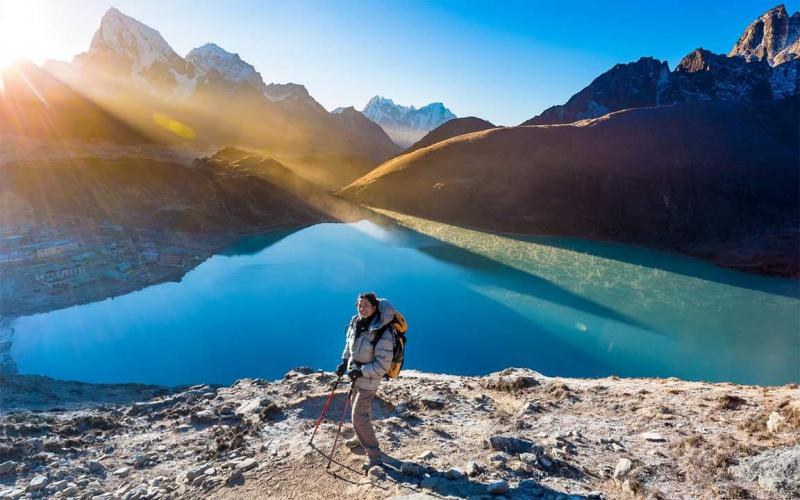
Tucked away in the Khumbu region of Nepal, the Gokyo Lake Trek is one of the most beautiful — and most underrated — trekking routes in the entire Everest region. While thousands of trekkers rush toward Everest Base Camp every year, the Gokyo Valley offers something quieter: a chain of turquoise glacial lakes, the largest glacier in Nepal, and arguably the single best viewpoint of the Himalayas at Gokyo Ri (5,357m), where four of the world's six highest peaks — Everest, Lhotse, Makalu, and Cho Oyu — stand in a single frame.
At Team Ram Adventure, we've guided trekkers through this valley for years, and this guide brings together everything you need to plan your trip: the day-by-day itinerary, real 2026 costs, required permits, difficulty level, best season to go, what to pack, and answers to the questions we get asked most.
Quick Overview: Gokyo Lake Trek at a Glance
| Detail | Information |
|---|---|
| Region | Khumbu, Sagarmatha National Park, Nepal |
| Duration | 11–14 days (Kathmandu to Kathmandu) |
| Max Altitude | Gokyo Ri – 5,357 m (17,575 ft) |
| Difficulty | Moderate to Challenging |
| Trek Style | Teahouse/Lodge trekking |
| Starting Point | Lukla (via flight from Kathmandu or Ramechhap) |
| Best Seasons | Spring (March–May) & Autumn (September–November) |
| Permits Required | Sagarmatha National Park Permit + Khumbu Pasang Lhamu Rural Municipality Permit |
| Group Size | 1–12 (private and group departures available) |
| Cost | USD 1,200–1,600 (standard guided package) |
Why Trek to Gokyo Lake?
- Six sacred glacial lakes, including Thonak Lake and Gokyo Lake (Dudh Pokhari), set against the Himalayas
- Gokyo Ri summit — many trekkers and photographers consider its panorama superior to Kala Patthar's
- Ngozumpa Glacier, the longest glacier in the Nepal Himalaya, crossed on foot
- Far fewer crowds than the classic Everest Base Camp trail, even in peak season
- Authentic Sherpa villages — Namche Bazaar, Dole, Machhermo, and Gokyo — with genuine mountain culture
- Option to extend via the Cho La Pass to combine with Everest Base Camp or the Everest Three Passes Trek
Gokyo Lake Trek Itinerary
| Day | Itinerary | Altitude | Approx. Walking Time |
|---|---|---|---|
| Day 1 | Arrival in Kathmandu | 1,400m | — |
| Day 2 | Fly to Lukla & Trek to Phakding | 2,610m | 3–4 hours |
| Day 3 | Trek to Namche Bazaar | 3,440m | 5–6 hours |
| Day 4 | Acclimatization Day in Namche Bazaar | 3,440m | 3–4 hours optional hike |
| Day 5 | Trek to Dole | 4,110m | 5–6 hours |
| Day 6 | Trek to Machhermo | 4,470m | 4–5 hours |
| Day 7 | Trek to Gokyo | 4,750m | 4–5 hours |
| Day 8 | Gokyo Ri / Gokyo Lakes Exploration | 5,357m (Gokyo Ri) | 4–6 hours |
| Day 9 | Trek back to Dole | 4,110m | 5–6 hours |
| Day 10 | Trek back to Namche Bazaar | 3,440m | 5–6 hours |
| Day 11 | Trek back to Lukla | 2,860m | 6–7 hours |
| Day 12 | Fly from Lukla to Kathmandu | 1,400m | — |
| Day 13 | Final Departure from Kathmandu | 1,400m | — |
Note: Lukla flights are frequently rerouted via Manthali/Ramechhap (a 4–5 hour drive from Kathmandu) during peak season due to Kathmandu airport traffic. We recommend building in 1–2 buffer days for flight delays, which are common in this region.
Gokyo Lake Trek Cost
The Gokyo Lake Trek cost typically ranges from USD 1,200 to USD 1,600 per person for a standard guided teahouse package with Team Ram Adventure. Budget and premium options fall outside this range depending on services chosen.
| What's Usually Included | What's Usually Excluded |
|---|---|
| Kathmandu–Lukla–Kathmandu flights | Nepal entry visa fee |
| Sagarmatha National Park entry permit | International airfare |
| Khumbu Pasang Lhamu Rural Municipality permit | Travel and high-altitude/helicopter evacuation insurance |
| Teahouse/lodge accommodation throughout the trek | Personal expenses such as Wi-Fi, hot showers, battery charging, bottled water, snacks and bar bills |
| Three meals a day (breakfast, lunch and dinner) while trekking | Tips for guide and porter |
| Licensed, English-speaking guide | Extra costs caused by early return or itinerary changes |
| Porter service (1 porter per 2 trekkers) | — |
| All applicable government and local taxes | — |
Ways to reduce cost: trekking in a larger group, traveling in shoulder season, and booking directly with a local agency rather than through a foreign reseller.
Permits Required for the Gokyo Lake Trek
Two permits are mandatory for anyone trekking in the Gokyo Valley:
| Permit / Document | Required? | Where to Get It | Approx. Cost / Fee | Purpose |
|---|---|---|---|---|
| Sagarmatha National Park Entry Permit | Yes | Nepal Tourism Board / designated entry points | Around NPR 3,000 for foreigners | Allows entry into Sagarmatha National Park |
| Khumbu Pasang Lhamu Rural Municipality Permit | Yes | Lukla / designated Khumbu checkpoints | Around NPR 2,000 | Local area entry and conservation fee |
| TIMS Card | Check current rules | Trekking agency / authorized office | Varies by current regulation | Trekker registration and safety tracking |
| Passport | Yes | Your home country | — | Identification and permit processing |
| Travel Insurance | Strongly recommended | Insurance provider | Varies by policy | Covers trekking emergencies, evacuation and medical costs |
Both permits are arranged in Kathmandu or at the park entrance and are included in Team Ram Adventure's standard package. Carry a few extra passport-sized photos and photocopies of your passport, as these are sometimes requested when permits are issued.
How Difficult Is the Gokyo Lake Trek?
The Gokyo Lake Trek is rated moderate to challenging. It isn't technical — no ropes or climbing gear are needed — but the combination of high altitude and consecutive trekking days makes it demanding:
- 5–7 hours of walking most days
- Maximum altitude of 5,357m at Gokyo Ri
- Two built-in acclimatization days to reduce altitude sickness risk
- Steep, rocky sections between Dole, Machhermo, and Gokyo
Prior hiking experience isn't mandatory, but a baseline level of cardiovascular fitness — built up with regular walking, hiking, or cardio training in the months before the trek — makes the experience considerably more enjoyable.
Best Time to Trek to Gokyo Lake
- Autumn (September–November): The most popular season — stable weather, clear mountain views, and moderate daytime temperatures.
- Spring (March–May): Rhododendron forests bloom along the lower trail, and visibility is excellent.
- Winter (December–February): Fewer crowds and crisp views, but very cold nights, especially above Namche.
- Monsoon (June–August): Not recommended — clouded views, leeches on lower trails, and higher risk of flight delays.
What to Pack for the Gokyo Lake Trek
- Layered clothing: thermal base layers, fleece, and a down jacket for evenings above 4,000m
- Waterproof, broken-in trekking boots
- A four-season sleeping bag (rated to at least -15°C)
- Trekking poles for the steep descents
- Sun hat, sunglasses (UV protection is essential at altitude), and high-SPF sunscreen
- Headlamp with spare batteries for the Gokyo Ri sunrise hike
- Water purification tablets or a filter (bottled water is expensive and adds plastic waste at altitude)
- Basic personal first-aid kit and any personal medication
- Comprehensive travel insurance that explicitly covers high-altitude trekking and helicopter evacuation up to 6,000m
Tips for a Safe and Enjoyable Gokyo Lake Trek
1. Walk slowly and hydrate often — altitude sickness is the biggest risk factor on this trek, not fitness.
2. Don't skip the acclimatization days in Namche and Gokyo, even if you're feeling strong.
3. Book flights with buffer days — Lukla flights are weather-dependent and delays are common, especially in peak season.
4. Carry cash — there are no ATMs beyond Namche Bazaar, and card payments aren't accepted in teahouses.
5. Trek with a licensed guide, especially if combining the route with the Cho La Pass, which requires route-finding experience.
6. Consider the Cho La Pass extension if you want to link Gokyo with Everest Base Camp for a longer, quieter alternative to the standard EBC route.
Altitude Sickness on the Gokyo Lake Trek: What You Need to Know
Gokyo Ri sits at 5,357m — high enough that altitude, not distance or terrain, is the biggest risk on this trek. Acute Mountain Sickness (AMS) can affect anyone regardless of fitness, and typically first appears around Namche Bazaar, with risk rising sharply between Machhermo and Gokyo.
Watch for: headache, nausea, dizziness, fatigue, and poor sleep. A headache that doesn't ease with rest and water within an hour is a warning sign, not something to push through.
Prevent it by: ascending slowly, never skipping acclimatization days, drinking 3–4 liters of water daily, eating well despite low appetite, and avoiding alcohol and sleeping pills at altitude.
If symptoms strike: stop ascending, tell your guide immediately, rest or descend if things worsen, and treat any persistent symptom as a signal to pause — not push on. Severe cases (HAPE/HACE) require immediate descent and, where needed, helicopter evacuation, which is why high-altitude travel insurance is essential.
Frequently Asked Questions About Gokyo Lake Trek
What is the Gokyo Lake Trek?
The Gokyo Lake Trek is a high-altitude trekking route in the Khumbu region of Nepal that leads through Sagarmatha National Park to the Gokyo Valley, home to a chain of glacial lakes and the summit viewpoint of Gokyo Ri (5,357m). It's considered one of the best alternatives to — or extensions of — the Everest Base Camp Trek.
Where is Gokyo Lake located?
Gokyo Lake sits in the Solukhumbu District of northeastern Nepal, inside Sagarmatha National Park, at an elevation of approximately 4,750–4,790m. It's reached on foot after flying into Lukla and trekking north through Namche Bazaar and Dole.
How many lakes are there in Gokyo Valley?
The Gokyo Valley contains six recognized glacial lakes, sometimes referenced locally as up to 19 smaller ponds and lakes in total. Most itineraries visit the first three: Longpongo, Taboche Tsho, and Dudh Pokhari (the main Gokyo Lake, where Gokyo village sits).
Is Gokyo Lake natural or man-made?
Gokyo Lake is entirely natural — a glacial-fed freshwater lake system formed by the Ngozumpa Glacier, the largest glacier in Nepal. It's considered sacred by local Sherpa and Hindu communities.
Is Gokyo Lake frozen?
The lake partially freezes in winter (December–February) around the edges but rarely freezes solid all the way through. In autumn and spring, it remains a striking turquoise color.
How many days does the Gokyo Lake Trek take?
Most itineraries run 11–15 days from Kathmandu to Kathmandu, with 12–13 days being the most common standard length, including two acclimatization days.
Can the Gokyo Lake Trek be done in fewer days?
Yes, faster 8–10 day versions exist, but they cut acclimatization time and increase altitude sickness risk. We don't recommend compressing the itinerary below 11 days.
Can I combine Gokyo Lake with Everest Base Camp?
Yes. Trekkers commonly link the two via the Cho La Pass (5,420m), creating a 16–18 day route that visits both Gokyo Ri and Everest Base Camp without backtracking. This route is more physically demanding and requires prior trekking experience.
Do I need to fly to Lukla for this trek?
Almost all itineraries begin with a flight to Lukla. It's possible to drive/trek in from Jiri or Salleri instead, adding roughly a week to the trip, but this is rare and only chosen by trekkers with extra time who want to avoid flying.
How much does the Gokyo Lake Trek cost?
A standard guided package typically costs USD 1,200–1,600 per person, covering flights, permits, guide, porter, accommodation, and meals. Budget independent trekking can run as low as USD 800–1,000; premium/private packages can exceed USD 2,500.
What's included in the Gokyo Lake Trek cost?
Most packages include Kathmandu–Lukla–Kathmandu flights, national park and municipality permits, teahouse accommodation, three daily meals while trekking, and a licensed guide and porter.
What's not included in the price?
Typically excluded: Nepal visa fee, international flights, travel/high-altitude insurance, Wi-Fi, hot showers, battery charging, bottled drinks, snacks, and tips.
Is the Gokyo Lake Trek cheaper than Everest Base Camp?
Generally, yes — slightly. Gokyo sees fewer trekkers, so teahouse prices along the route tend to be marginally lower, though the flight and permit costs are the same since both start from Lukla.
Do I need to tip my guide and porter?
Tipping isn't mandatory but is customary and expected. A common guideline is USD 10–15 per day for a guide and USD 8–10 per day for a porter, shared among a group if trekking together.
Is the Gokyo Lake Trek hard?
t's rated moderate to challenging. There's no technical climbing, but long trekking days (5–7 hours) at altitudes up to 5,357m make it physically demanding, particularly on the climb to Gokyo Ri.
Is Gokyo Lake Trek harder than Everest Base Camp Trek?
Opinions vary, but many guides consider Gokyo slightly harder due to the steep, rocky Dole-to-Gokyo section and the added elevation gain to Gokyo Ri, which sits higher than Kala Patthar's typical viewpoint elevation on some itineraries.
Do I need prior trekking experience?
No, but a reasonable level of cardiovascular fitness is important. Trekkers who prepare with regular walking, hiking, or cardio training in the 2–3 months before the trip generally have a much better experience.
What is the highest point of the Gokyo Lake Trek?
Gokyo Ri, at 5,357m (17,575 ft), is the highest point on the standard itinerary — reached on a steep but non-technical morning hike from Gokyo village.
How many hours do you walk each day?
Typically 5–7 hours per day, varying by stage — shorter on acclimatization and early days, longer on the push toward Gokyo and the Gokyo Ri summit day.
Is altitude sickness a risk on the Gokyo Lake Trek?
Yes — altitude, not distance or terrain, is the biggest risk factor on this trek. Acute Mountain Sickness (AMS) can affect trekkers of any fitness level above 3,500m.
How does the itinerary prevent altitude sickness?
Well-designed itineraries build in two acclimatization days (typically at Namche Bazaar and Gokyo) with short "climb high, sleep low" hikes to help the body adjust gradually.
Is it safe to trek Gokyo without a guide?
It's legally possible for parts of the Khumbu region, but a licensed guide is strongly recommended — especially for AMS recognition, route-finding in poor weather, and permit handling.
Has anyone died trekking to Gokyo Lake?
Fatalities are rare and typically linked to ignoring AMS symptoms, extreme weather events, or trekking without acclimatization — not to the trail's technical difficulty. Trekking with an experienced guide and following a gradual itinerary significantly reduces risk.
Do I need travel insurance?
Yes, and it should specifically cover high-altitude trekking (up to at least 6,000m) and helicopter evacuation — standard travel insurance policies often exclude this.
What permits do I need for the Gokyo Lake Trek?
Two permits are required: the Sagarmatha National Park Entry Permit and the Khumbu Pasang Lhamu Rural Municipality Entry Permit (which replaced the old TIMS card for this region).
Can I get permits myself, or does my agency arrange them?
Both are usually arranged by your trekking agency in Kathmandu or at the park entrance in Monjo. Independent trekkers can also obtain them directly, but it adds logistics and time.
Do I need a separate permit for Gokyo Ri?
No — Gokyo Ri is covered under the same Sagarmatha National Park permit since it lies within the park boundary.
When is the best time to do the Gokyo Lake Trek?
Autumn (late September–November) and spring (March–May) are the best seasons, offering the clearest skies, most stable weather, and best mountain visibility.
Can you trek to Gokyo Lake in winter?
Yes, December–February is possible with fewer crowds and clear (if very cold) skies, but nighttime temperatures at Gokyo and above regularly drop well below freezing.
Is monsoon season a good time to trek Gokyo?
No — June to August brings heavy rain, leeches on the lower trail, clouded mountain views, and a higher risk of Lukla flight cancellations.
Is there Wi-Fi and phone signal on the Gokyo Lake Trek?
Most teahouses offer paid Wi-Fi (via Everest Link cards) and there's decent mobile network coverage (NCell/NTC) up to Gokyo, though speed and reliability drop the higher you go.
Can I charge my phone and camera along the trail?
Yes, teahouses offer charging for a small per-hour fee, increasing with altitude. A power bank and/or solar charger is a smart backup.
Is there an ATM near Gokyo?
No. The last reliable ATM is in Namche Bazaar. Carry sufficient Nepali cash for the rest of the trek, as cards aren't accepted at teahouses.
What kind of food is available on the trek?
Teahouses serve a mix of Nepali staples (especially dal bhat), and international comfort food like noodles, momos, pizza, and pancakes. Vegetarian, vegan, and gluten-free requests can usually be accommodated with advance notice.
What is the accommodation like on the Gokyo Lake Trek?
Basic but comfortable teahouse lodges throughout, typically twin-share rooms with shared bathrooms at higher elevations. Hot showers are available for an extra fee.
Is the Gokyo Lake Trek suitable for solo trekkers?
Yes — many trekkers do it solo, though joining a guided group or hiring an independent guide is recommended for safety, cost-sharing on porters, and company on long trekking days.
Is the Gokyo Lake Trek family- or beginner-friendly?
It can suit families with older children or trekking-fit beginners, provided the itinerary includes proper acclimatization days and the group moves at a comfortable pace. It is not recommended for young children given the altitude.
Ready to start planning your Gokyo Lake Trek? Contact Team Ram Adventure for a customized itinerary, transparent pricing, and a team that knows this valley firsthand.
Ready to trek in the Himalayas?
Get itinerary guidance and local support from the Team Ram Adventure specialists.