 Plan Your Trip Now
In This Guide
If you've already done some research on Everest Region trekking, you've probably noticed the Three High Passes Trek keeps coming up as "the ultimate Everest trek." That's not marketing talk. It's the one route in the Khumbu that links Everest Base Camp, Kala Patthar, the Gokyo Lakes, and three passes above 5,300 metres into a single continuous journey. Most trekkers who ask us about it aren't first-timers to Nepal — they've either done EBC before and want more, or they've read enough to know that a standard Base Camp trek won't give them the full picture of this region.
This guide is written for that trekker. We'll walk through what the route actually involves, who it suits, how hard it really is compared with EBC, and the planning details that matter — permits, seasons, acclimatisation, and the mistakes we see people make when they underestimate this trek.
What the Everest Three High Passes Trek Actually Involves
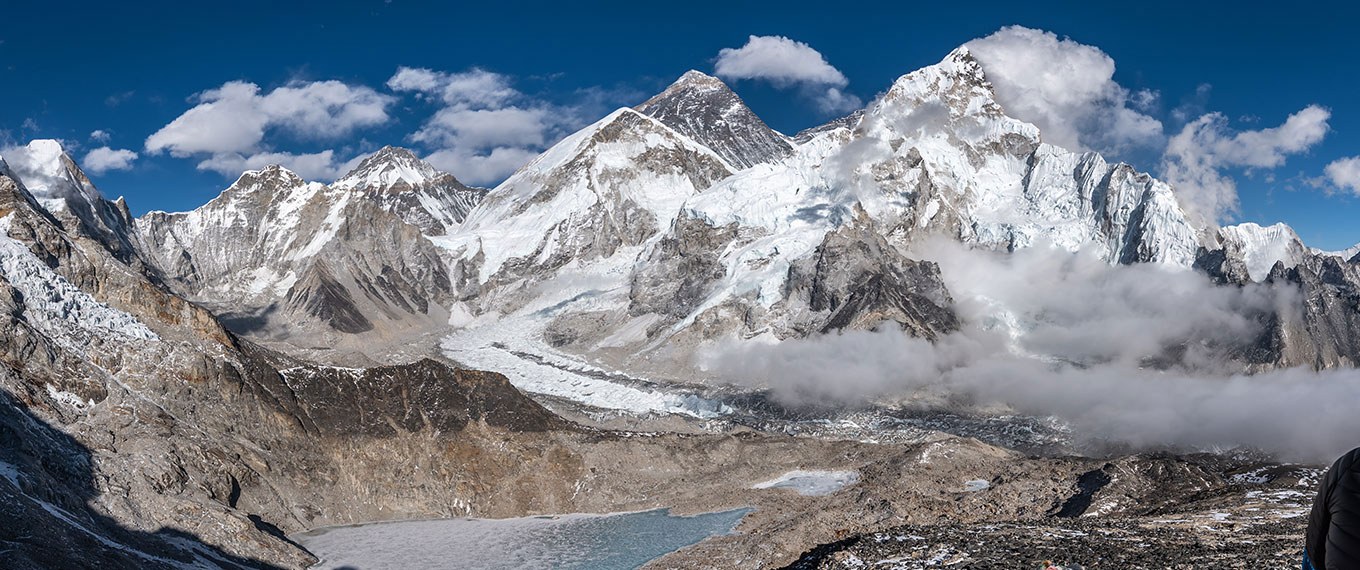
The Three High Passes Trek is not a separate trail from Everest Base Camp — it's an extended loop that absorbs it. Instead of walking up to Base Camp and back down the same valley, you cross three glaciated passes that connect the Khumbu, Imja, and Gokyo valleys: Kongma La (around 5,535 m), Cho La (around 5,420 m), and Renjo La (around 5,360 m). Exact recorded elevations vary slightly between sources and GPS readings, so treat these as approximate.
Along the way, you still visit Everest Base Camp, climb Kala Patthar for the classic Everest photo, and spend time at the turquoise Gokyo Lakes with a climb up Gokyo Ri. In effect, it combines the Everest Base Camp Trek and the Gokyo Lakes Trek into one route, with two extra passes stitched between them.
What sets it apart isn't just the extra distance. It's the terrain. The passes themselves involve scrambling over loose rock, walking across glacier moraine, and in some seasons, kicking steps into snow or ice near the top. This is where the trek stops being "a longer Base Camp walk" and becomes genuinely mountainous trekking.
Who This Trek Is Actually Suited For
We'll be direct about this, because a lot of listings oversell it. The Three High Passes Trek suits trekkers who:
- Have already completed at least one high-altitude trek (EBC, Annapurna Circuit, or similar), or have solid multi-day hiking experience with some scrambling
- Are comfortable with 6–8 hour trekking days over consecutive days, including some early starts before sunrise
- Want to see the Khumbu properly rather than tick off Base Camp and leave
- Have flexibility in their schedule, since pass crossings sometimes shift by a day or two due to weather
It's not the right choice for a first trek in Nepal, for trekkers with limited time who need a fixed itinerary, or for anyone uneasy about exposed, rocky terrain at altitude. If that describes you, the standard Everest Base Camp Trek or the shorter Gokyo Lakes Trek will still deliver outstanding mountain views without the pass-crossing demands.
Route and Itinerary Overview
Itineraries for this trek typically run 20 days, depending on how many acclimatisation and buffer days are built in. The general flow looks like this:
Day 1 : Arrival in Kathmandu (1300 m/4264 ft)
Day 2 : Kathmandu: sightseeing and trek preparation
Day 3 : Fly to Lukla, trek to Phakding (2,651m/8,700ft): 40 minutes flight; 8km, 3 - 4 hours trek
Day 4 : Phakding to Namche Bazaar (3,438m/11,280 ft): 11km, 5 - 6 hours
Day 5 : Namche Bazaar: Rest and acclimatization
Day 6 : Namche Bazaar to Tengboche (3860m/12,660 ft): 10km, 5 - 6 hours
Day 7 : Tengboche to Dingboche (4,360 m/14,300 ft): 9km, 5 - 6 hours
Day 8 : Dingboche: acclimatization and rest
Day 9 : Dingboche to Chhukung climb Chhukung Ri (5,546m): 14km, 6 – 7 hours
Day 10 : Cross to Kongma La pass trek to Lobuche (4940m/16,210ft): 10km, 6 - 7 hours
Day 11 : Lobuche to Gorak Shep & visit Everest Base Camp (5364 m/17,594 ft): 13km, 6-7 hours
Day 12 : Gorak Shep to Kala Pattha then to Lobuche (4940 m/16,207 ft): 7km, 8 - 9 hours
Day 13 : Lobuche to Dzongla (4830m/15,850 ft): 6km, 3 - 4 hours
Day 14 : Trek to Gokyo (5368m/17,611 ft): 6km, 7 - 8 hours
Day 15 : Rest day in Gokyo (5380m/17,575 ft), tour 4th and 5th Gokyo lakes: 3 - 4 hours
Day 16 : Gokyo to Marlung (5360m/17585 ft): 11km, 7 - 8 hours
Day 17 : Marlung to Namche Bazaar (3440 m.) 15km, 5 - 6 hours
Day 18 : Namche Bazaar to Lukla (2860 )19km, 6 - 7 hours
Day 19 : Lukla to Kathmandu (1350 m. )
Day 20 : Final Departure
The order of the passes varies between operators — some cross Renjo La first and Kongma La last. Both directions work; the choice usually comes down to acclimatisation planning and weather forecasts closer to the date. Confirm the specific day-by-day plan with whichever operator you book with, since exact overnight stops differ from one itinerary to the next.
Accommodation on the Trail
You'll stay in teahouses for the entire trek, which is standard across the Khumbu. Rooms are simple — twin beds, shared or basic attached bathrooms lower down, and squat or shared facilities at higher elevations like Lobuche, Gorak Shep, and the villages near the passes. Namche and Gokyo have more comfortable options with better food and occasionally hot showers for a small fee. Above 4,500 metres, expect basic lodges with limited electricity, often solar-charged, and cold rooms — a good sleeping bag is not optional here.
Food Along the Route
Teahouse menus are fairly consistent throughout the Khumbu: dal bhat, noodle and rice dishes, soups, porridge, and some Western options like pasta or pizza at the busier stops. Dal bhat remains the most practical choice at altitude — it's freshly cooked, filling, and usually comes with a refill. Prices increase the higher you go, since everything is carried in by porter or yak. Around the passes themselves, especially at Dzongla, Thangnak, and Lungden, menus are more limited than in Namche or Gokyo, so don't expect much variety on those nights.
Getting There and Transportation
The trek starts and ends with a flight between Kathmandu and Lukla, typically via Ramechhap during the peak spring and autumn seasons when Kathmandu's airport reroutes Lukla flights to manage traffic. Flight schedules are weather-dependent and mountain flights can be delayed or cancelled, particularly in poor visibility. It's worth building at least one buffer day into your Kathmandu return flight for this reason. Some trekkers choose a helicopter option for the return leg from Lukla to save time or in case flights are backed up, though this depends on availability and cost on the day.
Trek Difficulty: How It Compares to Everest Base Camp
This is the question we get asked most often, so let's be specific rather than vague.
The standard Everest Base Camp Trek is a strenuous but non-technical walk — long days at altitude, but on established trails with no scrambling required. The Everest Three High Passes Trek shares that same base difficulty and adds three genuinely demanding days on top of it. Each pass crossing involves:
- A pre-dawn start to cross before winds pick up
- Loose, rocky, and sometimes icy terrain near the top
- Longer daily distances and bigger elevation gains and losses than the standard EBC days
- No easy retreat option partway through — once you're committed to a pass, you generally need to finish the crossing
Trekkers with good general fitness and prior trekking experience manage it without technical climbing skills or equipment like crampons in normal conditions, though microspikes are often recommended and a guide will carry a rope for safety on Cho La in icier conditions. If snow has fallen recently, any of the three passes can become more serious, and a competent, locally experienced guide matters more here than on the standard EBC trail.
Altitude and Acclimatisation
You'll spend multiple nights above 4,500 metres and cross three passes above 5,300 metres, with Kala Patthar reaching around 5,545 metres — higher than Everest Base Camp itself. Altitude sickness is a real risk on this route, not a theoretical one, and it doesn't discriminate based on fitness level.
A few things worth understanding before you go:
- Built-in acclimatisation days (typically at Namche and Gokyo or Dingboche) are not optional extras — skipping them to save time is one of the more common mistakes trekkers make.
- The "climb high, sleep low" principle applies throughout, and a well-designed itinerary uses it before each pass.
- Diamox is commonly carried as a preventive measure by many trekkers, but it should be discussed with a doctor before your trip, not decided on the trail.
- Any headache, nausea, or disturbed sleep at altitude should be taken seriously and reported to your guide immediately, rather than pushed through.
If you want to understand the general principles in more depth, our <a href="https://www.teamramadventure.com/travel-guide/altitude-sickness-in-nepal">altitude sickness and acclimatisation guide</a> covers this separately.
Best Seasons and Weather
Spring (March to May) and autumn (late September to November) are the established windows for this trek, offering the most stable weather and clearer pass conditions. Autumn tends to have crisper visibility right after the monsoon clears; spring brings milder days lower down and rhododendron blooms through the forested sections, though upper sections can still be cold and occasionally windy.
Winter (December to February) is possible for well-prepared, experienced trekkers, but snow accumulation on the passes significantly raises the difficulty and can force route changes or delays. Monsoon season (June to September) is generally avoided — not just for rain, but because cloud cover blocks the views that are much of the point of this trek, and trails can be more slippery.
Weather at these altitudes is genuinely unpredictable even in the "best" seasons. A good itinerary builds in buffer days specifically to absorb a delayed pass crossing without derailing your flight home.
What to Pack for Everest Three High Passes Trek
Layering is the key principle, since you'll move between forested lower valleys and glaciated high passes on the same trip. Beyond the standard EBC packing list, a few items matter more on this route:
- A four-season sleeping bag rated for well below freezing
- Sturdy, broken-in trekking boots with good ankle support for uneven, rocky pass terrain
- Trekking poles — genuinely useful on the steep, loose descents off Kongma La and Cho La
- Microspikes or lightweight crampons, often provided or recommended by the operator for icy sections
- A headlamp for pre-dawn pass starts
- Sun protection — glacier glare at altitude is intense even on cool days
We recommend checking with your operator for a full seasonal packing list before you buy gear, since specific advice changes with departure month.
Everest Three High Passes Trek Permits and Fees
As of current regulations, two permits are required for trekking in the Khumbu region, including this route: the Sagarmatha National Park entry permit and the Khumbu Pasang Lhamu Rural Municipality permit. A TIMS card is not required in the Khumbu — it was replaced by the local municipality permit some years ago. A licensed guide is also a legal requirement for foreign trekkers in this region. Permit fees are reviewed periodically by the relevant authorities, so always confirm current costs and requirements with your operator or the Nepal Tourism Board before departure rather than relying on older blog posts, including this one.
Everest Three High Passes Trek Guides and Porters
Given the technical sections at each pass, we don't recommend attempting this trek independently, and current regulations require a licensed guide for foreign trekkers in the region regardless. A guide with specific Three Passes experience will read weather and snow conditions on the day and can adjust the crossing order or timing if needed. Porters are optional but genuinely worth it on a trek this long — carrying your own full pack over three high passes adds real strain on top of an already demanding itinerary.
Everest Three High Passes Trek Safety Considerations
Beyond altitude illness, the main safety factors are weather exposure on the passes, loose rock underfoot, and the remoteness of some sections between villages. Mobile signal is patchy in places, though most teahouses along this route now offer WiFi for a fee. Comprehensive travel insurance that specifically covers high-altitude trekking and helicopter evacuation is essential — check the altitude limit on your policy, since standard travel insurance often caps out well below what this trek requires.
Responsible Tourism in the Khumbu
The Khumbu is a UNESCO World Heritage Site and home to Sherpa communities whose livelihoods are closely tied to trekking tourism. A few practices that matter here: stick to marked trails to avoid damaging fragile alpine vegetation, carry out what you carry in, avoid single-use plastic bottles where refill stations are available, and be mindful photographing monasteries and local ceremonies. Choosing teahouses and operators that pay fair wages to guides and porters also supports the local economy directly rather than leaking value out of the region.
Cost Factors to Consider
Several elements affect the overall price of this trek: the length of the itinerary (fewer or more acclimatisation and buffer days), whether porters are included, group size, the standard of teahouses booked, and Lukla flight costs, which fluctuate with demand in peak season. Because this trek runs longer than standard EBC, total costs are typically higher — largely due to extra trekking days, permits, and guide fees rather than any single expensive item. Ask any operator for a clear breakdown of what's included versus what you'll pay for locally (meals, charging, hot showers, WiFi) so there are no surprises on the trail.
Common Mistakes Trekkers Make on This Route
- Underestimating the physical difference from EBC. This isn't "EBC plus a bit more" — the pass days are a different category of effort.
- Skipping acclimatisation days to shorten the trip. This is the single biggest contributor to altitude problems on this route.
- Booking too tight a schedule with no weather buffer. One delayed pass crossing can cascade into a missed flight home if there's no slack built in.
- Arriving without any prior high-altitude experience. It's possible, but it raises risk considerably — a shorter trek first is worth considering if you're new to altitude.
- Under-preparing for cold on pass mornings. Even in "warm" seasons, pre-dawn starts near 5,300 metres are genuinely cold.
Everest Three High Passes Trek vs Standard Everest Base Camp
If you're still deciding between the two, the honest comparison is this: EBC gives you the iconic Base Camp and Kala Patthar experience in a shorter, more predictable window, suited to a wider range of fitness levels. The Three High Passes Trek gives you that plus the Gokyo Lakes and three demanding pass crossings, in exchange for more days, more difficulty, and less schedule flexibility. Neither is objectively "better" — it depends on your experience, time available, and appetite for a harder route. If you've read this far and the difficulty section didn't put you off, this trek is very likely the right call.
Ready to Plan Your Trek?
If the Three High Passes Trek sounds like the right challenge for you, our team has planned and led this route through the Khumbu for years and can walk you through realistic timing, current conditions, and what a well-paced itinerary looks like for your fitness level. Take a look at our Everest Three High Passes Trek itinerary, or get in touch if you'd like to talk through whether this route or a shorter alternative fits your plans better.
Frequently Asked Questions
1. How many days does the Everest Three High Passes Trek take?
Most itineraries run 20 days including acclimatisation and buffer days, though the exact length varies by operator and how much schedule flexibility is built in for weather.
2. Is the Three High Passes Trek harder than Everest Base Camp?
Yes, noticeably. It follows much of the same trail as EBC but adds three pass crossings above 5,300 metres involving rocky, sometimes icy terrain, longer daily distances, and less margin for error.
3. Do I need prior trekking experience for this route?
It's strongly recommended. Prior experience with multi-day high-altitude trekking helps you judge your own pace and recognise altitude symptoms early, both of which matter more here than on a standard EBC trek.
4. What is the highest point on the Everest Three High Passes Trek?
Kala Patthar, at around 5,545 metres, is typically the highest point reached, slightly higher than the highest pass, Kongma La.
5. Do I need technical climbing skills or equipment?
No formal climbing skills are required in normal conditions, but microspikes are often used on icy sections, and guides carry a rope for safety on Cho La if conditions call for it.
6. What permits do I need for this trek?
You'll need a Sagarmatha National Park entry permit and a Khumbu Pasang Lhamu Rural Municipality permit. A TIMS card is not required in this region, and a licensed guide is mandatory for foreign trekkers.
7. When is the best time to do the Three High Passes Trek?
Spring (March to May) and autumn (late September to November) offer the most stable conditions for the pass crossings. Winter is possible for experienced trekkers but significantly harder.
8. Can I do this trek without a guide?
Current regulations require foreign trekkers in the Khumbu to hire a licensed guide, and given the technical sections at each pass, this is also a genuine safety consideration, not just a formality.
9. How does this trek compare to the Gokyo Lakes Trek?
The Gokyo Lakes Trek is a shorter, less technical route that reaches the lakes and Gokyo Ri without crossing all three passes or continuing to Everest Base Camp. The Three High Passes Trek essentially combines Gokyo, EBC, and the pass crossings into one longer journey.
10. What's the biggest risk on this trek?
Altitude sickness is the most common issue, followed by weather-related delays at the passes themselves. Both are manageable with a well-paced itinerary, proper acclimatisation days, and an experienced guide
Ready to trek in the Himalayas?
Get itinerary guidance and local support from the Team Ram Adventure specialists.