 Plan Your Trip Now
In This Guide
Most people picture the Everest Base Camp trek starting the same way: a hair-raising flight into Lukla, followed by a river of trekkers all walking the same well-worn trail. But there's a quieter, more original way to reach the foot of the world's highest mountain — and it starts on the ground, not in the air.
The Everest Base Camp Trek from Salleri takes you overland from Kathmandu into the Solu region before you ever set foot on the "main" Everest trail. You walk through Sherpa villages that see a fraction of the foot traffic Namche does, visit centuries-old monasteries, cross the Dudh Koshi River on swaying suspension bridges, and gain altitude gradually — all before merging with the classic EBC route at Phakding.
If you want the same bucket-list photo at Everest Base Camp and Kala Patthar, but with fewer crowds, a lower risk of flight cancellations, and a deeper cultural experience, this route deserves a serious look. This guide walks you through the full itinerary, real costs, permits, difficulty, packing list, and everything else you need to plan the trip — including where to book it.
👉 Full trip details and booking: Everest Base Camp Trek via Salleri – Team Ram Adventure
Why Trek to Everest Base Camp via Salleri?
Flying into Lukla is fast, but it's also one of the most weather-dependent flights in the world — delays and cancellations during peak season are common and can eat several days off your holiday. Starting from Salleri sidesteps that risk entirely.
Here's what makes this route worth choosing:
- No dependence on the Lukla flight to start your trek — you drive in overland instead, removing a major point of uncertainty from your trip.
- A gentler, longer acclimatization curve. Because you gain altitude gradually over several extra days, your body adjusts more naturally before you reach the high Khumbu villages.
- Genuine cultural immersion. The lower Solu region is dotted with traditional Sherpa settlements, mani walls, chortens, and gompas that most EBC trekkers never see.
- A quieter trail. Where the Lukla route can feel like rush hour in peak season, the Salleri approach is calm, rural, and green for the first several days.
- The historic Takshindo Monastery, forest trails, and river valleys add texture to the trip well before you reach the famous section of the trek.
- You still finish with everything the classic trek is known for — Namche Bazaar, Tengboche, Kala Patthar, and Everest Base Camp itself — because the two routes merge at Phakding.
In short: same legendary destination, richer journey there.
Quick Trip Facts
| Detail | Information |
|---|---|
| Trek Style | Teahouse / Lodge-based trekking |
| Trip Grade | Moderate to Challenging |
| Duration | Approx. 19 Days (Kathmandu to Kathmandu) |
| Max Altitude | Kala Patthar – 5,545 m (18,192 ft) |
| EBC Altitude | 5,364 m (17,598 ft) |
| Group Size | 2–12 people (private/customized groups available) |
| Meals | Breakfast, Lunch & Dinner during the trek |
| Accommodation | Teahouses/lodges on trail, hotel in Kathmandu |
| Transportation | Jeep drive (Kathmandu–Salleri) + Lukla–Kathmandu flight |
| Best Season | March–May and September–November |
| Starting Price | From around US$1,699 per person |
Salleri Route vs. Classic Lukla Route
| Factor | Via Salleri | Via Lukla (Direct Flight) |
|---|---|---|
| Start of trek | Overland jeep drive from Kathmandu | Short mountain flight to Lukla |
| Flight risk | Only on the return leg (Lukla–Kathmandu) | Both directions, more exposure to delays |
| Trail crowds | Quiet, rural, less commercial | Busier, especially in peak season |
| Acclimatization | Gradual, extra low-altitude days | Faster ascent, higher AMS risk early on |
| Cultural exposure | Deep — remote Sherpa villages, monasteries | Moderate — mainly Khumbu villages |
| Trip length | Longer (around 19 days) | Shorter (around 12–15 days) |
| Best for | Trekkers who want an offbeat, authentic journey and extra buffer days | Trekkers short on time who want the fastest route in |
Day-by-Day Itinerary
Here is the full 19-day itinerary for the Everest Base Camp Trek via Salleri:
| Day | Route | Altitude |
|---|---|---|
| 1 | Arrival in Kathmandu, transfer to hotel | 1,350 m |
| 2 | Kathmandu sightseeing (Swayambhunath, Durbar Square, Pashupatinath, Boudhanath) | 1,350 m |
| 3 | Drive to Salleri, short trek to Takshindo | 3,071 m |
| 4 | Trek to Khari Khola | 2,194 m |
| 5 | Trek to Puiyan | 2,890 m |
| 6 | Trek to Phakding (joins the classic EBC trail) | 2,692 m |
| 7 | Trek to Namche Bazaar | 3,440 m |
| 8 | Acclimatization day in Namche, side hike to an Everest viewpoint | 3,440 m |
| 9 | Trek to Tengboche | 3,860 m |
| 10 | Trek to Dingboche | 4,350 m |
| 11 | Acclimatization day in Dingboche, side trip to Chhukung Valley | 4,350 m |
| 12 | Trek to Lobuche | 4,930 m |
| 13 | Trek to Gorak Shep, afternoon hike to Everest Base Camp | 5,170 m / 5,364 m |
| 14 | Sunrise hike to Kala Patthar, descend to Pheriche | 5,545 m → 4,250 m |
| 15 | Trek back to Namche Bazaar | 3,440 m |
| 16 | Trek to Lukla | 2,810 m |
| 17 | Fly back to Kathmandu | 1,350 m |
| 18 | Free/leisure day in Kathmandu | 1,350 m |
| 19 | Final departure | – |
This exact schedule (with the same daily elevation gains) is the standard package offered on the Everest Base Camp Trek via Salleri page, though it can be shortened, extended, or customized around your travel dates.
Everest Base Camp Trek via Salleri Cost
Trip pricing depends on group size, season, accommodation category, and how much of the trek is customized. As a general guide, most operators price this trek somewhere in the US$1,200–1,700 per person range for a full-service package.
| Cost Component | What It Typically Covers |
|---|---|
| Transportation | Jeep drive from Kathmandu to Salleri, plus the Lukla–Kathmandu flight |
| Accommodation | Hotel nights in Kathmandu + teahouse/lodge stays on the trail |
| Meals | Breakfast, lunch, and dinner on trekking days |
| Permits | TIMS Card, Sagarmatha National Park entry, local rural municipality permit |
| Staff | English-speaking trekking guide and porter (commonly 1 porter per 2 trekkers) |
| Extras | First-aid kit, trekking map, government taxes, office service charge |
What's typically not included:
- International airfare to/from Nepal
- Nepal entry visa fee (around US$40 for 30 days, US$25 for 15 days — payable on arrival)
- Personal travel insurance (must cover high-altitude trekking and emergency helicopter evacuation up to 6,000 m)
- Drinks, desserts, bottled/boiled water, hot showers, and battery-charging fees on the trail
- Tips for your guide and porter
For exact current pricing, seasonal discounts, and group rates, check the live rates on the Everest Base Camp Trek via Salleri booking page — trekking companies frequently run early-booking discounts for the upcoming season.
What's Typically Included and Excluded
✅ Usually Included
- Airport pickup/drop-off and ground transfers
- Kathmandu hotel with breakfast
- Guided Kathmandu sightseeing tour with entrance fees
- A trekking duffel bag
- All meals (breakfast, lunch, dinner) during the trek
- Teahouse/lodge accommodation on the trail
- Kathmandu–Salleri jeep transport
- Lukla–Kathmandu flight with airport tax
- A licensed, insured trekking guide and porter
- TIMS card and national park/conservation entry fees
- Government taxes and office service charges
❌ Usually Excluded
- International flights
- Nepal visa fee
- Personal travel/rescue insurance
- Alcoholic drinks, snacks, bottled water, and hot showers
- Tips for your trekking crew
Best Time to Trek Everest Base Camp via Salleri
| Season | Months | Conditions |
|---|---|---|
| Spring | March – May | Mild days, clear skies, rhododendrons in bloom — one of the two best windows |
| Autumn | September – November | Crisp, stable weather with the best mountain visibility of the year |
| Summer/Monsoon | June – August | Wet, slippery trails, leeches, limited mountain views — not recommended |
| Winter | December – February | Very cold, heavy snow at higher elevations, some lodges close — for experienced cold-weather trekkers only |
In short: aim for Spring or Autumn for the most reliable weather, the clearest Everest views, and the most comfortable trekking conditions.
Trek Difficulty & Altitude
The Everest Base Camp Trek via Salleri is graded moderate to challenging. A few things to know before you commit:
- Expect 6–7 hours of walking on most days, across varied terrain — forest trails, river valleys, stone steps, and high alpine paths.
- The extra days walking in from Salleri mean a more gradual altitude gain than flying straight into Lukla, which generally makes acclimatization easier.
- The trek includes two built-in rest/acclimatization days — in Namche Bazaar and Dingboche — both with optional side hikes to keep your body moving while it adjusts.
- The highest points of the trek are:
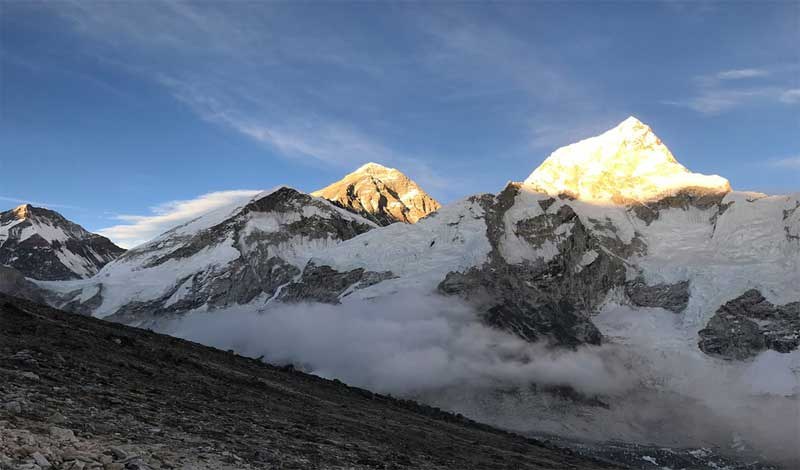
- Kala Patthar — 5,545 m (18,192 ft), the best sunrise viewpoint of Mount Everest on the whole route
- Everest Base Camp — 5,364 m (17,598 ft), at the foot of the Khumbu Icefall
- No technical climbing skills are required — this is a walking trek — but a good baseline fitness level and some hiking experience are strongly recommended.
- Basic training (regular walking, stair climbing, or hiking with a loaded pack) for 1–2 months before departure will make the trek noticeably more enjoyable.
Permits Required
You'll need the following permits, which your trekking operator normally arranges on your behalf:
- TIMS Card (Trekkers' Information Management System)
- Sagarmatha National Park Entry Permit (the trek passes through this UNESCO World Heritage Site)
- Khumbu Pasang Lhamu Rural Municipality Permit (a local permit for the Khumbu area)
Make sure whichever operator you book with confirms these are included in your package price — they usually are, as with the Everest Base Camp Trek via Salleri package.
Packing List for the Salleri to EBC Trek
Headwear
- Sun hat or scarf
- Warm fleece hat or light balaclava
- Sunglasses and snow goggles with UV protection
Upper Body
- T-shirts and thermal base layers
- Fleece jacket or pullover
- Waterproof, breathable shell jacket
- Down jacket or vest
Lower Body
- Hiking shorts and lightweight trekking pants
- Thermal bottoms
- Waterproof shell pants
- Warm fleece or wool pants (winter)
Hands & Feet
- Lightweight gloves plus heavier insulated mittens
- Liner socks + thick wool hiking socks
- Broken-in hiking boots with spare laces
- Camp shoes or sandals for evenings
Gear & Accessories
- Four-season sleeping bag (rated to at least 0°C / freezing)
- Headlamp with spare batteries
- Duffel bag for porter transport + a daypack (10–15L)
- Trekking poles
- Two water bottles or a hydration bladder
- Basic first-aid kit and personal medications
- Power bank (charging costs extra at higher elevations)
- Biodegradable toiletries, wet wipes, and toilet paper
Frequently Asked Questions
1. What exactly is the Everest Base Camp Trek via Salleri?
It's an alternative route to Everest Base Camp that begins with an overland drive from Kathmandu to Salleri instead of a flight to Lukla, following quieter trails through Sherpa villages before joining the classic EBC route at Phakding.
2. Why pick this route over flying straight to Lukla?
It removes the uncertainty of Lukla flight delays, offers a more gradual altitude gain, and adds a richer cultural experience through the lower Solu region.
3. How many days does it take?
Most itineraries run 18–20 days total, including the drive in and all trekking and acclimatization days.
4. Is it a hard trek?
It's rated moderate to challenging — long trekking days at altitude, but no technical climbing is needed.
5. What's the highest point?
Kala Patthar at 5,545 m, reached the morning after Everest Base Camp.
6. How long is the drive from Kathmandu to Salleri?
Roughly 8–10 hours, depending on road conditions.
7. What permits do I need?
The Sagarmatha National Park entry permit and the Khumbu Pasang Lhamu Rural Municipality permit, plus a TIMS card — your operator typically arranges all three.
8. When's the best time to go?
Spring (March–May) or Autumn (September–November), for stable weather and the clearest mountain views.
9. What's the accommodation like?
Teahouses/lodges throughout — simple but comfortable rooms in lower villages, more basic facilities higher up.
10. Do I need prior trekking experience?
It helps, but it isn't mandatory. Good physical fitness and some pre-trip training matter more than prior high-altitude experience.
11. What if I get altitude sickness?
Your guide monitors you throughout and the standard response is to descend immediately if symptoms appear; helicopter evacuation can be arranged when necessary — which is why insurance covering high-altitude rescue is essential.
12. How much should I tip?
As a rough guideline for the full trip: US$150–250 for your guide and US$100–150 for your porter, though this isn't mandatory.
13. Can the itinerary be customized?
Yes — most operators, including Team Ram Adventure, can adjust the number of days, acclimatization stops, accommodation category, and group size to suit you. Details are on the trip page.
Final Thoughts: Is the Salleri Route Right for You?
If your main goal is simply to stand at Everest Base Camp in the shortest possible time, the classic Lukla-fly-in route is still the faster option. But if you want a trip that feels like a genuine journey — one with quiet trails, real village life, monasteries, river crossings, and a gentler climb toward the same iconic destination — the Everest Base Camp Trek from Salleri is hard to beat.
You get everything the classic trek is famous for — Namche Bazaar, Tengboche Monastery, Kala Patthar sunrise, and Everest Base Camp itself — plus several days of authentic Himalayan culture that most trekkers never experience.
Ready to plan your trip? Get the full 19-day itinerary, current pricing, and availability, or request a custom departure date here:
👉 Everest Base Camp Trek via Salleri – Team Ram Adventure
This guide is for general planning purposes. Prices, permits, and trail conditions can change — always confirm current details directly with your trekking operator before booking.
Ready to trek in the Himalayas?
Get itinerary guidance and local support from the Team Ram Adventure specialists.