 Plan Your Trip Now
In This Guide
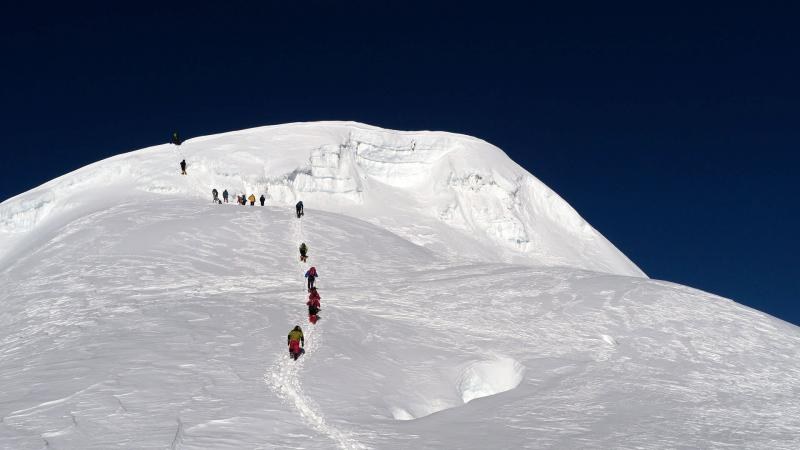
Standing at 6,476 meters (21,247 feet), Mera Peak is the highest trekking peak in Nepal and one of the most accessible 6,000-meter summits in the Himalayas. The climb offers an incredible introduction to high-altitude mountaineering, combining challenging trekking, glacier travel, snow climbing, and spectacular Himalayan scenery. From the summit, climbers are rewarded with a breathtaking panorama of five of the world's 8,000-meter giants—Mount Everest, Lhotse, Makalu, Cho Oyu, and Kanchenjunga—creating an unforgettable Himalayan adventure.
This complete guide covers everything you need to know about Mera Peak Climbing in 2026/2027 — difficulty, itinerary, cost, permits, best season, required gear, and training tips. By the end, you'll know exactly how to prepare, and how Team Ram Adventure can help you plan and book a safe, successful summit.
What Is Mera Peak Climbing?
Mera Peak sits in the remote Hinku Valley, within the Mahalangur Himalayan range in Nepal's Everest region. Classified as a trekking peak by the Nepal Mountaineering Association (NMA), it's widely considered the ideal introduction to high-altitude mountaineering — offering climbers a genuine 6,000m summit experience without the extreme technical demands of peaks like Ama Dablam or Lobuche East.
Unlike the crowded main Everest Base Camp trail, the approach to Mera Peak winds through the quieter, less-visited villages of Paiya, Panggom, Kothe, and Thagnak, giving climbers a more remote and peaceful Himalayan experience before reaching Khare — the primary staging and training base for the final summit push.
Mera Peak Climbing Difficulty
Mera Peak is graded Alpine F (Facile) to PD (Peu Difficile / "slightly difficult") — meaning it's a largely non-technical climb, but one that's physically demanding due to sustained high altitude.
What makes it challenging:
High Altitude, Not Technical Terrain The summit push follows a long, broad snow ridge from High Camp (around 5,800 m) to the top — there are no sustained vertical sections, ice walls, or extreme exposure like on Island Peak's headwall. The real challenge is altitude: climbers spend 3 nights above 5,000 meters, including summit night, which places genuine physiological demands on the body and makes Acute Mountain Sickness (AMS) the primary risk, rather than any technical climbing move.
Long, Demanding Summit Day Summit day begins in the early hours, following a long snow ridge with no fixed ropes required on the standard route — but the sheer distance, altitude, and cold combine to make it a genuinely tough physical test.
Consecutive Trekking Days Most itineraries run 15 to 18 days, with 6 to 7 hours of daily walking through remote, less-developed trails before even reaching Khare — cumulative fatigue is a real factor.
Basic Technical Skills Still Required While the route has no fixed ropes or vertical ice, crampons, an ice axe, and a climbing harness are essential from the glacier upward, and all climbers rope up with a guide for the glacier crossing and summit approach.
Is Mera Peak suitable for beginners?
Yes. Mera Peak is widely regarded as the best "first 6,000m peak" for climbers with no prior mountaineering experience. With proper acclimatization, professional guidance, and basic pre-climb training at Khare (covering crampon and ice axe use), well-prepared beginners regularly reach the summit — reported success rates run as high as 85–92% with proper acclimatization and preparation.
Mera Peak Climbing Itinerary 2026/2027
| Day | Route | Altitude (m) | Altitude (ft) |
|---|---|---|---|
| Day 1 | Arrival in Kathmandu | 1,400 m | 4,593 ft |
| Day 2 | Kathmandu Cultural Tour or Indoor Climbing Course in Kathmandu | 1,400 m | 4,593 ft |
| Day 3 | Fly to Lukla & trek to Chutanga | 3,020 m | 9,908 ft |
| Day 4 | Trek to Tuli Kharka via Zatrwa La | 4,100 m (pass: 4,600 m) | 13,451 ft (pass: 15,091 ft) |
| Day 5 | Trek to Gothey | 3,600 m | 11,811 ft |
| Day 6 | Trek to Thagnag | 4,350 m | 14,272 ft |
| Day 7 | Acclimatization Day at Thagnag | 4,350 m | 14,272 ft |
| Day 8 | Trek to Khare | 5,045 m | 16,552 ft |
| Day 9 | Ice Climbing Practice near Khare | 5,045 m | 16,552 ft |
| Day 10 | Trek to Mera Base Camp | 5,300 m | 17,388 ft |
| Day 11 | Climb to Mera High Camp | 5,800 m | 19,029 ft |
| Day 12 | Summit Day and descend to Khare | 6,476 m (summit) → 5,045 m | 21,247 ft (summit) → 16,552 ft |
| Day 13 | Contingency Day | 5,045 m | 16,552 ft |
| Day 14 | Trek to Gothey | 3,600 m | 11,811 ft |
| Day 15 | Trek to Tuli Kharka | 4,100 m | 13,451 ft |
| Day 16 | Trek to Lukla | 2,860 m | 9,383 ft |
| Day 17 | Fly back to Kathmandu | 1,400 m | 4,593 ft |
| Day 18 | Departure from Kathmandu | 1,400 m | 4,593 ft |
Note: Some itineraries run 14–18 days depending on route variation and acclimatization pacing, and most reputable operators build in at least one contingency day for weather delays at Khare or High Camp — never skip this when booking.
Mera Peak Climbing Cost 2026/2027
Cost varies based on itinerary length, group size, and service level. Based on current 2026/2027 market rates:
- Budget packages: roughly $2,200 – $2,700 per person
- Standard packages: roughly $2,700 – $3,800 per person
- Premium/private packages: roughly $3,800 – $4,500+ per person
Group size significantly affects per-person pricing, since permit and guide costs are shared among climbers — most agencies require a minimum of 2 people to book.
What's typically included:
- Mera Peak Climbing Permit (NMA) and required trekking permits
- Kathmandu–Lukla–Kathmandu domestic flights
- Licensed climbing guide and porter services
- Teahouse/lodge accommodation during the trek, tented camp at Base Camp/High Camp
- All meals during the trek and climb
- Group climbing gear (ropes, anchors) and safety equipment
What's typically excluded:
- International airfare and Nepal visa fees
- Personal climbing gear (boots, crampons, harness — rentable in Kathmandu)
- Travel and medical insurance with high-altitude helicopter evacuation coverage
- Personal expenses: hot showers, Wi-Fi, bottled water, extra snacks
- Tips and gratuities for guides and porters
- Extra nights in Kathmandu due to flight delays or itinerary changes
Mera Peak Climbing Permits 2026/2027
Mera Peak requires multiple permits, all arranged exclusively through a registered trekking agency in Kathmandu — individual climbers cannot apply on their own, and permits are not available at Base Camp.
Required permits:
- Mera Peak Climbing Permit (NMA) – Seasonal pricing: approximately $250 (spring), $125 (autumn), $70 (winter/summer)
- Makalu Barun National Park Entry Permit – Approximately $23–$30 per person
- Sagarmatha National Park Permit – Required depending on route variation
- Khumbu Pasang Lhamu Rural Municipality Permit – Approximately $15–$20 per person
- Garbage Deposit Fee – Approximately $250 per team, refundable upon proof that waste was carried out
Important permit notes:
- All permits must be processed in Kathmandu before departure — no exceptions
- No group discounts apply to the NMA climbing permit
- Children under 10 do not require a National Park entry permit
- A licensed guide is mandatory and directly involved in the permit application process
Best Season for Mera Peak Climbing
- Autumn (September–November): The most popular climbing season — clear skies, stable weather, and excellent visibility, with mid-October to mid-November considered prime time
- Spring (March–May): A strong second option, with warmer temperatures than autumn, blooming rhododendron forests on the lower approach, and generally stable climbing conditions
- Winter (December–February): Not recommended — extreme cold, high winds, and deep snow significantly increase difficulty and risk
- Monsoon (June–August): Not recommended — heavy rainfall, poor visibility, landslide risk, and unstable glacier conditions
Mera Peak Climbing Tips
1. Prioritize Acclimatization Over Speed
Follow your itinerary's rest days at Thagnak and Khare without skipping them. Since altitude — not technical terrain — is the primary challenge on Mera Peak, gradual acclimatization is the single biggest factor in a safe, successful summit.
2. Take the Khare Training Session Seriously
Most itineraries include a training day at Khare covering crampon use, ice axe technique, and roped-travel basics. Even without prior climbing experience, pay close attention here — these skills are directly applied on the glacier crossing and summit ridge.
3. Pace Yourself on Summit Day
Summit day is long, cold, and sustained — walk at a slow, steady pace ("bistari, bistari") rather than pushing hard early. Since the route follows a broad snow ridge without fixed ropes, consistent energy management matters more than speed.
4. Layer Properly for Extreme Cold
Temperatures at High Camp (5,800 m) and on summit night can drop dramatically. A solid layering system — base layer, insulating mid-layer, windproof/waterproof shell, and a warm down jacket — lets you adjust quickly without overheating or getting dangerously cold.
5. Stay Hydrated and Keep Eating
Altitude suppresses appetite and increases dehydration risk. Drink 3–4 liters of water daily and force yourself to eat, even without hunger — simple carbs and energy bars help sustain you through the long summit push.
6. Rent Technical Gear in Kathmandu
Boots, crampons, ice axe, and harness are often more practical to rent locally than to purchase for a single expedition — cost-effective, and guides can help ensure proper fit.
7. Trek With an Experienced, Licensed Climbing Guide
Beyond permit requirements, a skilled guide manages pacing, roped-travel safety on the glacier, and critical go/no-go decisions on summit day — especially important given the extended time spent above 5,000 meters.
8. Build a Weather Buffer Into Your Itinerary
Weather delays at Khare or High Camp are common. Choosing an itinerary with at least one built-in contingency day significantly improves your chances of a successful summit attempt.
9. Know the Signs of Altitude Sickness
Headaches, dizziness, or nausea are signs to alert your guide immediately. Since AMS — not technical difficulty — is the main risk on Mera Peak, don't ignore early symptoms; descending is always the right call if they worsen.
10. Train Your Legs and Cardio Before You Arrive
Squats, lunges, step-ups, and long hikes with a loaded pack in the months beforehand make both the multi-day trek approach and the demanding summit day considerably more manageable.
11. Pack Light for Summit Day, But Don't Cut Safety Corners
Keep your summit-day pack minimal (water, snacks, extra layer, headlamp with spare batteries), but never skip properly fitted crampons, a reliable harness, and warm gloves.
12. Consider Mera Peak as a First 6,000m Summit
If this is your first high-altitude climb, Mera Peak's non-technical route makes it an excellent stepping stone before attempting more technical peaks like Island Peak or Lobuche East in the future.
Essential Gear for Mera Peak Climbing
- Insulated mountaineering boots rated for extreme cold
- Crampons, ice axe, climbing harness, and carabiners/locking gear
- -20°C to -30°C rated sleeping bag for High Camp
- Down jacket, thermal base layers, fleece, and waterproof outer shell
- Trekking poles, gaiters, and glacier-rated UV sunglasses
- Headlamp, sun hat, balaclava, and warm gloves (with a lighter inner pair)
Most technical gear (boots, ice axe, crampons) can be rented in Kathmandu, which is often more practical than buying it for a single expedition.
How to Train for Mera Peak Climbing
- Cardiovascular training: Hiking, running, or stair climbing 5–6 days a week for at least 2–3 months before departure
- Strength training: Squats, lunges, and step-ups to build leg endurance for the long summit ridge
- Weighted pack training: Long hikes with a loaded daypack to simulate multi-day trekking conditions
- Basic technical familiarity: Practicing crampon and ice axe use beforehand, even informally, builds confidence for the on-site training at Khare
- Altitude awareness: Learn AMS symptoms and commit to the itinerary's built-in acclimatization days rather than rushing the ascent
Physical Fitness and Preparation for Mera Peak
As Nepal's highest trekking peak, Mera Peak demands genuine physical readiness — not because the terrain is technical, but because you'll spend multiple nights above 5,000 meters and face a long, sustained summit day at 6,476 meters. Proper preparation in the 2–3 months before departure significantly improves both safety and summit success.
Cardiovascular Fitness
Since most itineraries involve 6 to 7 hours of daily walking for 15+ consecutive days before even reaching Khare, cardiovascular endurance is your foundation.
- Hike, run, cycle, or swim 5–6 days a week, gradually increasing duration and intensity
- Include at least one long hike (4+ hours) weekly on hilly or uneven terrain
- Add stair climbing or an inclined treadmill to simulate the sustained ascent profile of the trek
Strength Training
Leg endurance and core stability matter throughout the trek, but especially on the long, broad summit ridge above High Camp.
- Squats, lunges, and step-ups 2–3 times a week to build leg strength for consecutive high-altitude days
- Core exercises (planks, rotational work) to support balance on the glacier and snow ridge while roped up
- General upper body conditioning — while Mera Peak has no fixed-rope headwall like Island Peak, basic upper body strength still helps with balance and fatigue management
Altitude and Endurance Conditioning
- Train at elevation if accessible, or do repeated hikes with a weighted pack (10–15 kg) to simulate trekking conditions
- Practice steady, rhythmic breathing techniques to help manage exertion in thin air
- Build mental endurance through longer training sessions, since summit day involves sustained effort over many hours in extreme cold
Technical Skill Preparation
Mera Peak's climbing demands are lower than more technical peaks, but basic familiarity still helps:
- Get comfortable wearing a climbing harness and using crampons if you've never tried before
- Practice basic ice axe handling, even informally, ahead of the on-site training session at Khare
- Since the whole team ropes up for the glacier crossing and summit push, understanding basic roped-travel etiquette in advance is useful
Health Considerations
- Climbers with pre-existing heart, lung, or blood pressure conditions should consult a doctor before attempting a 6,000m peak
- Schedule a general health check-up 1–2 months before departure
- Prioritize good sleep and hydration habits in the weeks leading up to the trip, since both directly affect altitude adaptation
- Note that Nepal restricts climbing permits for minors under 16, though there's no upper age limit — older or less experienced climbers may simply need extra acclimatization time
Mera Peak vs. Island Peak: Which Should You Choose?
Both are Nepal's most popular trekking peaks, but they differ in key ways: Mera Peak is higher (6,476 m vs 6,189 m) but less technical, with a broad snow ridge and no fixed-rope headwall, making it a better fit for complete beginners. Island Peak is slightly lower but involves a steeper technical headwall and glacier crevasse crossings, making it a better choice for those seeking more technical climbing exposure. Many climbers choose Mera Peak first, then progress to Island Peak or Lobuche East on a future trip.
Other Popular Peak Climbing Packages in Nepal
1. Lobuche East Peak (6,119 m)
A more technical climb than Island Peak, featuring a steeper summit ridge and greater exposure. Popular with climbers looking for a tougher challenge in the Everest region after already summiting Island Peak.
2. Chulu West Peak (6,419 m)
Located near the Annapurna Circuit route, this peak combines classic trekking with a moderately technical summit push, making it a great option for climbers already exploring the Manang region.
3. Pisang Peak (6,091 m)
Another Annapurna-region trekking peak, known for its accessible approach and rewarding summit views over the Annapurna and Manaslu ranges — a solid introductory climb for first-timers.
4. Yala Peak (5,732 m)
One of the easiest trekking peaks in Nepal, located in the remote Langtang region. Ideal for climbers wanting a genuine taste of mountaineering without the technical demands of Island Peak or Mera Peak.
5. Ama Dablam (6,812 m)
A serious step up — one of the most visually striking and technically demanding peaks in the Everest region, generally attempted only by climbers with prior mountaineering experience.
6. Tent Peak / Tharpu Chuli (5,663 m)
Located near Annapurna Base Camp, this is a relatively accessible peak offering close-up views of the Annapurna Sanctuary, often combined with the ABC trek itself.
7. Naya Kanga Peak (5,844 m)
A lesser-known but rewarding peak in the Langtang region, offering a quieter, less crowded climbing experience with moderate technical sections.
Book Your Mera Peak Climbing Trip with Team Ram Adventure
At Team Ram Adventure, we design Mera Peak itineraries built around proper acclimatization through the Hinku Valley, experienced climbing guides who know the summit ridge and Khare training ground inside out, and a well-paced schedule with built-in weather buffer days. Whether you're chasing your first 6,000-meter summit or looking for the highest trekking peak in Nepal, our team is ready to help you prepare, train, and summit safely.
👉 Ready to book your climb? Check out our Mera Peak Climbing package for the full itinerary, cost breakdown, and everything you need to plan your 2026/2027 expedition with Team Ram Adventure.
Planning your first Himalayan summit? Reach out to Team Ram Adventure for expert guidance on permits, training, gear rental, and everything you need for a safe and successful Mera Peak Climbing expedition in 2026/2027
Ready to trek in the Himalayas?
Get itinerary guidance and local support from the Team Ram Adventure specialists.